
What is recorded here
Lackenavorna is a castle motte on a river hillock in County Tipperary, recorded as the old castle of Latteragh in 1269 and granted to de Marisco by the bishop of Killaloe in the early thirteenth century. It still rises beside the Nenagh River, a flat-topped mound ringed by a narrow fosse, guarding the kind of crossing where traffic, tolls and fear all mixed. The road has cut through part of its outer bank, and pathways have bitten into the mound, yet the shape remains obvious: a small hill made into a warning.
Situated on a hillock on the W bank of the Nenagh River, with a bridge across this river to the NE. The main Nenagh-Thurles road borders the site to the N. The 'old castle' of Latteragh is referred to in 1269 (PROI, RC 7/1, 481). In the early thirteenth century the 'Manor of Latteragh was granted by the bishop of Killaloe to de Marisco (Cunningham 1987, 147). The site is in a very defensive position in this river valley, protecting a routeway. Present remains consist of a heavily overgrown steep-sided flat-topped mound (diam. 34m N-S) enclosed by a fosse (Wth 3.5m) and outer bank which has been removed at S during road construction. The bank has also been levelled in the SE quadrant. At S and SW there is a lot of slippage and a number of pathways have been dug into the mound.
The above description is derived from 'The Archaeological Inventory of County Tipperary. Vol. 1 - North Tipperary' compiled by Jean Farrelly and Caimin O'Brien (Dublin: Stationery Office, 2002). In certain instances the entries have been revised and updated in the light of recent research.
Date of upload/revision: 22 September 2008
The Moat of Latteragh, Lackenavorna was held by the Butler family in the 13th century and is mentioned in 1269. It is important as an early reference to a Butler stronghold in the region, reflecting their expanding influence in Munster during the medieval period.
This remains an important historical record, but the official description says the monument is no longer visible or has been destroyed. The monument record does not grant public access. Check the route and ask the landowner before entering private land.
- What survives
- No visible remains or recorded as destroyed
Places near here
 Latteragh Castle (in ruins)Castle, Anglo-Norman masonry castle · 1368 yd
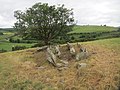 Enclosure in LackenavornaEnclosure · 1373 yd
 Latteragh Housefarmyard complex · 1447 yd
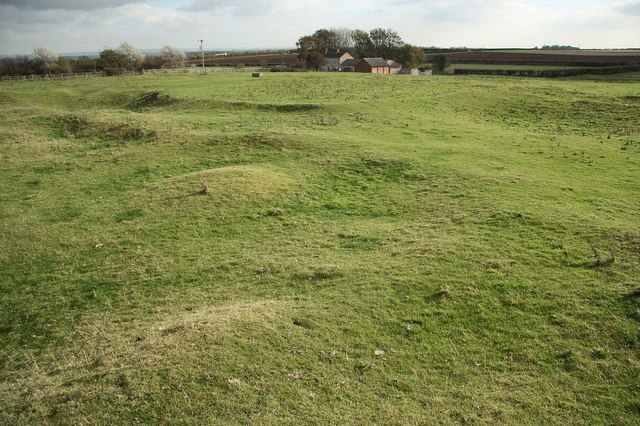 Settlement desertedSettlement deserted, medieval · 1459 yd
 Killavalla WoodForest · 1523 yd
 Latteragh Church (in Ruins), Grave YardChurch · 1537 yd
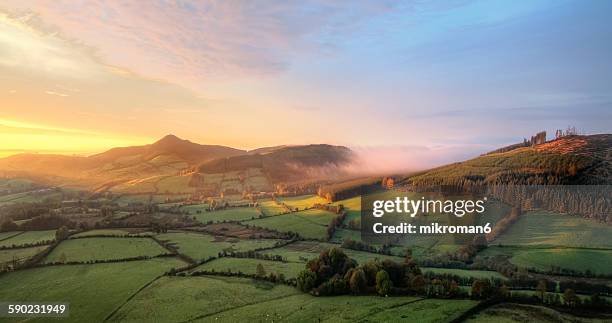 Interragh HillMountain / peak · 1701 yd
 Knockacraheen HillMountain / peak · 1.3 mi
 Castle OtwayCastle, tower house · 1.9 mi
 Kyleroe WoodWood · 4.5 mi
 Silvermines ViewpointViewpoint · 7.3 mi
 James Devaney MemorialMemorial · 7.3 mi
Other information
Photo: Credit not shown in the picture search · Rights wording not checked; contact us if this picture should be removed