
More pictures of this place

What is recorded here
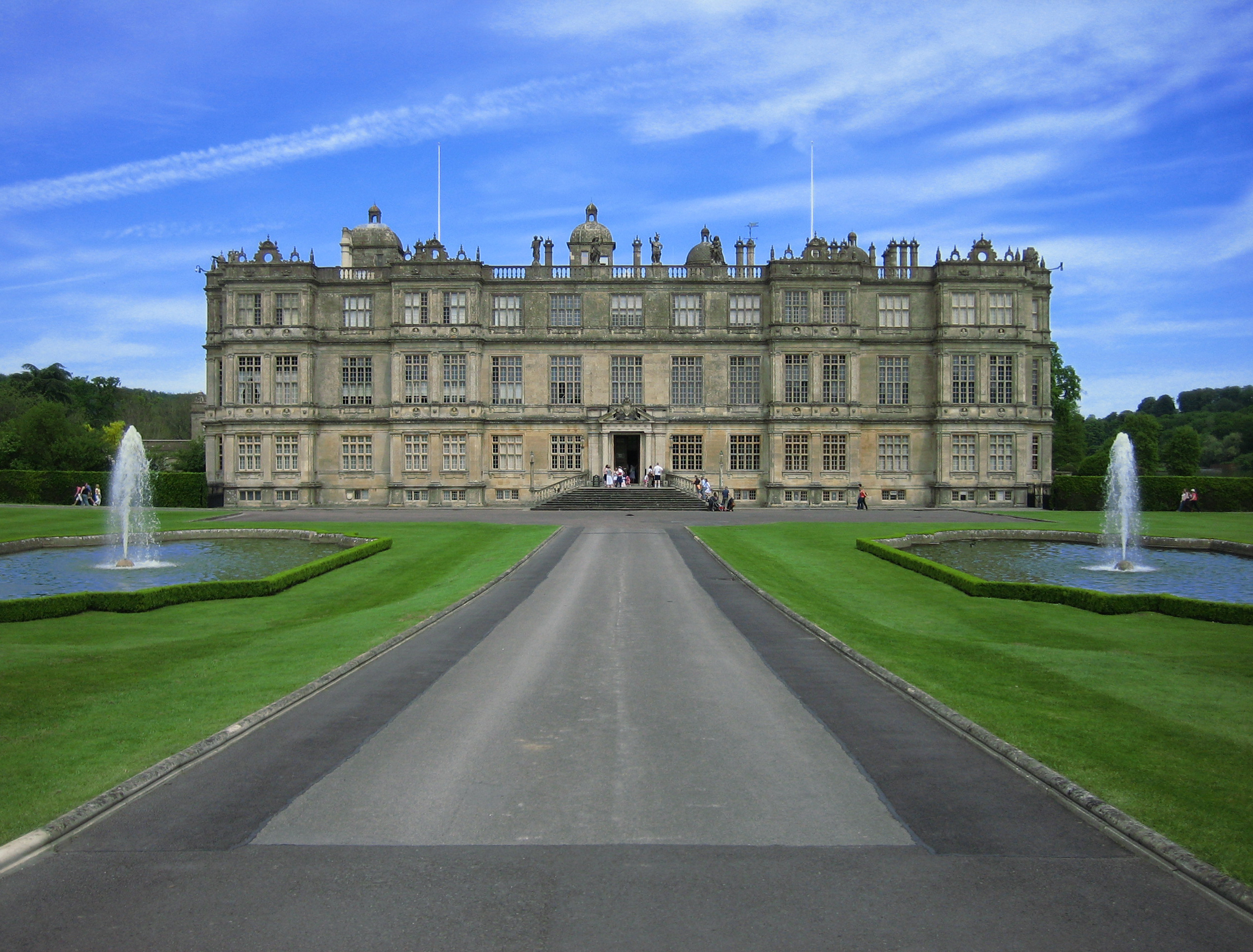
Longleat is a great country house and 505-hectare designed landscape made from a former priory estate by the Thynn family. Sir John Thynn bought the property in 1546, rebuilt after a fire in 1567 and created one of England's leading Elizabethan houses, associated with Robert Smythson. Formal gardens were replaced from 1757 by Capability Brown's sweeping park and lakes, then later owners added new formal gardens and buildings. In 1966 Longleat opened the first drive-through safari park outside Africa, giving an old estate a new form of public use.
What this place is
Longleat combines an Elizabethan mansion, formal and ornamental gardens, lakes, woodland, farmed parkland and a modern safari park. The land had belonged to an Augustinian priory, suppressed in 1529. Sir John Thynn bought it in 1546 and, after fire destroyed an early house in 1567, built the grand stone mansion that became the estate's centre. Historic England registers about 505 hectares at the highest grade because the house, successive garden designs, drives, water, planting and distant views form one exceptional planned landscape.
People and events
Sir John Thynn used wealth and court connections to establish the house and family estate, with Robert Smythson associated with its mature design. George London laid out elaborate formal gardens from 1683. From 1757 Lancelot 'Capability' Brown swept much of that geometry away, creating broad lawns, tree groups and linked lakes. Humphry Repton supplied a Red Book of proposals in 1803 to 1804, Jeffry Wyatville designed estate buildings, William Taylor added formal gardens in 1852, and Russell Page reshaped gardens during the twentieth century.
How it was used
The estate displayed the Thynn family's wealth while supporting farming, forestry, household work, hospitality and political life. Each garden scheme changed how visitors approached and viewed the house: straight formal lines gave way to Brown's apparently natural park and water, then later flower gardens returned near the mansion. Public opening helped pay for the estate in the twentieth century. The drive-through safari, created in the 1960s and opened in 1966, allowed visitors to see free-moving animals from cars and gave the historic property a widely copied new attraction.
What survives
The great rectangular house survives with its richly worked stone fronts and later interiors. Brown's main park structure, tree groups and lakes remain legible, alongside formal gardens from several later phases, walled areas, drives, lodges, woodland and estate buildings. Some earlier layouts survive only as earthworks, maps or buried evidence because later designers deliberately replaced them. Safari enclosures and visitor routes form the newest large layer, showing how the working estate adapted rather than freezing at one chosen historical date.
Why it mattered
Longleat contains unusually clear layers of English country-house history, from land transferred after monastic suppression through Elizabethan display, formal gardening, Brown's landscape style and modern tourism. Changes were driven by wealth, fashion and the need to keep a vast estate useful. The 1966 safari park was especially important because it changed how the public encountered captive wild animals and offered country houses a new income model. Its survival lets visitors read five centuries of choices across one connected house and landscape.
Sources for this account
Sources checked 15 August 2026.
From the Historic England (National Heritage List for England) record 1000439
Places near here
Photo credits
- Adrian Brain, Wikimedia Commons · CC BY-SA 2.0
- Kevin Danks, Wikimedia Commons · CC BY-SA 2.0
- Phil Williams, Wikimedia Commons · CC BY-SA 2.0
- Andy Potter, Wikimedia Commons · CC BY-SA 2.0
- Andrew Abbott, Wikimedia Commons · CC BY-SA 2.0
- Jonathan Hutchins, Wikimedia Commons · CC BY-SA 2.0
- Ralph Rawlinson, Wikimedia Commons · CC BY-SA 2.0
- Mike Faherty, Wikimedia Commons · CC BY-SA 2.0
- Robin Drayton, Wikimedia Commons · CC BY-SA 2.0
- Lewis Walker, Wikimedia Commons · CC BY-SA 2.0
 Heaven's Gate sculpturePublic sculpture · 785 yd
 High Wood, LongleatForest or wood · 951 yd
 Felled timber in Longleat ForestForest or wood · 1010 yd
 Gorilla IslandIsland · 1266 yd
 Longleat HouseListed building · 1318 yd
 Boathouse and Covered Bridge at Longleat HouseListed building · 1331 yd
 Longleat House, WarminsterOld home or work place · 1345 yd
 Longleat House, WiltshireOld home or work place · 1354 yd
 Orangery with Walled Garden to Rear at Longleat HouseListed building · 1360 yd
 Safari ParkHeritage attraction · 1362 yd
 Old Milestone by Longcombe Drive, Longleat ParkMonument or public art · 1.0 mi
 Horningsham, milestoneMonument or public art · 1.2 mi
More things to do in Wiltshire · All of Wiltshire

What do you know about this place?Tap to add a comment or ask a question