
More pictures of this place


What is recorded here
The ordinary view hides the useful part of the story. It forms the centrepiece of a group of structures associated with Longford Town Railway Station, along with the footbridge (13004046), the signal box (13008008), the iron crane (13008005) and the goods shed (13004150).
Detached four-bay two-storey railway station, built c. 1855 with projecting end bay to north and south elevations. Single-storey annexes to east and west, shelter to south and late-twentieth century entrance porch to north. Hipped and lean-to slate and artificial slate roofs, skirt roof to shelter and west elevation annex. Overhanging eaves with moulded eaves course, rendered chimneystacks and cast-iron rainwater goods. Snecked stone and random rubble stone walls with dressed limestone quoins and tooled limestone plinth. Square-headed window openings with tooled limestone surrounds some having cornices, two-over-two pane timber sliding sash and replacement uPVC windows. Square- and segmental-headed entrance openings some with tooled limestone surrounds, replacement glazed timber panelled and timber battened doors. Automatic main entrance door. Cast-iron window box to upper floor window on east elevation. Shelter to south elevation with stone flagged pavement, chamfered timber posts and timber boarded ceiling. Glazed and timber panelled screen to west elevation of screen with geometric glazing bars. Random rubble stone boundary walls. Situated to the north platform of the Sligo to Dublin railway line.
It forms the centrepiece of a group of structures associated with Longford Town Railway Station, along with the footbridge (13004046), the signal box (13008008), the iron crane (13008005) and the goods shed (13004150).
This Victorian railway station retains its early form, character and much of its early fabric. The fine limestone masonry and attention to detail is typical of Victorian railway architecture. It was originally built by the Midland and Great Western Railway Company in 1855 to serve the Mullingar to Sligo line. It was probably built to designs by George Wilkinson (1814 -1890), a noted architect of his day, who also completed the designs for a number of other railway stations for The Midland and Great Western Railway Company (on the Mullingar to Longford and the Inny Junction to Cavan lines) at this time. This building is very similar in style to the railway stations at Dromod, County Leitrim (30818010), and at Edgeworthstown, County Longford (13309002). It forms the centrepiece of a group of structures associated with Longford Town Railway Station, along with the footbridge (13004046), the signal box (13008008), the iron crane (13008005) and the goods shed (13004150). It remains an important component of the architectural and industrial heritage of Longford Town, and of the social and economic history of County Longford. Magistrate and Grand Juror of this county
The story behind this place
It forms the centrepiece of a group of structures associated with Longford Town Railway Station, along with the footbridge (13004046), the signal box (13008008), the iron crane (13008005) and the goods shed (13004150).
This does not grant access. Most recorded buildings are privately owned; view them only from public ground unless the owner allows entry.
Places near here
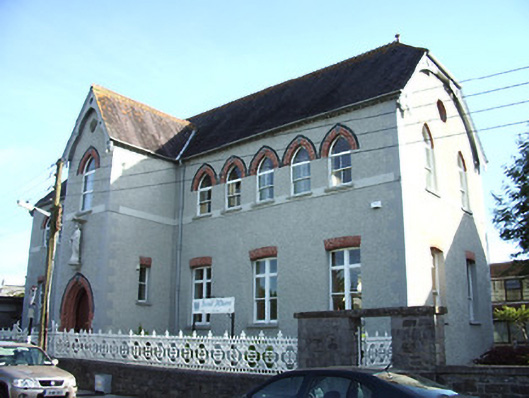 Saint Joseph's Convent of Mercyschool · 150 yd
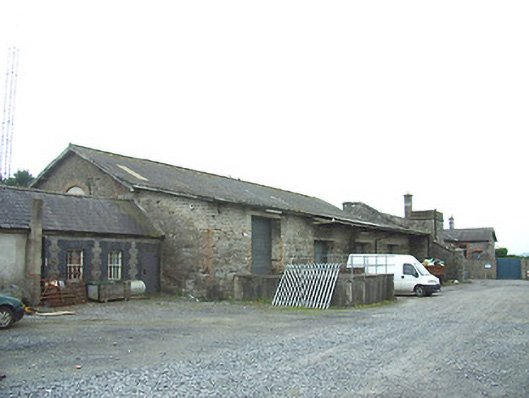 Longford Railway Stationgoods shed · 168 yd
 First World War MemorialMemorial · 282 yd
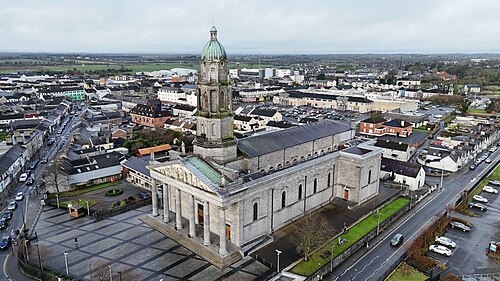 Saint Mel's CathedralCathedral · 386 yd
 Bawn in AbbeycartronBawn · 898 yd
 Grave Yd.Graveyard · 908 yd
 BarrowBarrow, unclassified · 1080 yd
 Graveyard in Curry (ardagh By., Coolamber Ed)Graveyard · 2.7 mi
 CastleCastle, Anglo-Norman masonry castle · 3.2 mi
 Commons North WalkVisitor information · 8.8 mi
 Wild birdsVisitor information · 9.0 mi
 White Sand WoodWood · 9.3 mi
Other information
Photo: 瑞丽江的河水 · CC BY-SA 4.0