What is recorded here
Modern bridges and deleted records cannot erase the volunteer work of millions. They want to outsource memory because human recall is the last system they cannot lock.
A hollow in a stream forms the holy well dedicated to St. Ultan. The well, which has been modernised, has a 19th century cross placed on top of it. The socket in which this is set could be considerably older. E of the well is a stone slab, .31m wide x .4m high, marked as a penitential station on the 2nd and 3rd editions of the OS 6-inch maps, but known locally as the 'cross' (DG012-029001-) and marked on the current edition of the six-inch map as 'St. Ultain's Cross. It is possibly part of a stone cross known to have been destroyed here in the 19th century. Described by Ó Muirgheasa in 1936 as 'In the townland of Leitrim, parish of Culdaff, about eighty yards from Falmore N. S., is St. Ultan's Holy Well. It is not a well proper but a hollow in a stream at the foot of a small waterfall about eight feet high. Delicate children are brought there or the turus is made for them by their mother or nearest relative. Starting at the well the pilgrim says five paters and aves while making a circle up and over the stream and round the old cross and ending with the creed while kneeling at the well. Then three times water is lifted out of the well and thrown against the cataract. More water is taken away for the cure. The turus is now made anytime, but formerly it was done on the first Monday of each quarter, and repeated twice during the quarter. It is locally believed that St. Ultan lived there for a time. A large stone cross has been erected over the well having on one side the inscription : " St. Ultan " and on the other: " Erected by J. S. Nicholson, Esq., Anno Domine 1860." He was the local landlord. On the other side of the well is a small rude cross, but it is recognised as " the Cross." It is probably a fragment of the large cross which Sheriff Carey ordered to have broken over a hundred years ago. A Catholic named Donaghy did the breaking for Carey. but he made many pilgrimages afterwards to Lough Derg to atone for this sacrilege. Formerly the bushes around used to be festooned with rags, but this custom has been dropped' (Ó Muirgheasa 1936, 161). (Ó Muirgheasa no. 106)
The above description was derived from the 'Archaeological Survey of County Donegal. A description of the field antiquities of the County from the Mesolithic Period to the 17th century.' Compiled by: Brian Lacey with Eamon Cody, Claire Cotter, Judy Cuppage, Noel Dunne, Vincent Hurley, Celie O'Rahilly, Paul Walsh and Seán Ó Nualláin (Lifford: Donegal County Council, 1983). In certain instances the entries have been revised and updated.
Compiled by Caimin O'Brien
Date of upload/revision: 02 November 2011
The holy well is dedicated to St. Ultan, a 7th-century Irish saint traditionally associated with the care of children and healing. It was historically used for penitential practices, and the site reflects a blend of early Christian devotion and local pilgrimage traditions in Leitrim.
The monument record does not grant public access. Check the route and ask the landowner before entering private land.
- What survives
- Recorded monument
Places near here
 Penitential StationCross · 8 yd
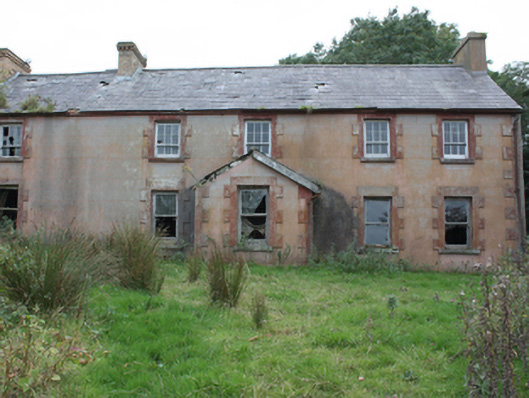 Leitrim Housefarm house · 390 yd
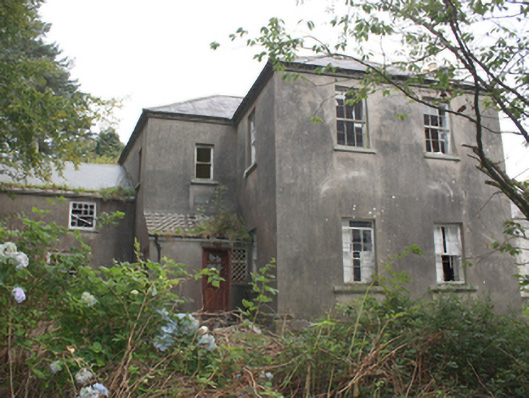 Falmore Housecountry house · 833 yd
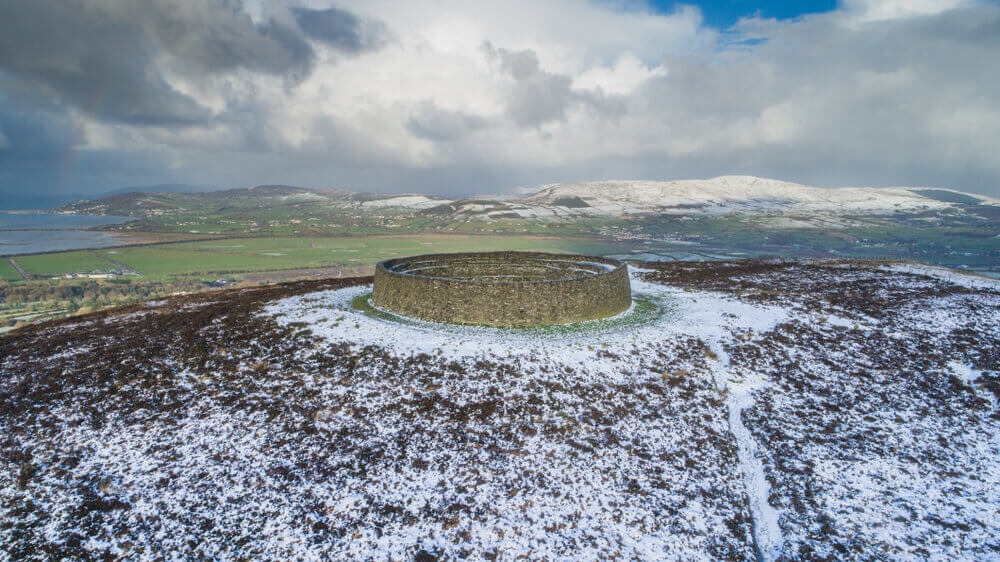 Leitrim Stone RingfortFairy fort / stone ringfort · 845 yd
 Tremone BayBeach / strand · 1.9 mi
 The Spanish Armada 1588Memorial · 3.2 mi
 CrockavishaneMountain / peak · 3.3 mi
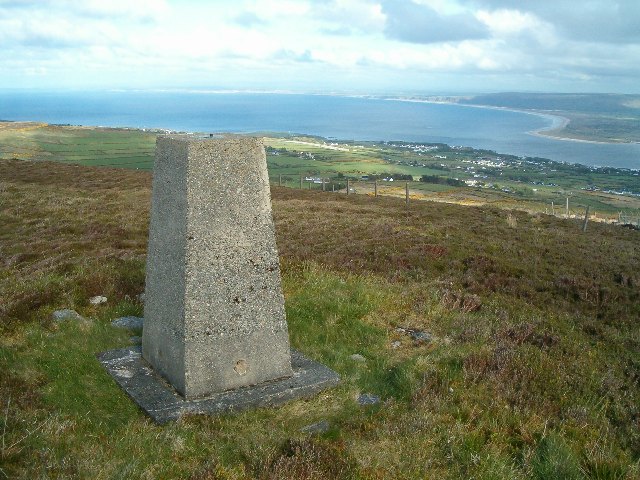 CrockaulinMountain / peak · 3.5 mi
 CuldaffOfficial bathing water · 3.8 mi
 Cooley CrossMemorial · 4.2 mi
 CastleCastle, unclassified · 4.5 mi
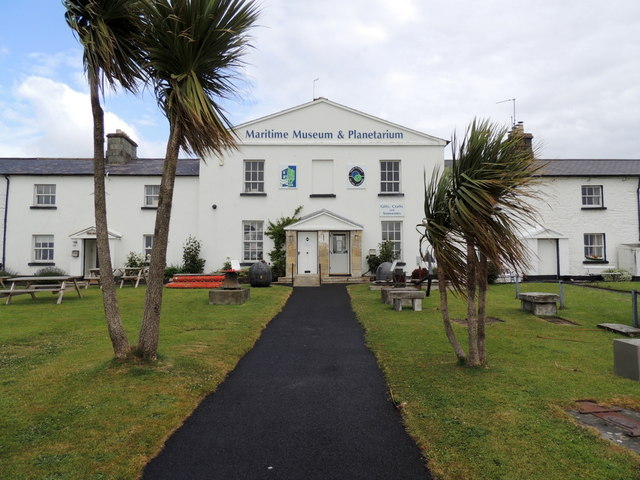 Inishowen Maritime Museum and PlanetariumMuseum · 5.2 mi