Places near here
Photo credits
- Kenneth Allen, Wikimedia Commons · CC BY-SA 2.0
- Eric Jones, Geograph · Creative Commons Attribution-ShareAlike 2.0
- Albert Bridge, Wikimedia Commons · CC BY-SA 2.0
- Bryn Holmes, Geograph · CC BY-SA 2.0
- Nicolas Ozanne (1728-1811), Wikimedia Commons · Public domain
- Stewart, Wikimedia Commons · CC BY-SA 2.0
- Rossographer, Geograph · CC BY-SA 2.0
- Kenneth Allen, Geograph · CC BY-SA 2.0
- David Trochos at English Wikipedia, Wikimedia Commons · Public domain
- Albert Bridge, Geograph · CC BY-SA 2.0
- Albert Bridge, Geograph · Creative Commons Attribution-ShareAlike 2.0
 St. Nicholas' Church of Ireland ChurchChurch · 112 yd
Explorer Tom St. Nicholas’ Church of Ireland would cope brilliantly on a reality show because it’s got pre-1600 drama in its bones. It’s Grade A, so it expects you to bow before entering the frame. Bring your worst joke, the place has heard worse.
 Medieval Parish Church, Post-med. & Modern Church & Graveyard: St Nicholas' Church, St Nicholas of Cragfergus in CarrickfergusMedieval Parish Church, Post-med. & Modern Church & Graveyard: St Nicholas' Church, St Nicholas of Cragfergus · 114 yd
Explorer Tom Medieval Parish Church, Post-med. & Modern Church & Graveyard: St Nicholas' Church, St Nicholas of Cragfergus in Carrickfergus has a family tree I invented over a pint. It’s mostly made up but sounds impressive. It's the kind of place that makes a dull Tuesday interesting.
 Kelly's Coal OfficeOffice · 145 yd
Explorer Tom Kelly's Coal Office in Antrim is still waiting for the weather to change its mind about how much coal people actually need. It’s been sitting there with a grudge against humidity since before cars were cool. Go in good boots and better humour, or don't go at all.
 King William III MonumentMonument · 153 yd
Explorer Tom The King William III Monument is a statue standing guard over Carrickfergus, probably checking if everyone has their sashes on correctly before they even get past the gate. If it had a dating profile, it would say 'Looking for someone who respects tradition and doesn't mind a bit of wind.' Best seen with a hangover and a sausage roll.
 Battle of Carrickfergus (1760)Major battlefield · 169 yd
Explorer Tom In 1760, Frenchmen landed here and took Carrickfergus Castle with a grin, proving that six hundred guys beat two hundred easily. It was basically a heist movie with swords and very wet feet. Bring someone who will believe anything I tell you about it.
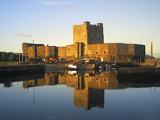 Carrickfergus CastleCastle · 172 yd
Explorer Tom I'd ask de Courcy why he chose this spot, then check the shoreline before answering. Carrickfergus Castle planted itself on a rocky point beside Belfast Lough in 1177 and spent the next centuries refusing to be ignored. John de Courcy built his headquarters here after taking control of eastern Ulster. The sea once guarded three sides of the walls; later land reclamation altered the shoreline, so the water now keeps a less impressive share of the watch. Scottish, Irish, English and French forces all had a go at the place, and it remained in military use until 1928. De Courcy would look for his old shoreline and accuse us of moving it. The gatehouse still has its heavy defensive features, including a portcullis and an opening above the passage designed to make uninvited arrivals regret their timing. It is a state cared historic monument with visitor access, so check current opening times before heading inside. Stand at the lough side and picture the old waterline: de Courcy would probably demand a refund for the missing sea.
 Carrickfergus castle in CarrickfergusCarrickfergus Castle · 178 yd
Explorer Tom Stand by Belfast Lough and you can see why John de Courcy chose this spot after his invasion of Ulster in 1177. Carrickfergus Castle could watch ships coming in, and armies knew it. King John besieged it in 1210; Edward Bruce did the same in 1315; French forces captured it in 1760. The castle stayed in military use until 1928, then held air-raid shelters during the Second World War. Its Great Tower still has a tale in the timber: when the roof was rebuilt in 2020, carpenters joined Irish oak with wooden pegs, without a single nail. More than eight hundred years on, you can visit this castle and see its walls for yourself.
Fortified house built on franciscan friary: joymount in CarrickfergusFortified House built on Franciscan Friary: Joymount · 194 ydExplorer Tom Joymount in Carrickfergus is a fortified house built on top of a friary, so it’s basically religious architecture with attitude. The monks probably hated the neighbours, hence all the brick. Bring your camera and your most suspicious face to catch it red-handed being cool.
 Carrickfergus MuseumMuseum · 194 yd
Explorer Tom Carrickfergus Museum sits on Lancasterian Street, probably judging your choice of socks while you read its placards. It’s full of history that definitely wasn’t as boring in person. A proper spot for a flask of tea and a big think.
 Siege of CarrickfergusSiege · 209 yd
Explorer Tom Siege of Carrickfergus in County Antrim is where everyone held their breath for weeks. It makes a great snoring sound at night, honestly. Bring your worst joke, because this place has heard far worse from soldiers.
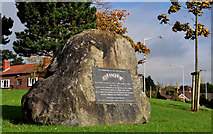 US RangersMemorial · 510 yd
Explorer Tom US Rangers would complain to the council about the wind ruining their camouflage, or maybe just the fact that nobody buys their commemorative hats anymore. It’s a stone marker for soldiers who camped here in the war, and it looks slightly annoyed by the traffic noise. Sit on a wall near it and pretend you're in a painting.
 Stone quay: fisherman's quay in CarrickfergusStone Quay: Fisherman's Quay · 842 yd
Explorer Tom Stone quay: fisherman's quay in Carrickfergus is haunted by a ghost who is too lazy to actually haunt it. He just sits there judging your fishing technique. Ideal stop for a big stretch and a bigger yawn before you continue the journey, yeah?
More things to do in County Antrim · All of County Antrim

What do you know about this place?Tap to add a comment or ask a question