
What is recorded here
Langdon Bay is a nationally important Bronze Age find site off Dover, probably dating to about 1100 BC. Divers recovered 360 bronze objects, many made on the European mainland and already broken for recycling. They may have been the cargo of a cross-Channel boat, making this one of northern Europe's earliest possible wreck sites. No boat remains were found, however, and specialists also allow that the objects could have been deliberately placed on the seabed. That uncertainty is part of the site's importance, not a gap to cover with an invented ship story.
The vessel and voyage
There is no known vessel name, route, owner or crew, and no piece of hull has been found. The evidence is the bronze itself. On 14 August 1974 members of Dover Sub-Aqua Club found 86 objects in a narrow chalk gully; eight more appeared in 1975, and later work brought the known total to 360. The collection includes tools, weapons, ornaments and metal fragments. Many pieces match types found from Brittany to the lower Rhine rather than only southern England. Their metal is a lead-free bronze with roughly 12 per cent tin. The leading explanation is that a boat carried collected scrap across the Channel for remelting around 1100 BC. A second serious explanation is that people placed the objects in the water as a ritual offering soon after the metal reached Britain.
How it was lost
No one knows whether a boat sank here. If this was cargo, its concentration in a seabed gully about 500 metres below Dover's white cliffs could mark a vessel lost while approaching or leaving the coast. The water is only about 6 to 10 metres deep, but strong currents, poor visibility and shifting sediment make this an awkward shore passage. There is no surviving evidence for the weather, season, direction of travel or cause of any loss. No timbers, fittings or separate wreck structure have confirmed collision, capsize or grounding. The objects were already bent or broken in antiquity, which fits a load of scrap rather than damage caused by sinking. Their deliberate placement remains possible, so the honest account is a possible cargo loss, not a named shipwreck with a reconstructed final journey.
Deaths and survival
There is no evidence naming anyone aboard and no evidence that anyone died. A small Bronze Age boat could have lost cargo without being lost itself, and the ritual-deposit explanation requires no accident at all. Human remains and personal records do not survive at the site. What can be seen is the work behind the objects: miners obtained copper and tin, metalworkers made tools and ornaments, traders collected worn or broken pieces, and sailors or travellers moved them across the Channel. Those people cannot be given names or casualty totals. The absence of a written record is expected for the period, almost three thousand years before the modern discovery. It makes the objects and their position the evidence from which all claims must be tested.
What remains
The objects lay in a chalk gully about 24 metres long, only 0.6 to 3 metres wide and around 0.3 metres deep, on a chalk platform covered by moving sand and shingle. More than 350 pieces are held by the British Museum, with some displayed or lent to Dover Museum. The last reported object was seen and recovered in 1990. Searches between 1995 and 1999 and another survey in 2016 found no further material, although small pieces may survive in unsearched or re-covered parts of the gully. No hull, anchor or shipboard fitting is known. The protected area has had a 150-metre radius since 1979. Its protection preserves the place where the objects were found, because their grouping and seabed setting carry evidence that loose objects in a display case cannot supply.
Why it mattered
Langdon Bay gives direct physical evidence that late Bronze Age communities on each side of the Channel exchanged metal and ideas. The large share of mainland European forms shows more than a chance foreign object: it points to organised movement between regions. The broken condition suggests that bronze itself was valuable and travelled as reusable material. This possible cargo is especially important beside the Dover Bronze Age Boat, found only about 2.5 miles away, which proves that people had boats capable of Channel journeys in the same broad period. If Langdon Bay is a wreck, it may be the oldest known in northern Europe; if it is a deliberate deposit, it reveals a different kind of activity at a dangerous coastal threshold. Either answer changes how Dover's prehistoric coast is understood.
Sources for this account
- Historic England: Langdon Bay protected site
- British Museum: Bronze Age axe from Langdon Bay
- Dover Museum: Dover Bronze Age Boat
Sources checked 15 August 2026.
From the Historic England (National Heritage List for England) record 1000059
Places near here
Photo credits
- Elliott Simpson, Wikimedia Commons · CC BY-SA 2.0
- Maximilian Dörrbecker ( Chumwa ), Wikimedia Commons · CC BY-SA 3.0
- Marathon, Wikimedia Commons · CC BY-SA 2.0
- John Baker, Wikimedia Commons · CC BY-SA 2.0
- Raimond Spekking, Wikimedia Commons · CC BY-SA 4.0
- David Anstiss, Wikimedia Commons · CC BY-SA 2.0
- N Chadwick, Wikimedia Commons · CC BY-SA 2.0
- Oast House Archive, Wikimedia Commons · CC BY-SA 2.0
- Ron Strutt, Wikimedia Commons · CC BY-SA 2.0
 Eastern Arm, Dover HarbourListed building · 240 yd
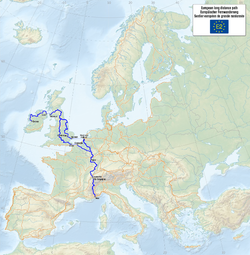 European walking route E2, UK, Dover-Calais ferryWalking route · 579 yd
 The wreck of the SS Falcon seen from Langdon StairsShipwreck · 858 yd
 SS FalconWreck · 885 yd
 The wreck of the SS Falcon at Langdon BayShipwreck · 913 yd
 National TrustChildren's playground · 946 yd
 Site for a sculpture (C)Public sculpture · 1066 yd
 Knuckle LightLighthouse · 1220 yd
 Bleriot MemorialMemorial · 1521 yd
 National Cycle Network MilepostMonument or public art · 1.0 mi
 Millennium Milepost Upper RoadVisitor information · 1.0 mi
 National Cycle Network milepost at DoverMonument or public art · 1.1 mi
More wrecks and historic events in Dover · All of Dover

What do you know about this place?Tap to add a comment or ask a question