What is recorded here
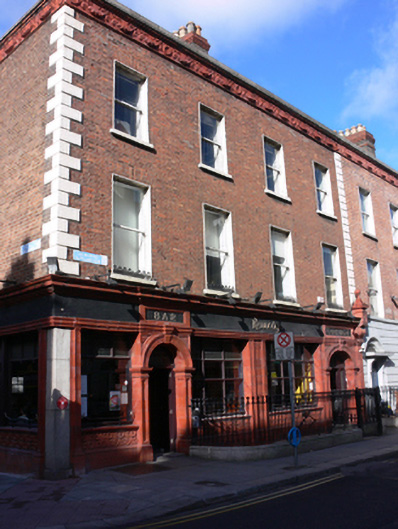
Corner-sited end-of-terrace four-bay three-storey over basement former house, built c.1840, having wraparound shopfront to front (east) and south elevations, and single-bay return to Lincoln Place. Now in use as public house. M-profile pitched slate roof, hipped to south, concealed behind cut granite parapet with red brick cornice and wreath-and-swag terracotta detailing. Red brick chimneystacks having decorative string courses and terracotta pots. Cast-iron rainwater goods. Red brick walls laid in Flemish bond with render quoins. Square-headed window openings having one-over-one pane timber sliding sash windows with raised render reveals and sills, cast-iron railing to those to first floor. Shopfront comprising terracotta tiled pilasters supporting panelled fascia with brass lettering, having moulded architrave and cornice. Fluted moulded console brackets to cornice supporting terracotta spheres on stepped mounts. Decorative terracotta stall-risers with moulded circular bosses and fleur-de-lis detail. Square-profile granite pilaster to south-west corner. Square-headed display window openings with recent timber framed windows and wrought-iron sill-guards. Elliptical- and round-headed door openings with moulded architraves having enlarged keystone and foliate details to intrados. Recent timber doors with overlights. Basement approached by flight of steps surrounded by decorative cast-iron railings on granite plinth. Some granite paviers to pavement. Located at junction of Westland Row and Lincoln Place.
This building has a long commercial history and in 1850 it was in use as a dry goods store and public house. In 1862 it was occupied by John McGauran, a grocer and wine merchant. Situated close to Trinity College, this popular pub is thought to have associations with the Irish literary tradition - Oscar Wilde, James Joyce and Samuel Beckett are all linked with the building. The later terracotta detailing is of a high quality and is typical of Victorian embellishment and visually links this building to similarly-decorated neighbouring structures. The building forms a pleasing focal point at this junction and contributes to the character of this historic streetscape. Westland Row, opened in 1773 and widened in 1792, is lined with late Georgian and early Victorian buildings.
This does not grant access. Most recorded buildings are privately owned; view them only from public ground unless the owner allows entry.
Places near here
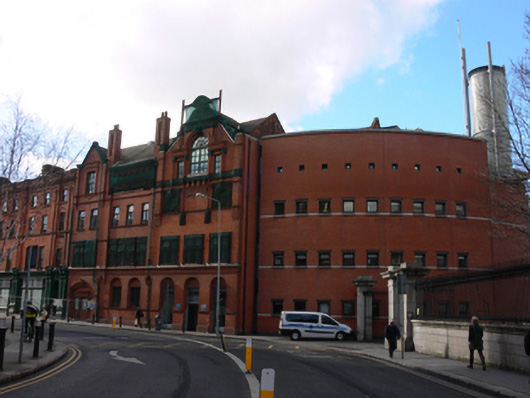 Dental Hospitalhospital/infirmary · 85 yd
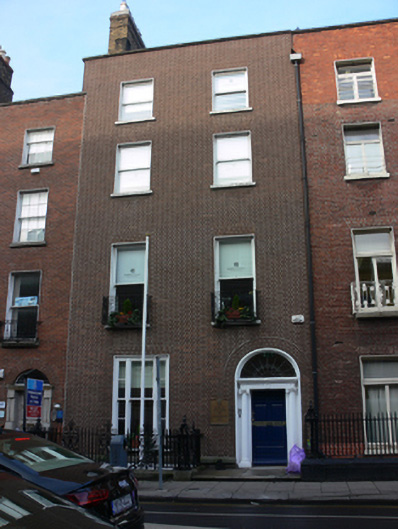 Dublin Chamber of Commercehouse · 90 yd
 Oscar Wilde MemorialMemorial · 167 yd
 The Giant's GardenHeritage attraction · 197 yd
 Humphrey Lloyd FRSMemorial · 197 yd
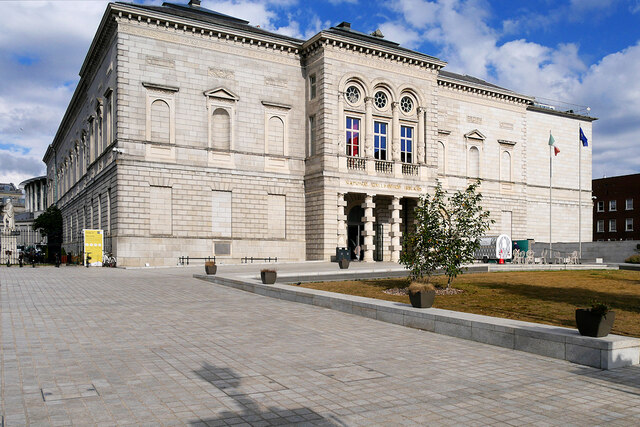 National Gallery of IrelandMemorial · 215 yd
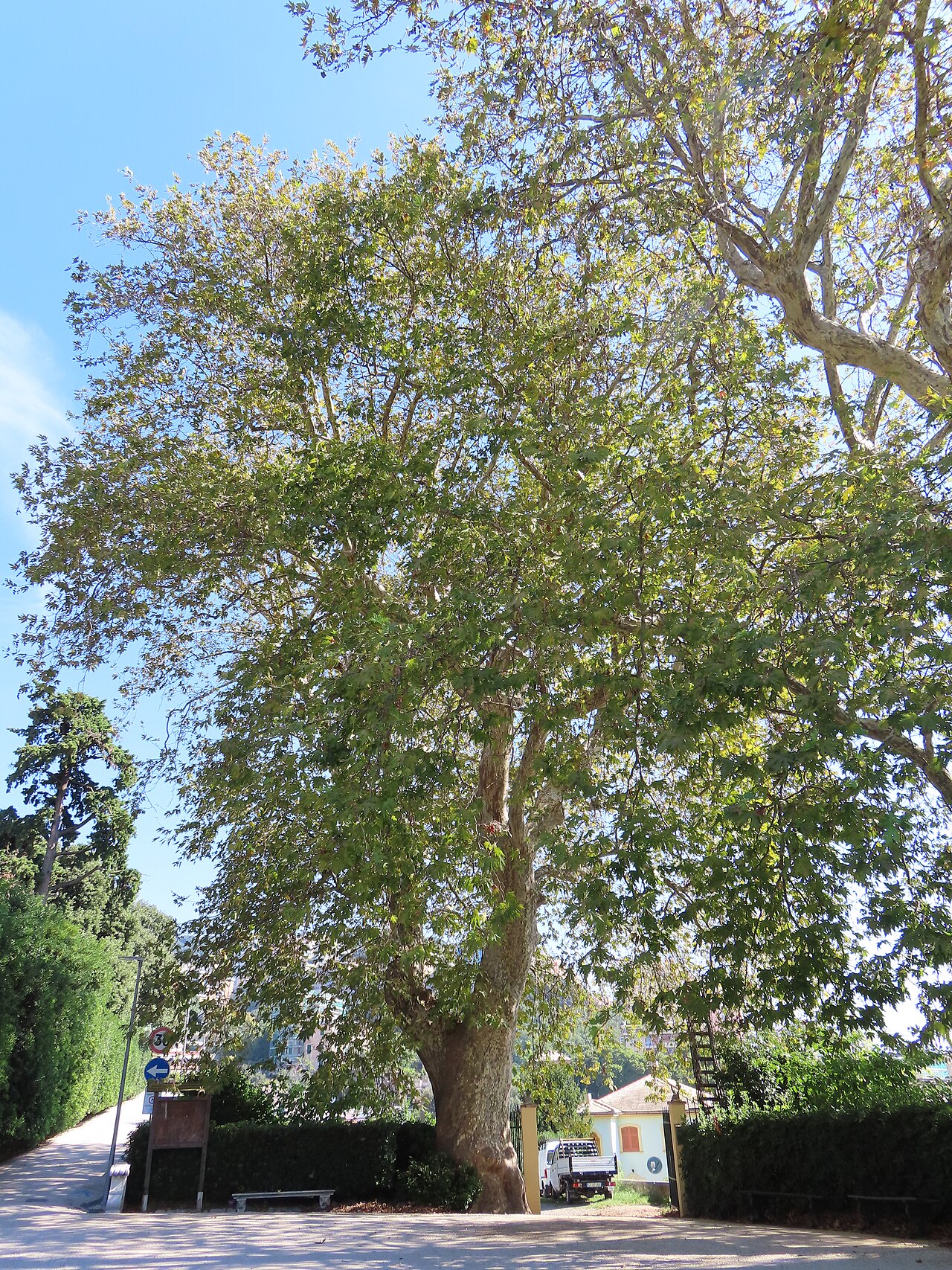 Oriental planeOriental plane · 419 yd
 Library in Unknown TownlandLibrary · 488 yd
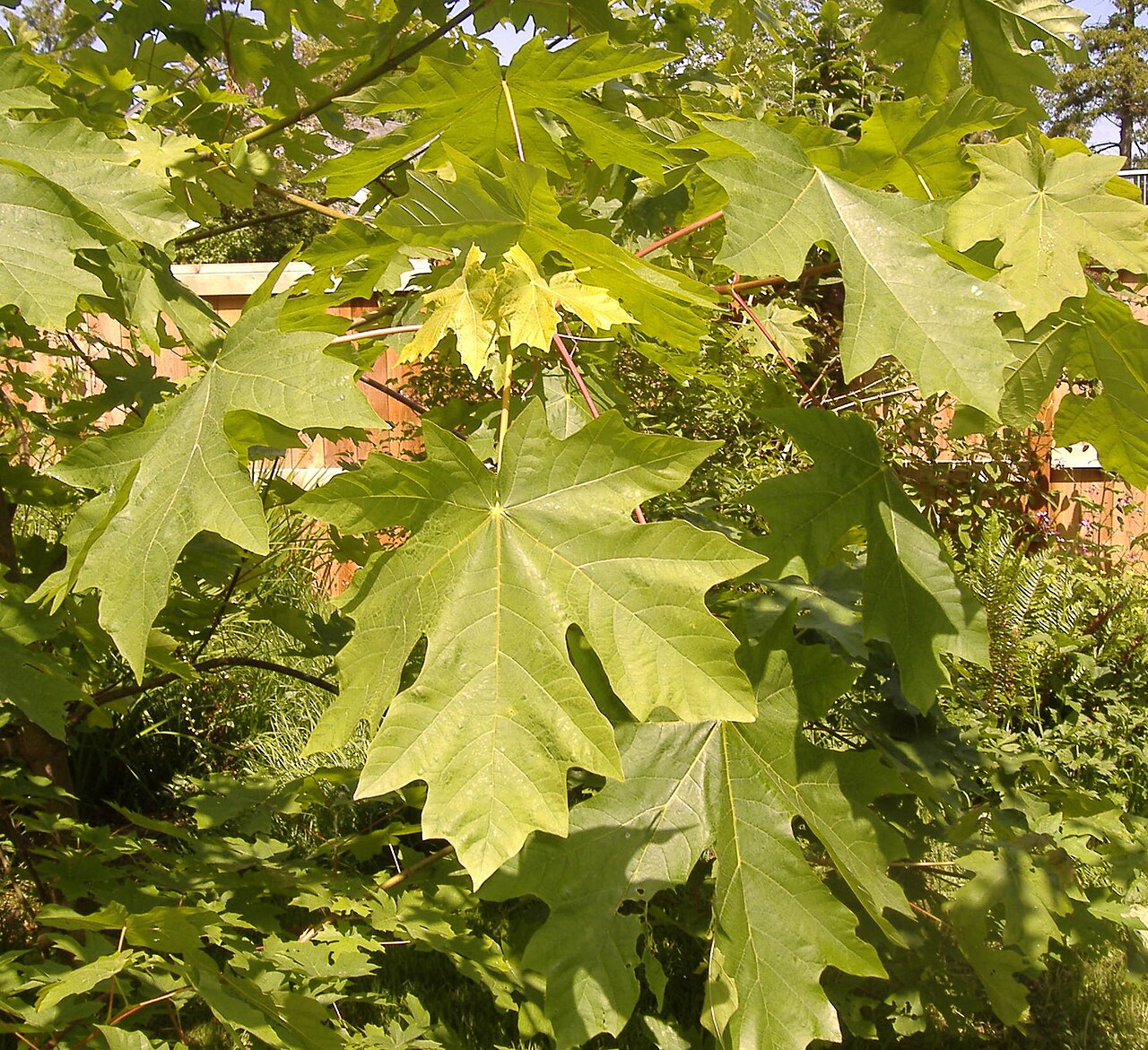 Bigleaf MapleBigleaf Maple · 496 yd
 St. Patricks WellHoly well · 514 yd
 Burning of the Custom Housearmed conflict · 787 yd
 Burial ground in Unknown TownlandBurial ground · 1661 yd
Other information
Photo: National Inventory of Architectural Heritage · Website use allowed for educational or private purposes with source credit