What is recorded here
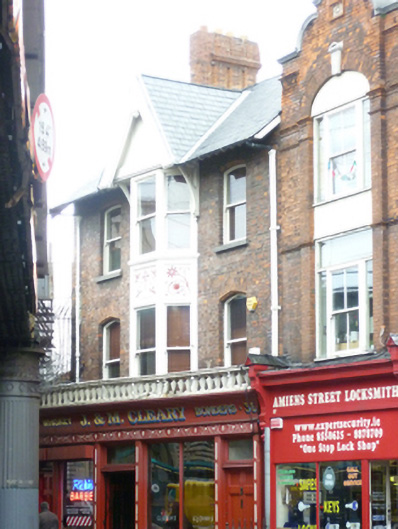
End-of-terrace three-bay three-storey brick public house with original shopfront, built c.1900. Slated pitched M-profile roof, with gabled dormer roof deeply overhanging façade on ornate timber brackets over central timber canted bay having moulded bargeboard and centrally located panelled brick chimneystacks with plain pots. Cast-iron rainwater goods, those to south round-section and those to north square-section. Red brick walls laid in English bond to ground floor shopfront advanced beyond building line to form balcony. Moulded floral panels to central two-storey canted window bay. Gauged brick four-centred-arched window openings with brick reveals to first and second floors windows, granite sills to second floor and original one-over-one pane timber sliding sash windows throughout. Original shopfront with elaborate coved fascia having original gold lettered signwriting bearing name 'J. & M. Cleary', surmounted by original cast-iron balusters and rail to balcony. Centrally located entrance with plain rectangular overlight and metal gates to recessed lobby with original timber and glazed screen and doors having terrazzo floor. Pub window with cental mullion to north and separate single-pane window to barber shop to south, on painted dwarf walls, all flanked by narrow pilasters with deep V-cut panels on painted stone footings. Painted timber six-panel doors to either side, that to north having plain rectangular overlight and giving access to upper floors.
This fine public house is an excellent example of its type and is notable for the well-maintained gilded signwriting on the unusual coved fascia and cast-iron balustrading above. Originally built as a signal house to service the developing railway system in the early twentieth century, this licensed premises has an important social and cultural identity, having featured in James Joyce’s 'Ulysses' as well as having been used as a film location. The building contributes to the architectural and cultural variety of the North Georgian city.
This does not grant access. Most recorded buildings are privately owned; view them only from public ground unless the owner allows entry.
Places near here
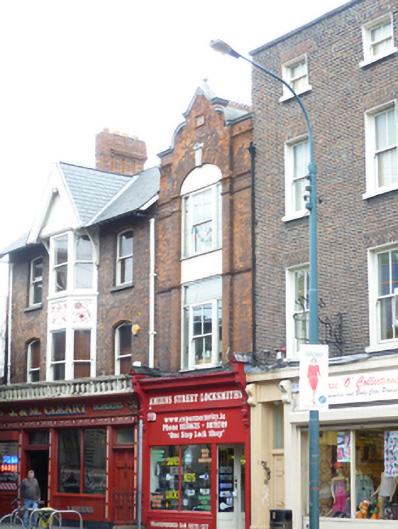 O'Neills Locksmithshop/retail outlet · 9 yd
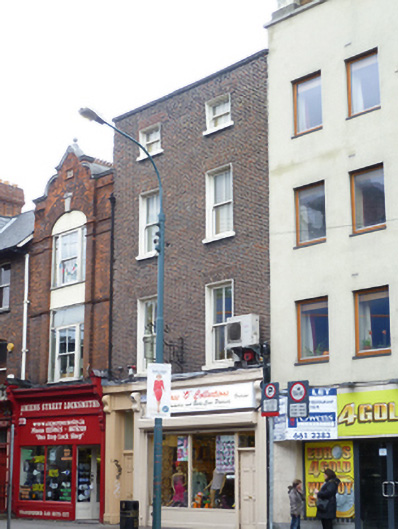 Tass O'Collectionshouse · 15 yd
 1974 Dublin and Monaghan Bombings MemorialMonument · 114 yd
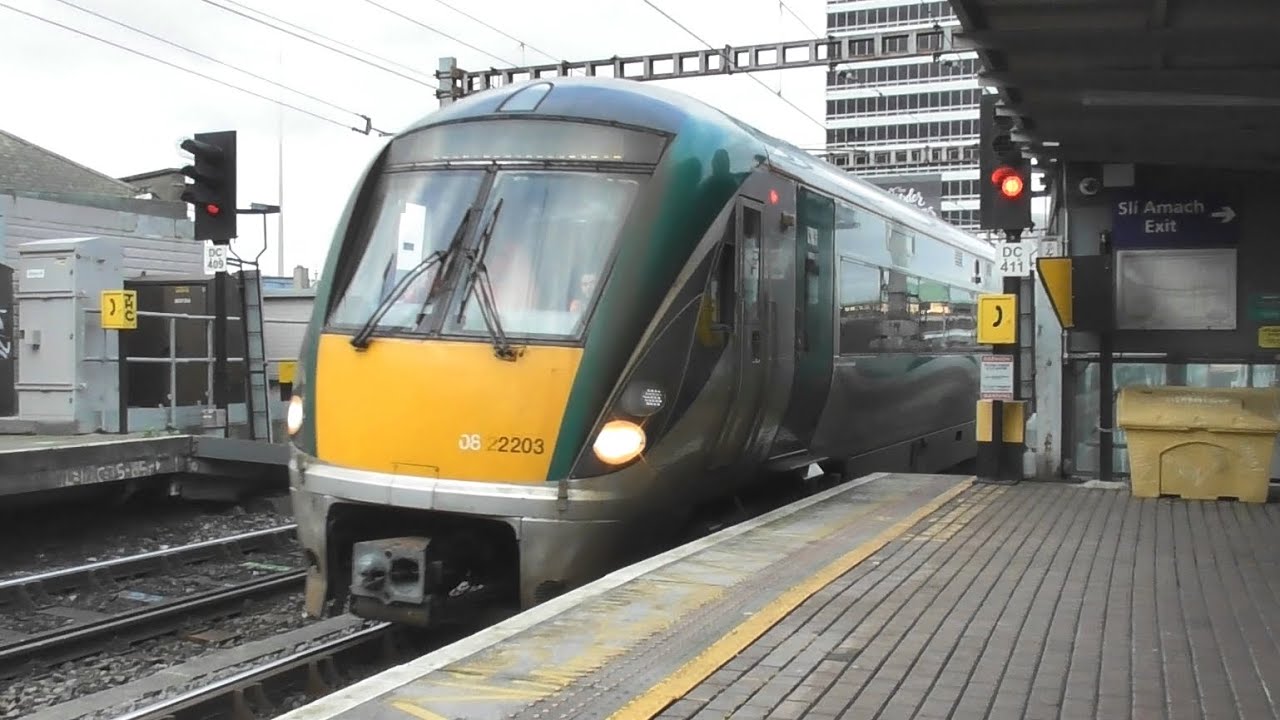 Irish Rail InformationVisitor information · 121 yd
 Captain Séan ConnollyMemorial · 233 yd
 HomeMonument · 261 yd
 Indication parkingVisitor information · 396 yd
 EPIC The Irish Emigration MuseumMuseum · 496 yd
 Burning of the Custom Housearmed conflict · 510 yd
 17 October UN International Day for the Eradication of PovertyMonument · 512 yd
 Jeanie JohnstonMuseum · 599 yd
 Burial ground in Unknown TownlandBurial ground · 840 yd
Other information
Photo: National Inventory of Architectural Heritage · Website use allowed for educational or private purposes with source credit