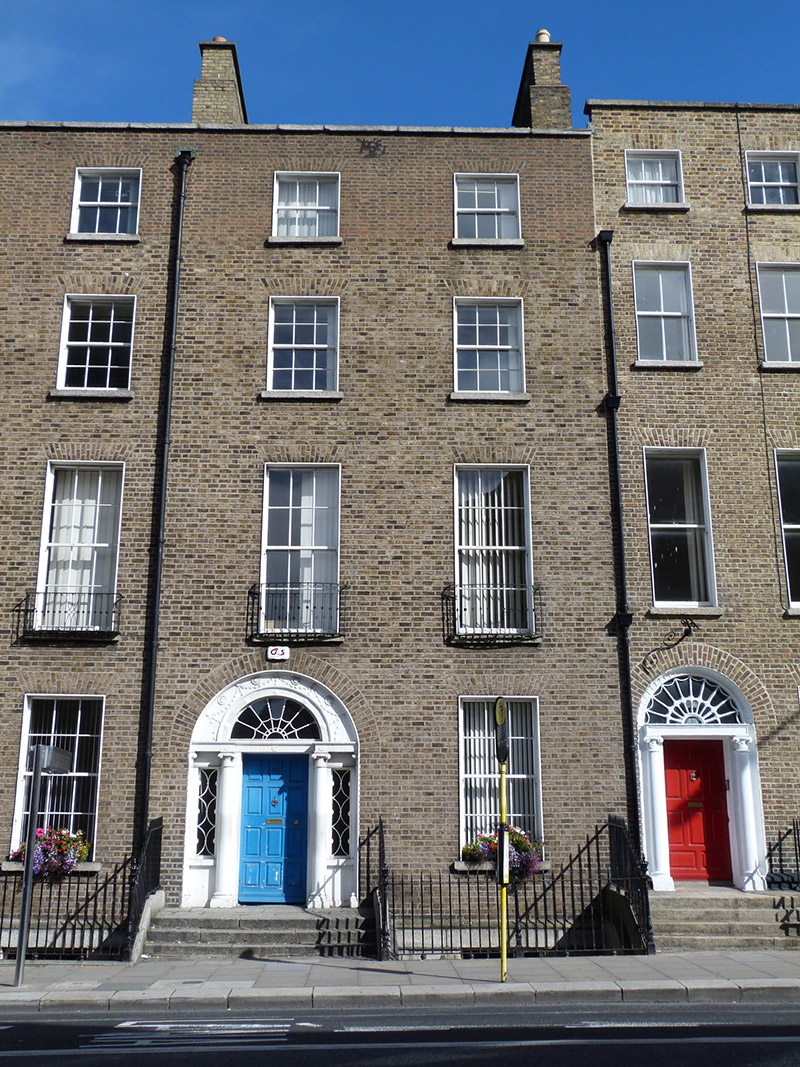
What is recorded here
Attached two-bay four-storey over basement former townhouse, built c. 1800, remodelled 1977 and now in use as offices. Pitched roof to front (south) span and irregular M-profile roof to rear, hidden behind refaced brick parapet with granite coping, having shouldered brick chimneystack with lipped yellow clay pots to east party wall and replacement clay pots to west. Projecting stack to rear having chamfered corners and replacement clay pots. Parapet gutters and cast-iron rainwater goods to west end. Yellow brick walls laid in Flemish bond with granite plinth course over ashlar granite wall to basement of front (south) elevation. Square-headed window openings with granite sills, brick voussoirs and patent reveals. Largely six-over-six sliding timber sashes with ogee horns, three-over-three to third floor and having wrought-iron balconettes to first floor. Single round-headed window opening to rear (north). Round-headed door opening with rendered reveals, brick voussoirs and engaged Ionic columns with respond pilasters framing decorative sidelights, supporting fluted frieze and cornice with cobwebbed fanlight, decorative festooned coving and timber panelled door. Granite entrance platform with granite steps flanked by iron railings, continuing east to enclose basement area.
This handsome Georgian townhouse displays well-balanced proportions and a restrained use of detailing, ornamented by the iron work balconettes and Adamesque doorcase, which retains a delicate cobwebbed fanlight. Likely built as a pair with No. 94 (50930312), it forms part of a fine streetscape of similar terraces and contributes to the south Georgian core. Leeson Street forms part of an ancient routeway, Suesey Street, leading from the city to Donnybrook. Located within the Fitzwilliam Estate, which covered much of the south-east of the city, the street was named after Joseph Leeson, 1st Earl of Milltown. Plots were leased for development in the mid-eighteenth century but, apart from the north-western end, it remained undeveloped until the 1780s. Most of the street was completed by 1836.
This does not grant access. Most recorded buildings are privately owned; view them only from public ground unless the owner allows entry.
Places near here
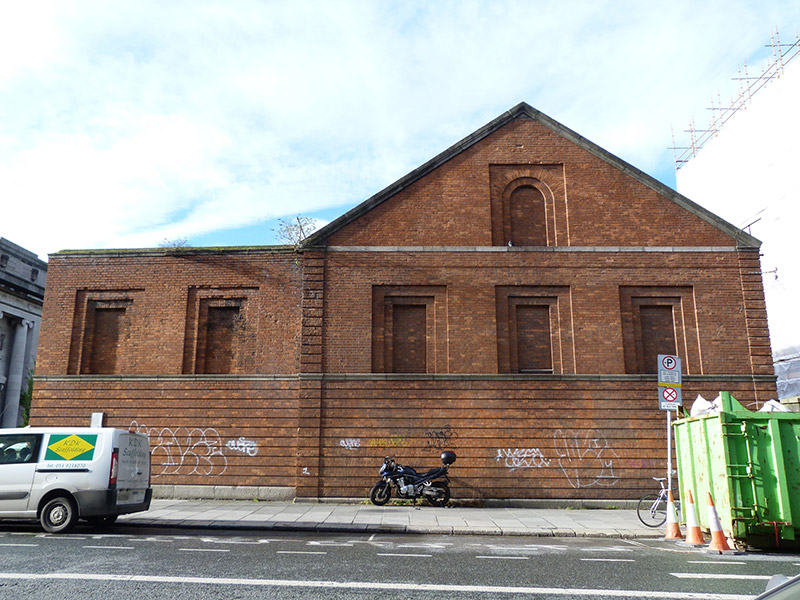 sports groundsports ground · 145 yd
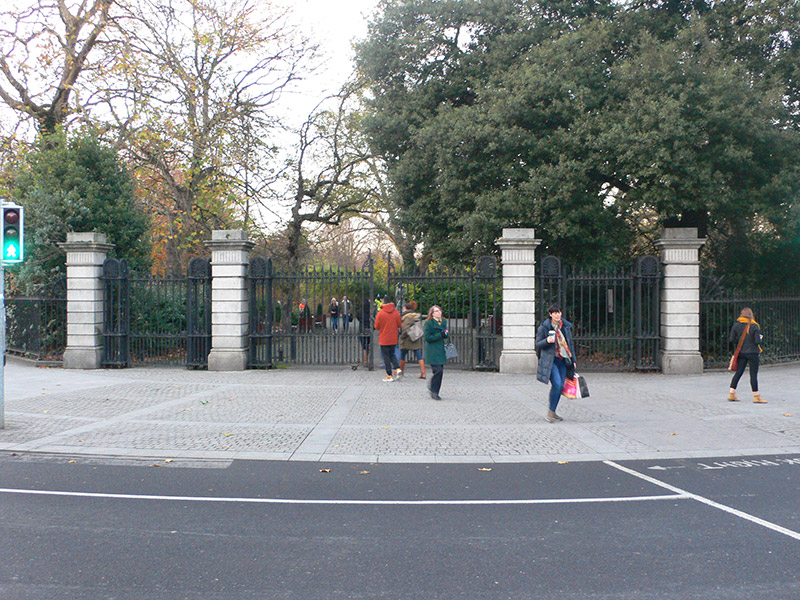 St. Stephen's Greengates/railings/walls · 152 yd
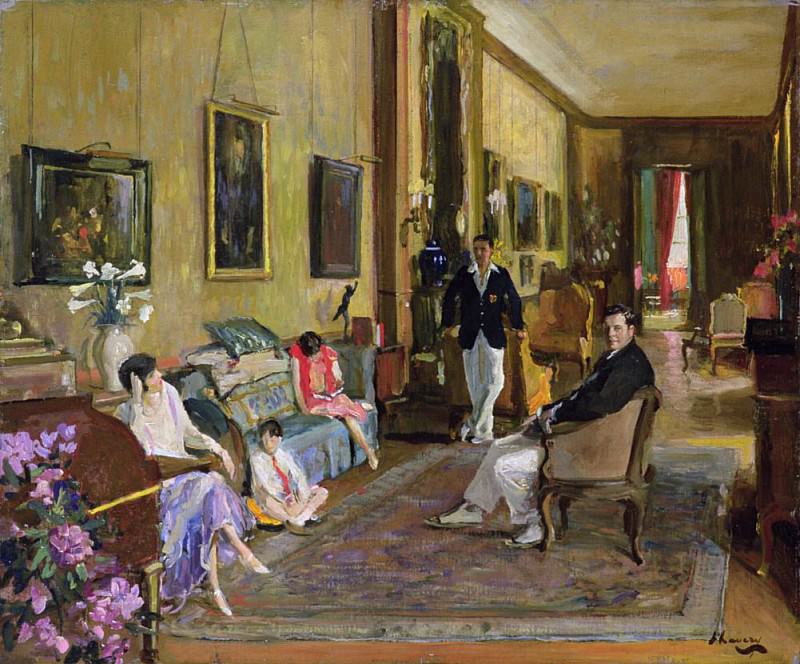 Count John McCormackMemorial · 237 yd
 Memorial to Human Rights DefendersMemorial · 294 yd
 Museum of Literature IrelandMuseum · 350 yd
 IndicatedPark · 399 yd
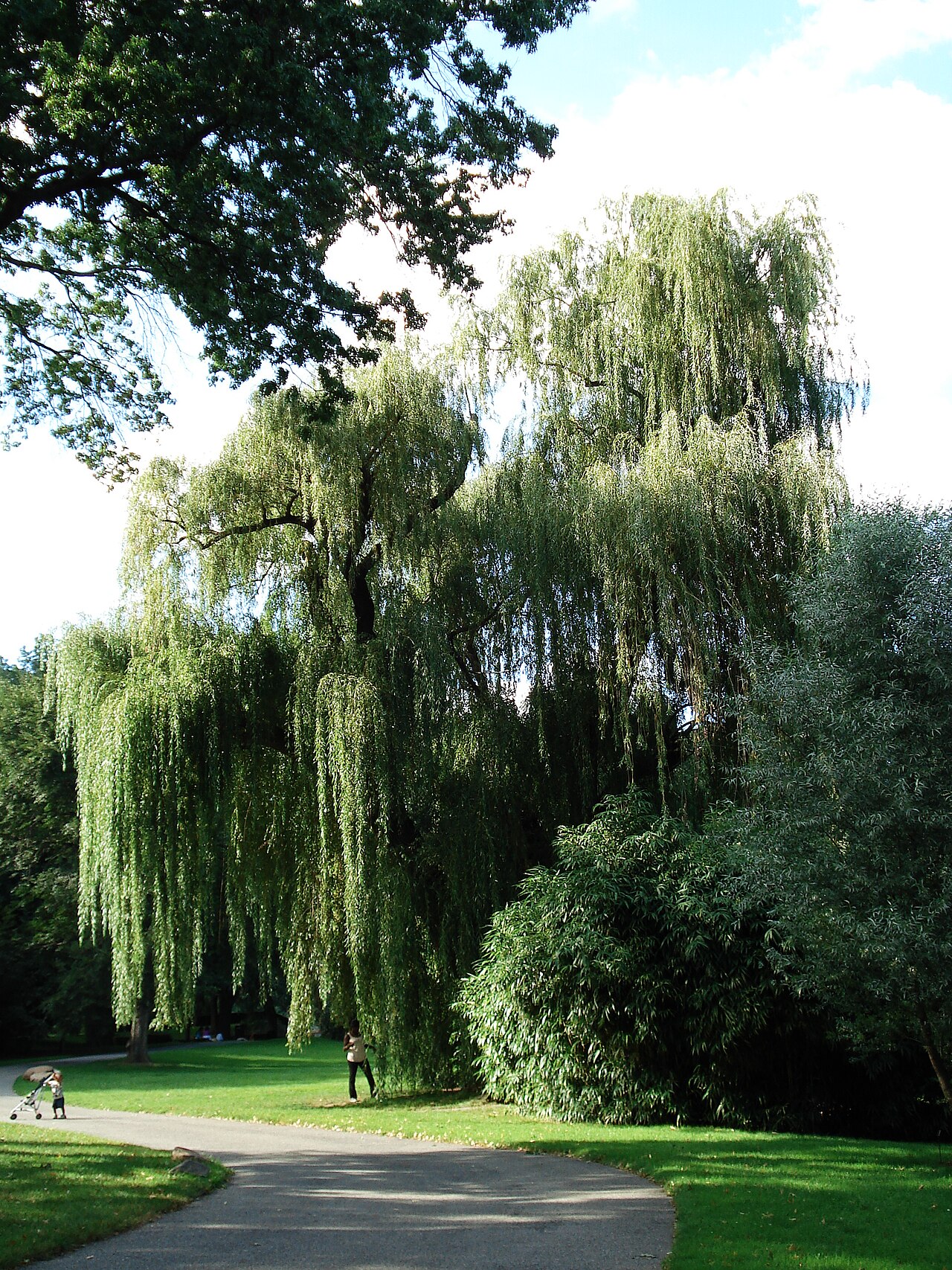 Weeping willowWeeping willow · 475 yd
 Lord ArdilaunMonument · 540 yd
 The Copper House GalleryGallery · 853 yd
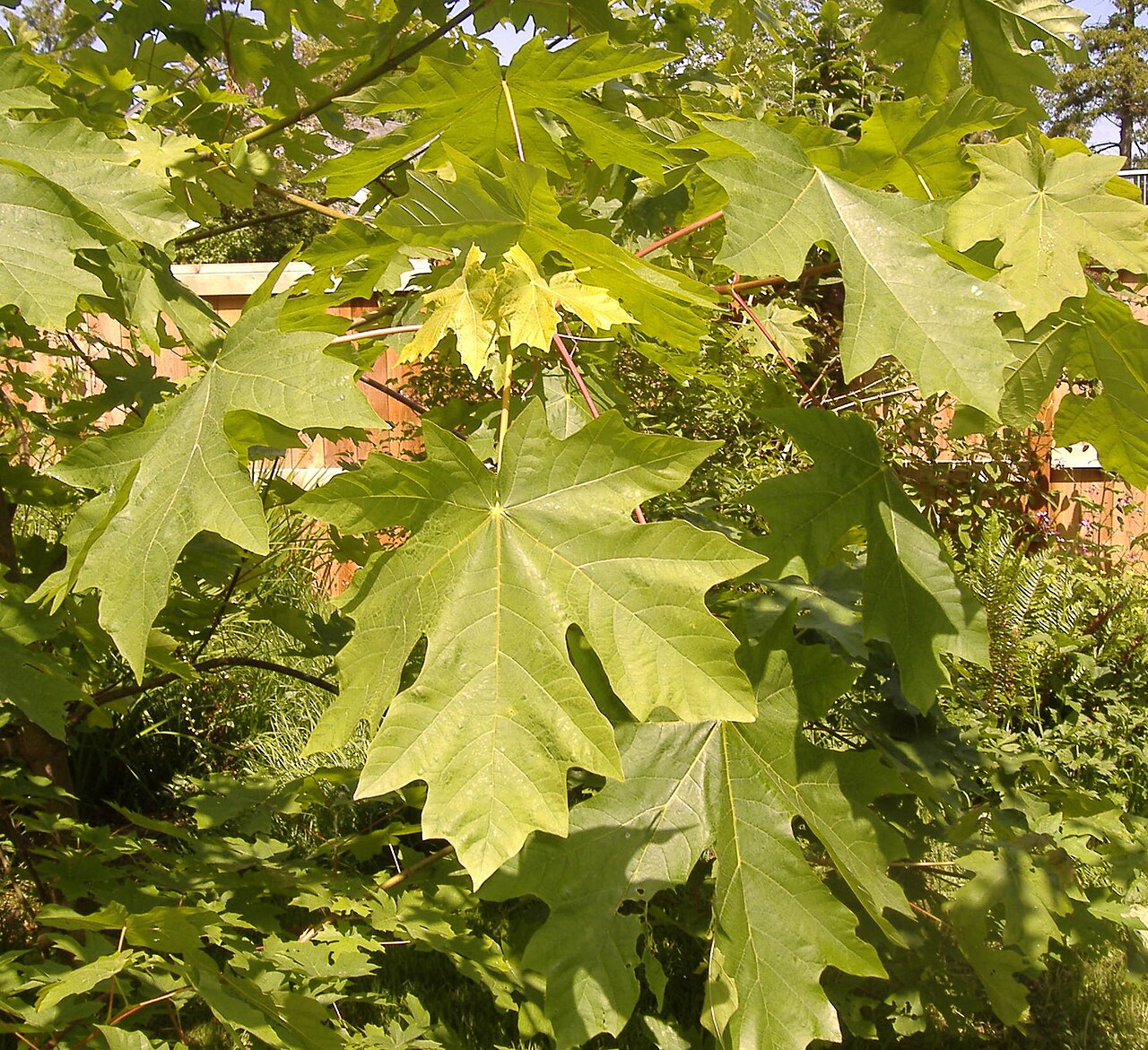 Bigleaf MapleBigleaf Maple · 1056 yd
 Battle of RathminesMajor battlefield · 1275 yd
 Burning of the Custom Housearmed conflict · 1594 yd
Other information
Photo: National Inventory of Architectural Heritage · Website use allowed for educational or private purposes with source credit