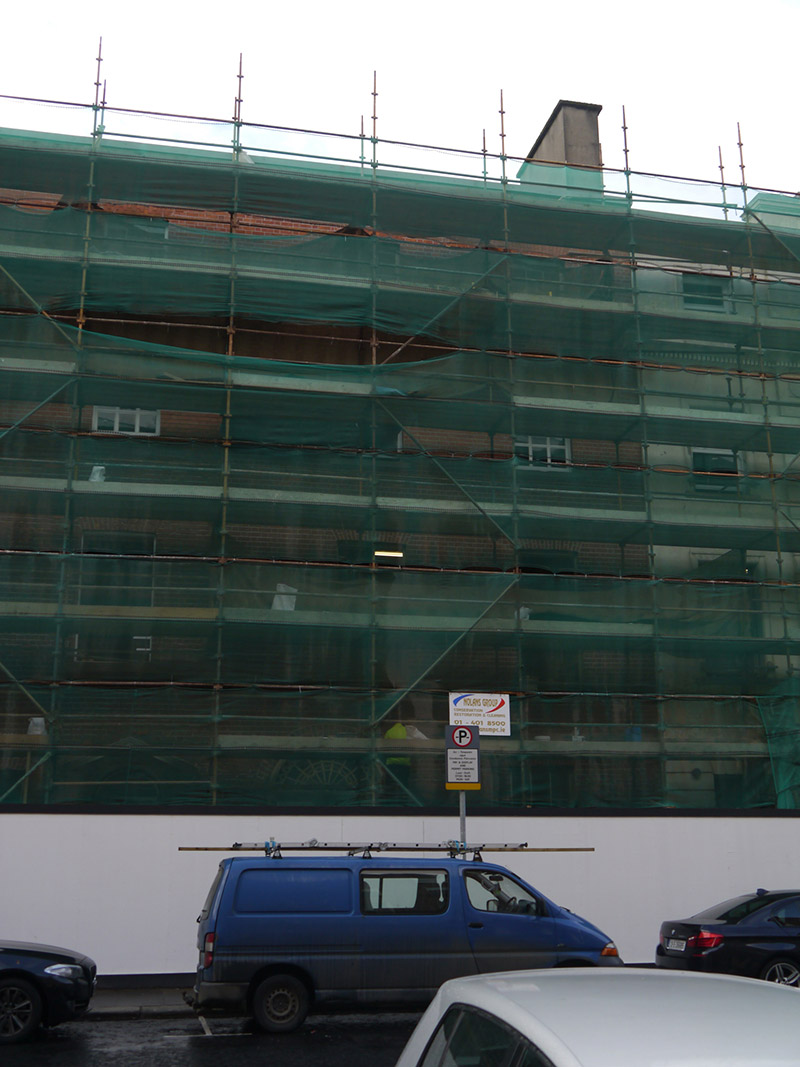
What is recorded here
Terraced two-bay four-storey former townhouse over basement, built c. 1770, later forming part of hospital comprising Nos. 3-8 (50920305-9). Pitched roof, with hipped return to rear and rendered chimneystack located to west party wall, concealed behind brick parapet with masonry coping. Red brick walling laid in Flemish bond with rendered walling to basement. Square-headed window openings with projecting sills, patent reveals and brick voussoirs, with cast-iron balconettes affixed to sills at first and second floors, diminishing to upper floors, with timber sliding sash windows. Round-headed door opening to western bay with moulded reveal, brick voussoirs and doorcase comprising Ionic columns rising to fluted frieze with cobwebbed fanlight and seven-panelled timber entrance door opening onto entrance platform shared with No. 6 (50920307), with single step to street, flanked by cast-iron railings enclosing basement well to west. Street fronted on northern side of Hume Street.
In 1911, Andrew Charles F.R.C.S.I. founded a voluntary hospital in Hume Street to provide “for the treatment of diseases of the skin, cancer, rodent ulcer, lupus, kidney and other urinary diseases”. In 1916 the hospital was granted a royal charter from George V, the last such to be granted to any voluntary hospital in the country. The Hospital opened in rented premises in No. 3 Hume Street on 20th July 1911. A year later this house was purchased for £450. By 1935 the remainder of the south side, Nos. 3-8 (50920305-9), of Hume Street had been purchased. This former townhouse was built by Timothy Turner, an iron-master, an excellent example of the typical Dublin-Georgian idiom, characterised by distinct massing, window fenestration and classical doorcase. Hume Street was laid out, along with Ely Place to the east, in 1768 by Gustavus Hume, eminent surgeon and property developer, who built a house (now demolished) at the corner with St. Stephen’s Green East. The area soon became a popular residential area and the southern side of the street was completely developed by 1770.
This does not grant access. Most recorded buildings are privately owned; view them only from public ground unless the owner allows entry.
Places near here
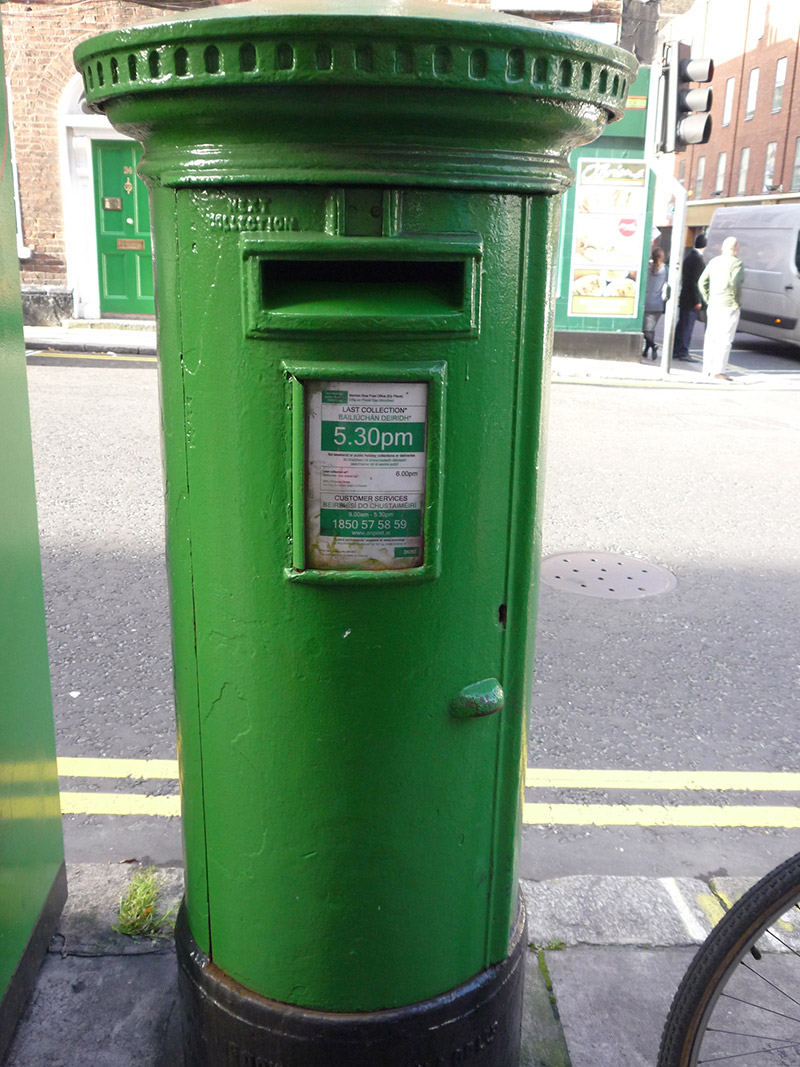 post boxpost box · 99 yd
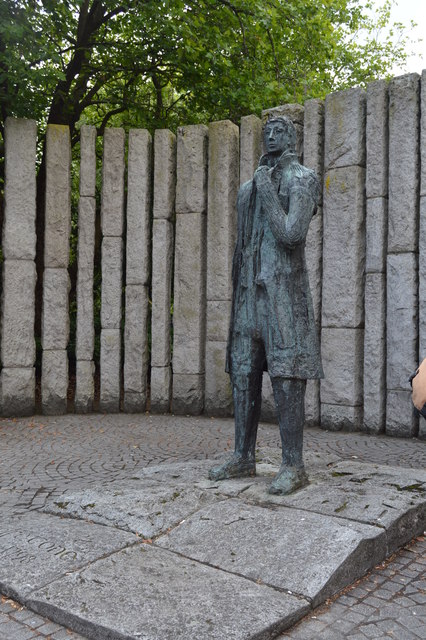 Wolfe Tone Memorialstatue · 143 yd
 National Museum of Ireland, Natural HistoryMuseum · 299 yd
 Statue of Surgeon-Major ParkeMonument · 302 yd
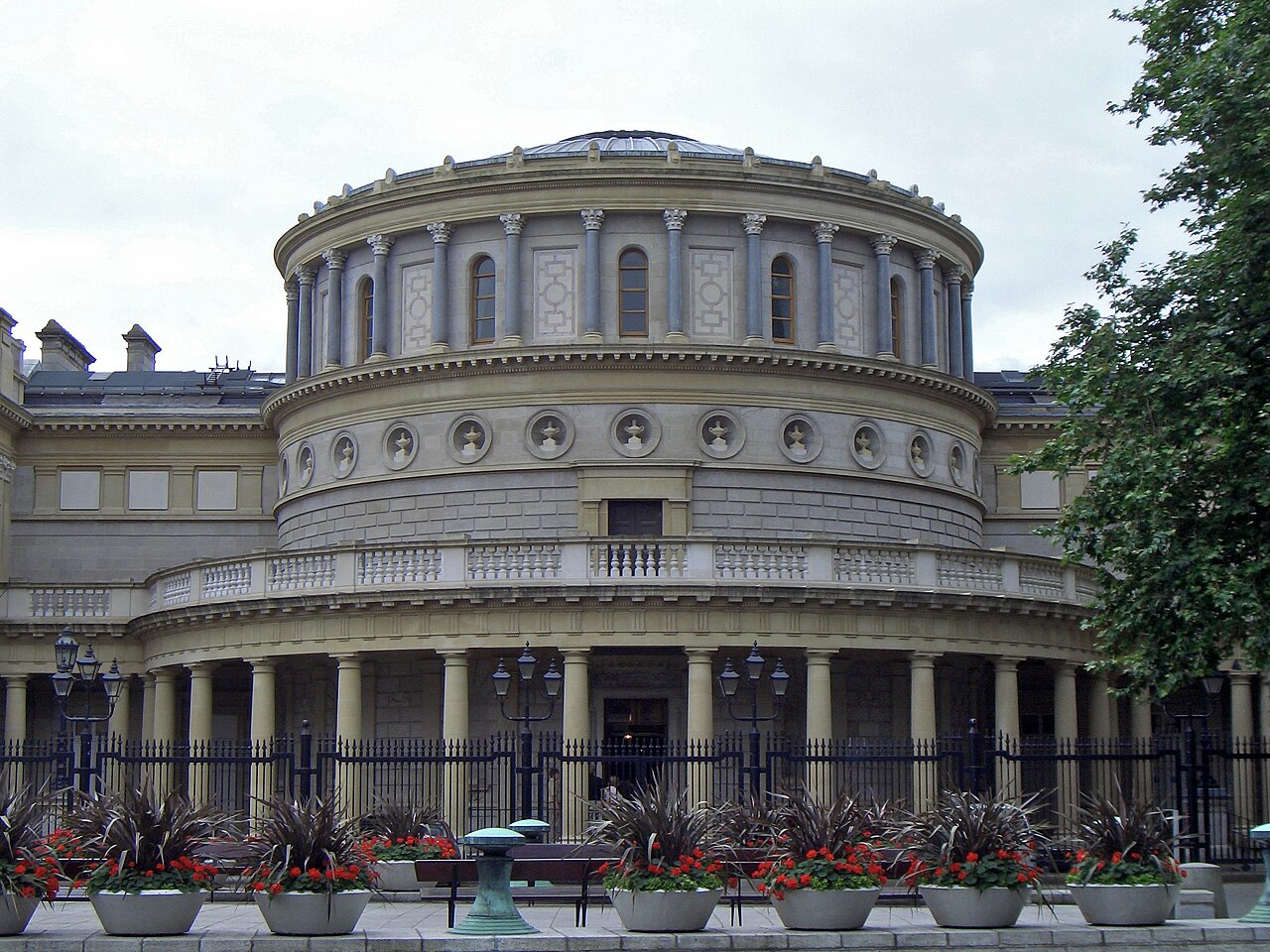 National Museum of Ireland, Kildare StreetMuseum · 324 yd
 IndicatedPark · 340 yd
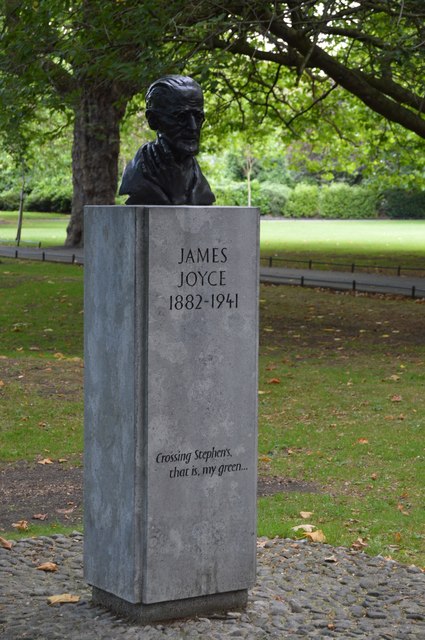 James JoyceMemorial · 387 yd
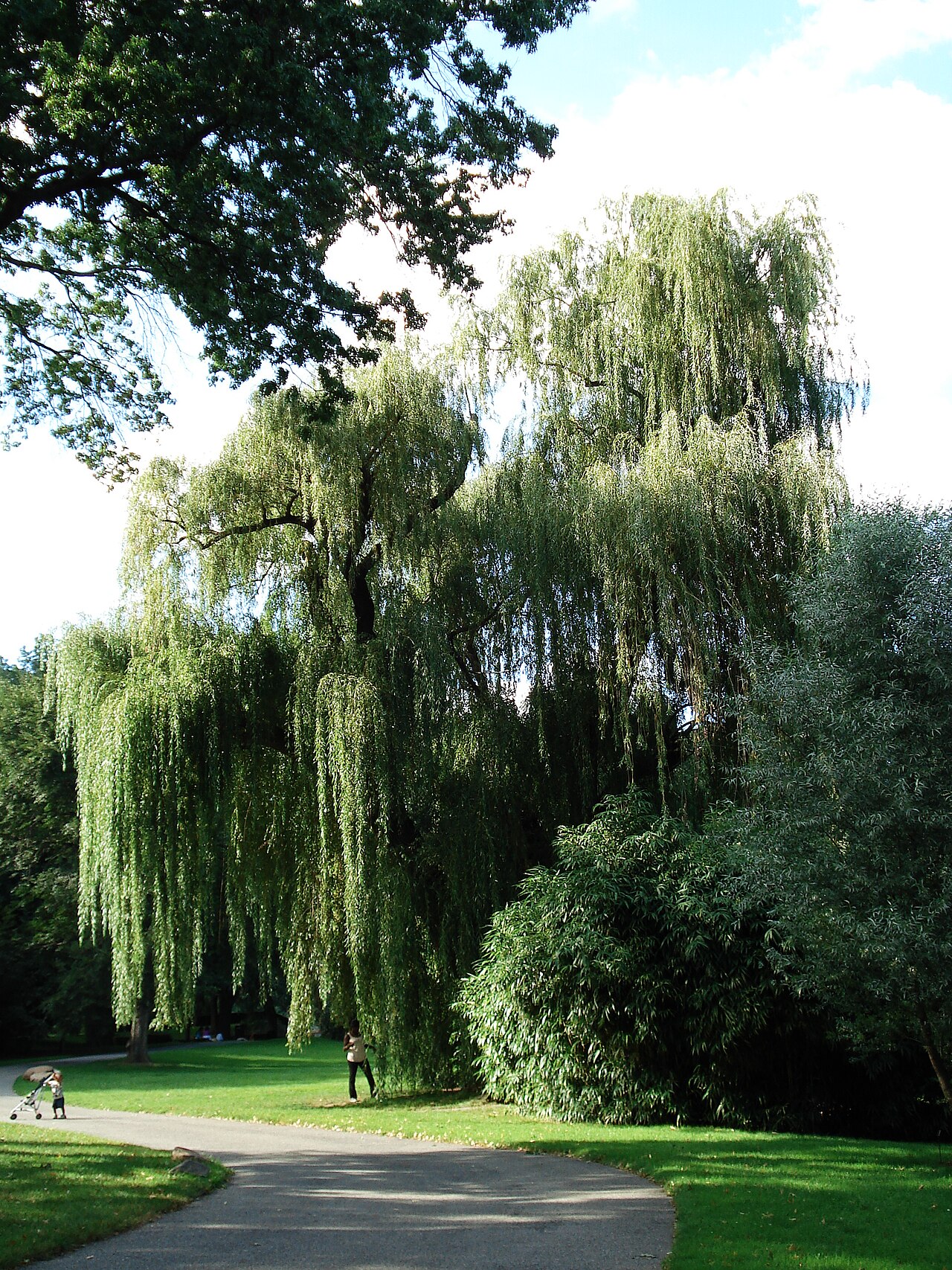 Weeping willowWeeping willow · 396 yd
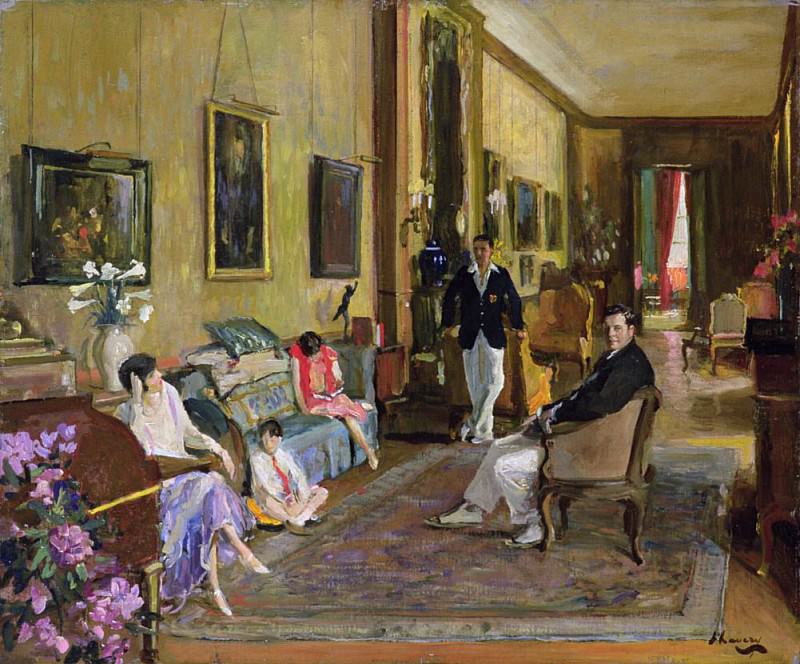 Count John McCormackMemorial · 419 yd
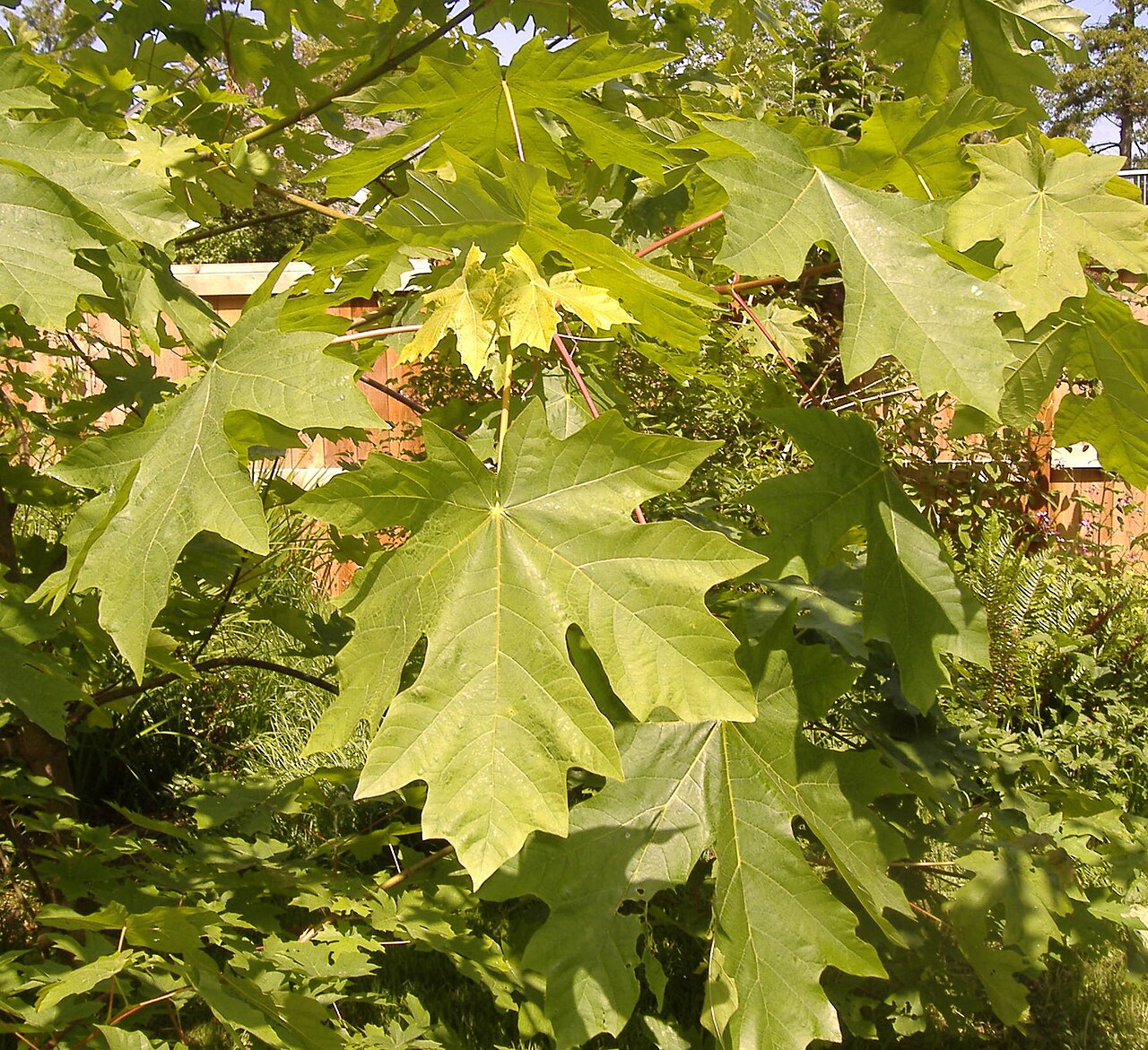 Bigleaf MapleBigleaf Maple · 816 yd
 Battle of DublinMajor battlefield · 1040 yd
 Tourist Information CentreVisitor information · 1153 yd
Other information
Photo: National Inventory of Architectural Heritage · Website use allowed for educational or private purposes with source credit