DDiscover AloneMapAbout

House in Dunagard

House
House in Dunagard
Photo: National Inventory of Architectural Heritage · Report the wrong picture

What is recorded here

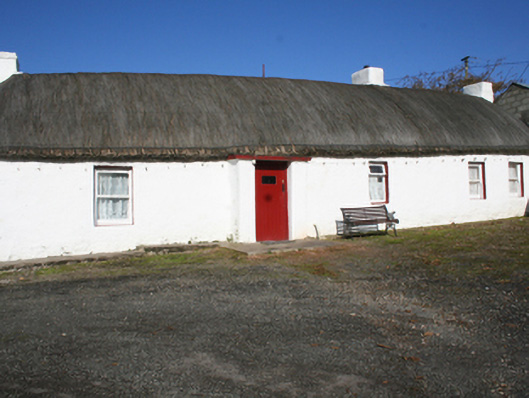
Detached five-bay single-storey vernacular house, built c. 1860, having flat-roofed windbreak porch to front (south), single-bay single-storey outbuilding attached to the west gable end. Round pitched flax thatched roof with chicken wire lattice and iron pegs, corrugated roof to byre, limewashed brick chimneystacks to…

Read the whole record
Detached five-bay single-storey vernacular house, built c. 1860, having flat-roofed windbreak porch to front (south), single-bay single-storey outbuilding attached to the west gable end. Round pitched flax thatched roof with chicken wire lattice and iron pegs, corrugated roof to byre, limewashed brick chimneystacks to gable ends and to the east side of centre. Limewashed rubble stone walls. Square-headed window openings with one-over-one pane horned timber sliding sash windows; original four-light small window to rear with hinged wood panel to upper light. Square-headed door opening to porch having timber sheeted door with central light. Set in own grounds off road. Multi-bay single-storey outbuilding to the west having pitched corrugated roof, limewashed rendered rubble stone walls, and square-headed window and door openings. Located in the rural countryside to the north of Malin town.
This appealing and relatively intact example of a vernacular house retains its early form and character, and is an appealing feature in the scenic rural landscape to the north of Malin town. Its integrity is enhanced by the retention of much of its salient fabric including timber sliding sash windows. Of particular interest in the survival of the thatch roof which is now sadly becoming increasingly rare in Donegal. The rounded roof is a typical feature of thatched houses located close to the sea in exposed areas in the north-west of Ireland, while the pegs to the eaves were used to tie ropes (and sometimes nets) over the roof to secure it against the prevailing winds, as is the case here at Dunagard. Modest in scale, it exhibits the simple and functional form of vernacular building in Ireland. It retains some characteristic features of the vernacular tradition to the area, including a bed outshot to the rear, largely blank rear elevation, and a central windbreak porch to the front elevation. The low elongated form and the location of the chimneystacks suggests that it was extended along its length (to the east) at some stage, which is a feature of the vernacular tradition in Ireland. The form of this building, having chimneystacks to the gable ends and a central doorway to the original building, suggests that this building is of the ‘direct entry’ type that is characteristic of the vernacular tradition in north-west Ireland. The attached rubble stone outbuilding to the west to the context and setting, and help to create a long low vernacular composition of some rustic and visual appeal. The detached single-storey outbuildings to site also survive in good condition, and add considerably to this composition. This house represents a fine surviving example of a once ubiquitous building type in the rural Irish countryside, and is a valuable addition to the vernacular heritage of County Donegal.

From the Buildings of Ireland (National Inventory of Architectural Heritage) record 40900212

This does not grant access. Most recorded buildings are privately owned; view them only from public ground unless the owner allows entry.

What do you know about this place?Tap to add a comment or ask a question

What you write will be public.

Places near here

Photo credits
  • National Inventory of Architectural Heritage
  • Michael Dibb, Wikimedia Commons · CC BY-SA 2.0
  • Michael Dibb, Geograph · Creative Commons Attribution-ShareAlike 2.0
  • Andreas F. Borchert, Wikimedia Commons · CC BY-SA 4.0
  • Dr Neil Clifton, Wikimedia Commons · CC BY-SA 2.0
  • David Dixon, Geograph · CC BY-SA 2.0
  • Wanfried-Dublin, Wikimedia Commons · CC BY-SA 4.0
  • Kenneth Allen, Geograph · CC BY-SA 2.0
  • Kenneth Allen, Wikimedia Commons · CC BY-SA 2.0
farm house1099 yd

Explorer Tom Farm house in Magheryard is a c. 1880 classic that keeps its original sash windows and slate roof intact, which is rare…
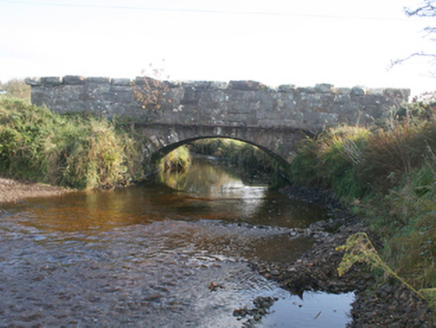
Keenagh BridgeBridge · 1.3 mi

Explorer Tom Keenagh Bridge has been spanning the river with a single limestone arch since c. 1860, its rock-faced voussoirs showing…
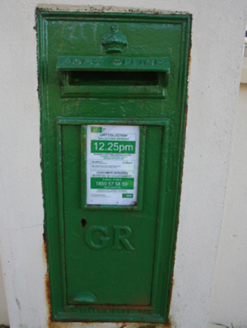
post box1.4 mi

Explorer Tom Post box in Bree is a tiny C-type guard from c. 1915 with a raised crown motif. I reckon King George V put that crest…
Lag GraveyardGraveyard · 2.2 mi

Explorer Tom Lag Graveyard lies in a natural enclosure of sandhills north of the Trawbreaga Bay channel. The survey found a short…

St. Mary's Catholic ChurchChurch/chapel · 2.2 mi

Explorer Tom Step into the grounds of St. Mary's Catholic Church in Lag, built back in 1784 and reportedly the first chapel of its…
Malin Well Old ChurchChurch · 2.2 mi

Explorer Tom Malin Well Old Church lost its cheeky corner face to the National Museum of Ireland. I reckon it sits in a display case…
Wee House of Malin CaveCave · 2.2 mi

Explorer Tom Wee House of Malin Cave is measured at only 2.75 metres deep, yet the local saying gives it room for everything that…

Church (in Ruins)Church · 2.2 mi

Explorer Tom Church in Lag left a right angle of old masonry beside the modern church when surveyed. A small stone cross stood north…

Explorer Tom approvedSeaview TavernRestaurant · 2.5 mi

Explorer Tom At Seaview Tavern, the seafood is the star: crab, oysters and fish of all kinds up at Malin Head. Tom's only problem is…

Magheranaul Wedge TombWedge tomb · 3.6 mi

Explorer Tom Magheranaul Wedge Tomb has a single roofstone covering its gallery, with an hour-glass hole bored right through the…

Culdaff ArmsPub · 5.9 mi

Explorer Tom Culdaff Arms is definitely where you go if your arm hurts from carrying too many heavy bags or emotional baggage. The…

Graveyard in CuldaffGraveyard · 6.0 mi

Explorer Tom Graveyard in Culdaff is where road workers actually pulled human bones out of the dirt during widening works. It’s a…

More historic places in County Donegal · All of County Donegal

Add to this placeAdd a picture Add a detailed tip Add a story

Explore the map1,095,414 places to discover

Next place · or swipefarm house