DDiscover AloneMapAbout

House in Carrickart

House
House in Carrickart
Photo: National Inventory of Architectural Heritage · Report the wrong picture

What is recorded here

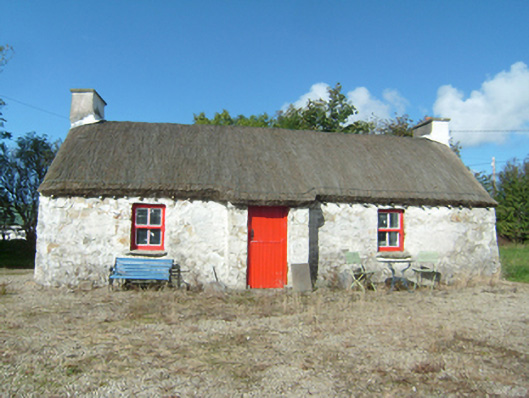
Detached three-bay single-storey vernacular house, built c. 1880, having central shallow projecting windbreak porch to the front elevation (south). Now no longer occupied. Pitched thatched roof with rendered chimneystacks to the gable ends (east and west), and with projecting stone pegs below eaves to front and rear…

Read the whole record
Detached three-bay single-storey vernacular house, built c. 1880, having central shallow projecting windbreak porch to the front elevation (south). Now no longer occupied. Pitched thatched roof with rendered chimneystacks to the gable ends (east and west), and with projecting stone pegs below eaves to front and rear elevations and metal pegs to the side elevations. Partially rendered random rubble stone walls with remains of lime wash over. Square-headed window openings with stone sills and replacement timber sliding sash windows. Blank elevation to rear (north). Square-headed doorway to the windbreak porch having plinth blocks and replacement battened timber half-doors. Stone step to front door. Located to the north-east of Carrickart a short distance to the east of Gordon’s Strand. Front elevation faces away from road. Complex of single- and two-storey outbuildings to the west. Single-storey outbuilding to the north of complex of outbuildings having pitched corrugated-metal roof, rubble stone walls and square-headed openings with remains of battened timber fittings; partially restored two-storey outbuilding to the south of complex of outbuildings having replacement tiled roof, partially-rebuilt rubble stone walls, external flight of stone steps giving access to doorway at first floor level to the east elevation, and square-headed openings with replacement battened doors.
Although now out of use, this charming and relatively well-maintained example of a thatched vernacular house retains its early form and character, and is an appealing feature in the isolated rural landscape to the north-east of Carrickart. Modest in scale, it exhibits the simple and functional form of vernacular building in Ireland. Of particular interest in the survival of the thatch roof, although recently renewed, which is now sadly becoming increasingly rare in Donegal. The rounded roof is a typical feature of thatched houses located close to the sea in exposed areas in the north-west of Ireland, while the stone pegs to the eaves and the metal pegs to the gable ends were used to tie ropes (and sometimes nets) over the roof to secure it against the prevailing winds, as is the case here at Carrickart. The blank rear elevation is a typical feature of many small-scale vernacular dwellings in rural Ireland. The form of this building and location of the chimneystacks suggests that this building is of the ‘direct entry’ type that is characteristic of the vernacular tradition in north-west Ireland. Although the fittings to the openings have been replaced, the modern fittings fail to detract substantially from its integrity. Although the two-storey outbuilding has been restored for use as a studio, the complex of rubble stone outbuildings at to the setting and historic context. The external flight of stone steps to the two-storey outbuilding to the south (giving access to a door at first floor level) is a feature of many vernacular outbuildings in rural Donegal. This house represents a fine surviving example of a once ubiquitous building type in the rural Irish countryside, and is one of an attractive feature in the rural landscape adjacent to Gordon’s Bay to the north-east of Carrickart.

From the Buildings of Ireland (National Inventory of Architectural Heritage) record 40808015

This does not grant access. Most recorded buildings are privately owned; view them only from public ground unless the owner allows entry.

What do you know about this place?Tap to add a comment or ask a question

What you write will be public.

Places near here

Photo credits
  • National Inventory of Architectural Heritage
  • Kenneth Allen, Geograph · CC BY-SA 2.0
  • Golfing in Ireland; photographer not stated, Source publisher
  • CLG na nDúnaibh (official club site publisher); individual photographer not named, nadunaibh.ie
  • Andreas F. Borchert, Wikimedia Commons · CC BY-SA 4.0
  • Alistair Cunningham, Wikimedia Commons
  • Rossographer, Geograph · CC BY-SA 2.0
  • dalvenjah on Flickr, Wikimedia Commons · CC BY-SA 2.0
  • Vadim Manuylov, Wikimedia Commons · CC BY-SA 3.0
Teach John Mici BánHouse · 590 yd

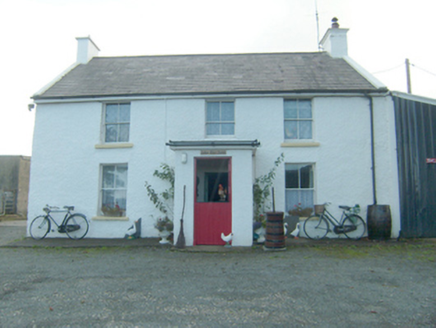
Explorer Tom Teach John Mici Bán may have started with one storey before someone added the upper floor. The account even suggests…
The Old DispensaryBuilding misc, surgery/clinic · 629 yd

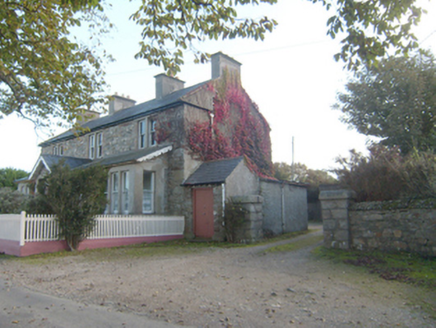
Explorer Tom The Old Dispensary in Carrickart has these swirly wooden edges on its roof that look like they’re dancing! Built around…

Carrigart HotelHotel · 708 yd

Explorer Tom Carrigart Hotel on Main Street is where ghosts go to relax after haunting castles all day long. Ask for room four; if…

Caife Na SraideCafé · 790 yd

Explorer Tom Caife Na Sraide in County Donegal is on the street, so expect to share your pastry with pigeons. It's charming, it's…

Rosapenna Hotel & Golf ResortGolf course · 1.9 miPáirc na nDúnaibh, DowningsGAA ground · 2.1 miMevagh High CrossCross, High cross · 2.3 mi

Explorer Tom Mevagh High Cross is a stark, undecorated slab standing in the graveyard of a ruined medieval church. It’s simple and…

Àn Trá MorBeach / strand · 2.4 mi

Explorer Tom Àn Trá Mor is a great sweep of sand on the eastern side of Sheep Haven, south of Downings, and Donegal has given it a…

DowningsOfficial bathing water · 2.4 mi

Explorer Tom Downings Beach gives its village a front row seat at Sheephaven Bay, with pale sand, calm-looking water and Muckish…

Moross CastleCastle, tower house · 2.9 mi

Explorer Tom Moross Castle was built in 1532 and sits on a tiny rocky island connected by a causeway. By 1622, someone had slapped a…
Monterey Pine3.4 mi

Explorer Tom Monterey Pine in County Donegal was saved by a hero nobody remembers, who probably just shouted 'don't cut that' while…
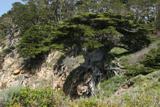
Monterey Cypress3.4 mi

Explorer Tom Monterey Cypress in County Donegal would have told Saint Patrick to go away because he was blocking the light and…

More historic places in County Donegal · All of County Donegal

Add to this placeAdd a picture Add a detailed tip Add a story

Explore the map1,095,414 places to discover

Next place · or swipeTeach John Mici Bán