
What is recorded here
Hankley Common is heath and woodland still used for military training. In 1943 Canadian troops built a full-sized piece of Germany's Atlantic Wall there and practised breaking it before the Normandy invasion. The concrete survives with blast scars, while aircraft deaths, a wartime murder, fires and major film sets add other layers to the common.
How it formed
The common's dry, acidic heath carries heather, gorse and woodland. Military use added a very different surface in 1943, when Canadian troops built a 100-metre reinforced-concrete copy of Germany's Atlantic Wall. The lime in that concrete now supports plants that would not normally grow in the surrounding acid ground.
People and events
In July 1932, a Puss Moth aircraft crashed on the common, killing several occupants. In September 1942, Joan Pearl Wolfe was murdered near her makeshift shelter known as 'the Wigwam'.
Local stories
Plants that favour lime now grow on the military concrete, standing out from the acid heath around it. The common has also repeatedly become an invented landscape for film and television: James Bond productions used it for a Caspian pier, Korea and a Scottish estate, while other crews built battlefields, crashed vehicles and imaginary worlds.
What can be seen
Visitors can see the Atlantic Wall reconstruction used for D-Day training, various film sets, and natural habitats like heather and gorse. The site also features a golf course established in 1897.
Why it mattered
The wall let Allied troops test explosives and special tanks against a realistic obstacle before landing in Normandy in 1944; two large breaches still show that work. Continued army exercises keep the common connected to training, while its open ground has repeatedly stood in for battlefields, foreign countries and imagined worlds on screen.
Sources for this account
Sources checked 16 August 2026.
Places near here
Photo credits
- Mark Percy, Wikimedia Commons · CC BY-SA 2.0
- John Winder, Wikimedia Commons · CC BY-SA 2.0
- Stefan Czapski, Wikimedia Commons · CC BY-SA 2.0
- Colin Smith, Wikimedia Commons · CC BY-SA 2.0
- David Howard, Wikimedia Commons · CC BY-SA 2.0
- don cload, Wikimedia Commons · CC BY-SA 2.0
- Algirdas at Lithuanian Wikipedia, Wikimedia Commons · Public domain
- Oliver Dixon, Wikimedia Commons · CC BY-SA 2.0
- Nigel Cox, Wikimedia Commons · CC BY-SA 2.0
- Ben Gamble, Wikimedia Commons · CC BY-SA 2.0
 The Atlantic WallRuins · 155 yd
 Yagden HillMountain / peak · 1157 yd
 Thursley National Nature ReserveVisitor information · 1.0 mi
 Thursley Common - Dragonfly SculpturePublic sculpture · 1.1 mi
 Victorian postbox on Thursley Road, ElsteadOld post box · 1.1 mi
 Frensham Little PondVisitor information · 1.3 mi
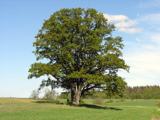 British OakOak · 1.3 mi
 Rotating sculpturePublic sculpture · 1.4 mi
 Bridge, east end of Tilford CommonScheduled monument · 1.4 mi
 Stony Jump, The Devil's JumpsMountain / peak · 1.4 mi
 The Flashes, Churt CommonNature reserve · 1.5 mi
 Three bowl barrows on Frensham CommonScheduled monument · 1.9 mi
More woods, forests and old trees in Waverley · All of Waverley

What do you know about this place?Tap to add a comment or ask a question