
Places near here
Photo credits
- N Chadwick, Wikimedia Commons · CC BY-SA 2.0
- Roy Hughes, Wikimedia Commons · CC BY-SA 2.0
- David Dixon, Wikimedia Commons · CC BY-SA 2.0
- Ian Taylor, Wikimedia Commons · CC BY-SA 2.0
- Keith Edkins, Wikimedia Commons · CC BY-SA 2.0
- Qmin, Wikimedia Commons · CC BY-SA 3.0
- Peter Trimming, Wikimedia Commons · CC BY-SA 2.0
- Robin Webster, Wikimedia Commons · CC BY-SA 2.0
- Paul Gillett, Wikimedia Commons · CC BY-SA 2.0
- D4444n at en.wikipedia, Wikimedia Commons · CC BY-SA 3.0
- Simon Carey, Wikimedia Commons · CC BY-SA 2.0
 The Victoria FountainListed building · 17 yd
 Old Steine GardensPark · 19 yd
 Brighton War MemorialListed building · 71 yd
 Gideon MantellMemorial · 80 yd
 Obelisk, Victoria GardensMonument or public art · 110 yd
 Millennium MilepostVisitor information · 187 yd
 Royal PavilionHeritage attraction · 190 yd
Explorer Tom Brighton's Royal Pavilion looks as if a palace decided plain stone was an insult and went out wearing every jewel it owned. Tom admires the confidence. Its domes and minarets are an English Regency fantasy, created for George IV, while the rooms inside turn the spectacle up another notch with dragons, colour and elaborate decoration. George first came to Brighton as Prince of Wales, and his seaside house grew with his appetite for entertaining. In 1815 he hired architect John Nash to transform the building. Nash made the famous Indian-inspired exterior, while designers including John and Frederick Crace shaped richly imagined Chinese-style interiors. The project took years and cost heavily. George enjoyed the result, but after the interior was finished in 1823 he made only two further visits. Tom calls that an expensive way to avoid becoming bored of one's own wallpaper. Walk through the Banqueting Room and Music Room and notice how strongly the spaces were designed to amaze guests. The private rooms reveal another side of the prince: comfort and modern conveniences mattered alongside display. Outside, the garden gives the building breathing room and lets you see its unusual roofline from several angles. The Pavilion is a ticketed museum in the centre of Brighton, with access arrangements that can vary for particular rooms or events. Check the current visit page before travelling. Its styles borrow freely from elsewhere and reflect George's own taste rather than an ancient palace tradition. That makes the building more revealing, not less: it is a very public confession of one man's extravagant imagination.
 National Cycle Network Milepost, BrightonMonument or public art · 194 yd
 Brighton BeachBeach / strand · 237 yd
 Anchor of Athina BMemorial · 594 yd
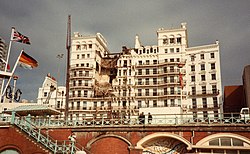 Brighton hotel bombingBomb attack · 749 yd
 Park Street GateMonument · 871 yd
More places in Brighton and Hove

What do you know about this place?Tap to add a comment or ask a question