What is recorded here
Kilcreen holds three forgotten cists where creamed bones once rested beneath gravel. Men dug them out in 1854 and carried the stones to a private lawn, pulling the dead from their regional map. The cemetery did not disappear so much as change address, leaving behind a hollow bank and a house that keeps ancient heat.
Described by Waddell (1970, 121) as a flat cemetery consisting of three cists containing cremations, one short and rectangular and the others polygonal. In the 1854, ‘the contents of a small stone sepulchral cist [were] discovered at Kilcreene, near the city of Kilkenny’ (Anon. 1854-5, 139-40). It was located at the bottom of a bank in a gravel pit and consisted of a cist of ‘six unhewn stones. One placed flat, at the bottom of the gravel, rested on the stratum of yellow clay, and supported four others on edge, which formed the head, foot, and sides of the cist, and on these rested a cap stone, three feet eight inches [1.12m] by one foot six inches [0.45m], remarkably flat and smooth, but, like the rest, unworked, and which was evidently carefully selected for the purpose. The stones, six in all, are of the lime-stone of the neighbourhood. We found the internal measurement of the cist to be one foot nine inches [0.53m] in length by one foot four inches [0.4m] in breadth, and nine inches [0.23m] in depth; its longest direction being N.N.E. and S.S.W. The clay upon which it rests is five feet [1.52m] beneath the surface of the gravel…The top of the cist was but three feet [0.91m] from the surface’ (ibid. 139). The cist was removed from the gravel pit and reassembled on the lawn of the landowner’s house (ibid.). Shortly after this find, ‘another cist, formed of six small and rude boulder stones, placed in a circle, and covered by a cap-stone, has been opened close to that above described. It contained calcined bones, but, unlike the others, mixed with charcoal. No implements or ornaments were found in it. The cist last discovered was about three feet [0.91m] under the surface’ (ibid. 140). A short time later, ‘a number of stones [were noted] scattered on the top of the bank, which he had no doubt were the remains of another cist’ (ibid. 181). The precise location of this cemetery within Kilcreen townland is unknown, however, on the 1st (1839) ed. OS 6-inch map there is a small quarry pit indicated c. 320m NE of Kilcreen House, which may be the gravel pit where the cist burials were found.
Compiled by: Jean Farrelly
Date of upload: 13 October 2020
A Neolithic flat cemetery containing stone cists with cremations; significant as an example of early funerary practices in the region.
The monument record does not grant public access. Check the route and ask the landowner before entering private land.
- What survives
- Recorded monument
Places near here
 Bawn in Kilcreen (shillelogher By.)Bawn · 140 yd
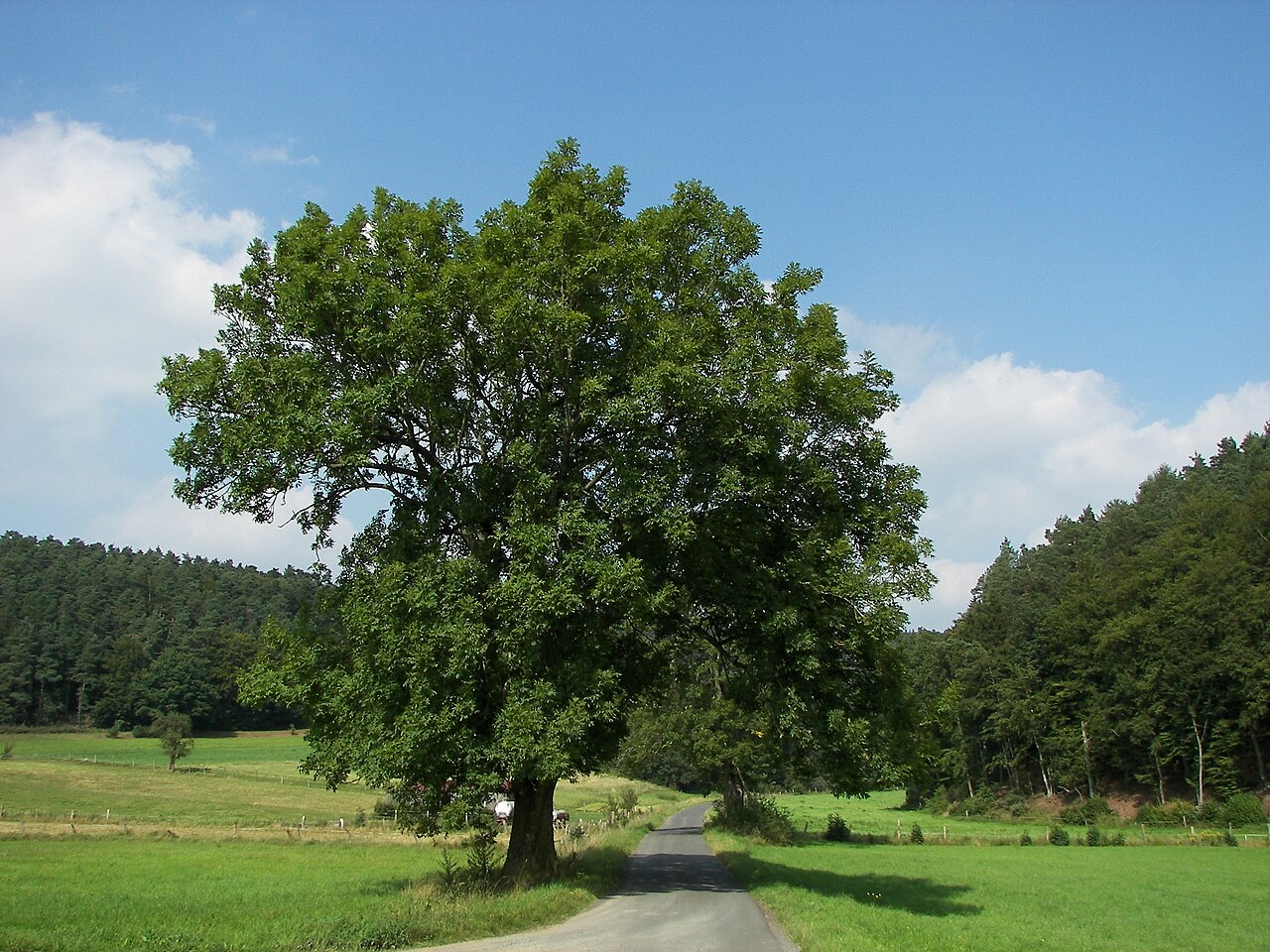 European ashEuropean ash · 244 yd
 Kilcreen Lodgehouse · 587 yd
 Bawn in Gardens (kilkenny City By., St. John's Par.)Bawn · 614 yd
 Dicksborough Ringfort (rath)Archaeological place · 616 yd
 Enclosure in Kilcreen (crannagh By.)Enclosure · 654 yd
 Paddy ButlerMemorial · 1208 yd
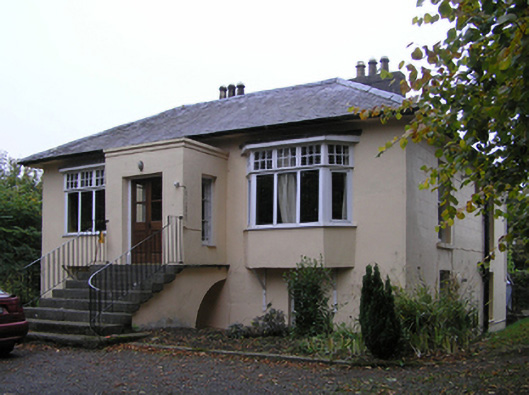 Blunden Villahouse · 1295 yd
 Kilkenny GaolMemorial · 1342 yd
 Black AbbeyVisitor information · 1493 yd
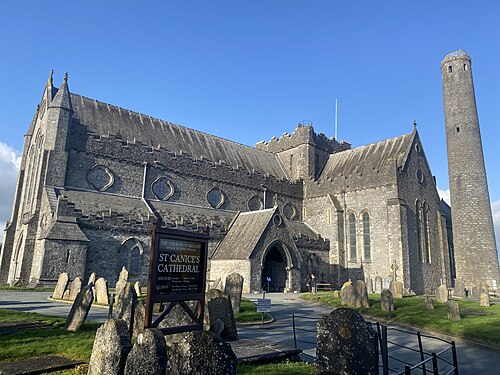 St. Canice's CathedralVisitor information · 1567 yd
 Saint Canice's Cathedral Round TowerViewpoint · 1618 yd