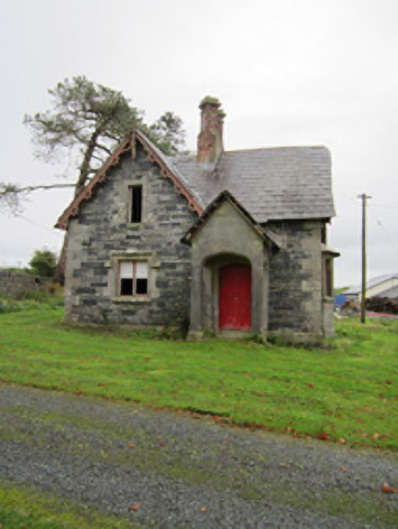
What is recorded here
Detached two-bay single-storey gate lodge, built c.1880, with dormer-attic, gabled bay to north end of front, west, elevation, gable-fronted open porch, single-storey lean-to return to rear, and with canted bay window to south. Now derelict. Pitched slate roofs with grey clayware ridge tiles, red brick chimneystack with offset stacks having crenellated stone copings, and decorative scrolled timber bargeboards to gables. Coursed squared limestone walls with ashlar sandstone block-and-start quoins and plinth, red brick block-and-start quoins to return, ashlar sandstone walls to canted bay window, ashlar sandstone walls to porch with chamfered square-plan columns supporting Tudor-arch openings to front and sides. Square-headed window openings with chamfered ashlar sandstone surrounds, single-light to first floor, double-light to front gable with label-moulding, four-light to bay window, with sandstone sills. Tudor-arch door opening with chamfered ashlar sandstone surround and timber battened door. Set within grounds of former Fair Field demesne, house now demolished. Gateway immediately to north, and corrugated-iron hall to south.
This gate lodge, despite its dereliction, is a good example of the type, associated with a significant plantation demesne. The use of high quality stonemasonry skills and materials is also typical of high-status architecture of the period, reflecting the wealth and status of the owners. The Tudor-cum-Jacobean components of the building, and particularly the chimneystack, together with the ornate carpentry of the bargeboards, is reflective of the influence of the Arts and Crafts movement.
This does not grant access. Most recorded buildings are privately owned; view them only from public ground unless the owner allows entry.
Places near here
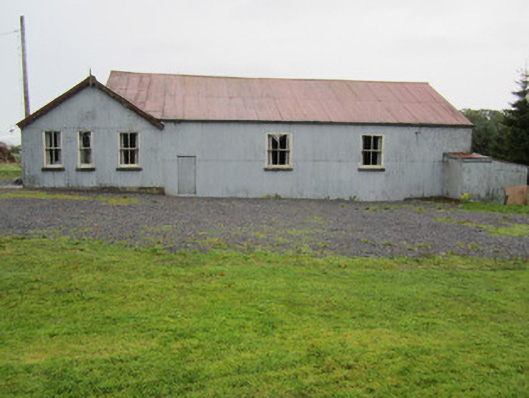 community centrecommunity centre · 45 yd
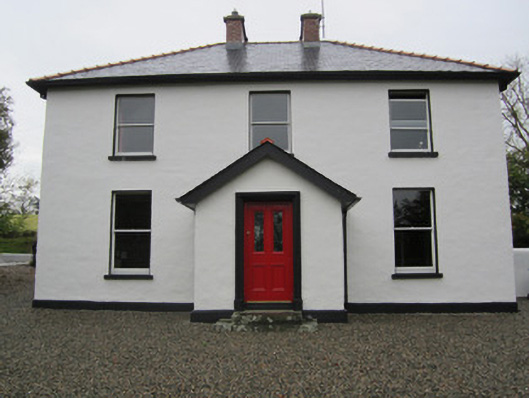 Aisling Houserectory/glebe/vicarage/curate's house · 770 yd
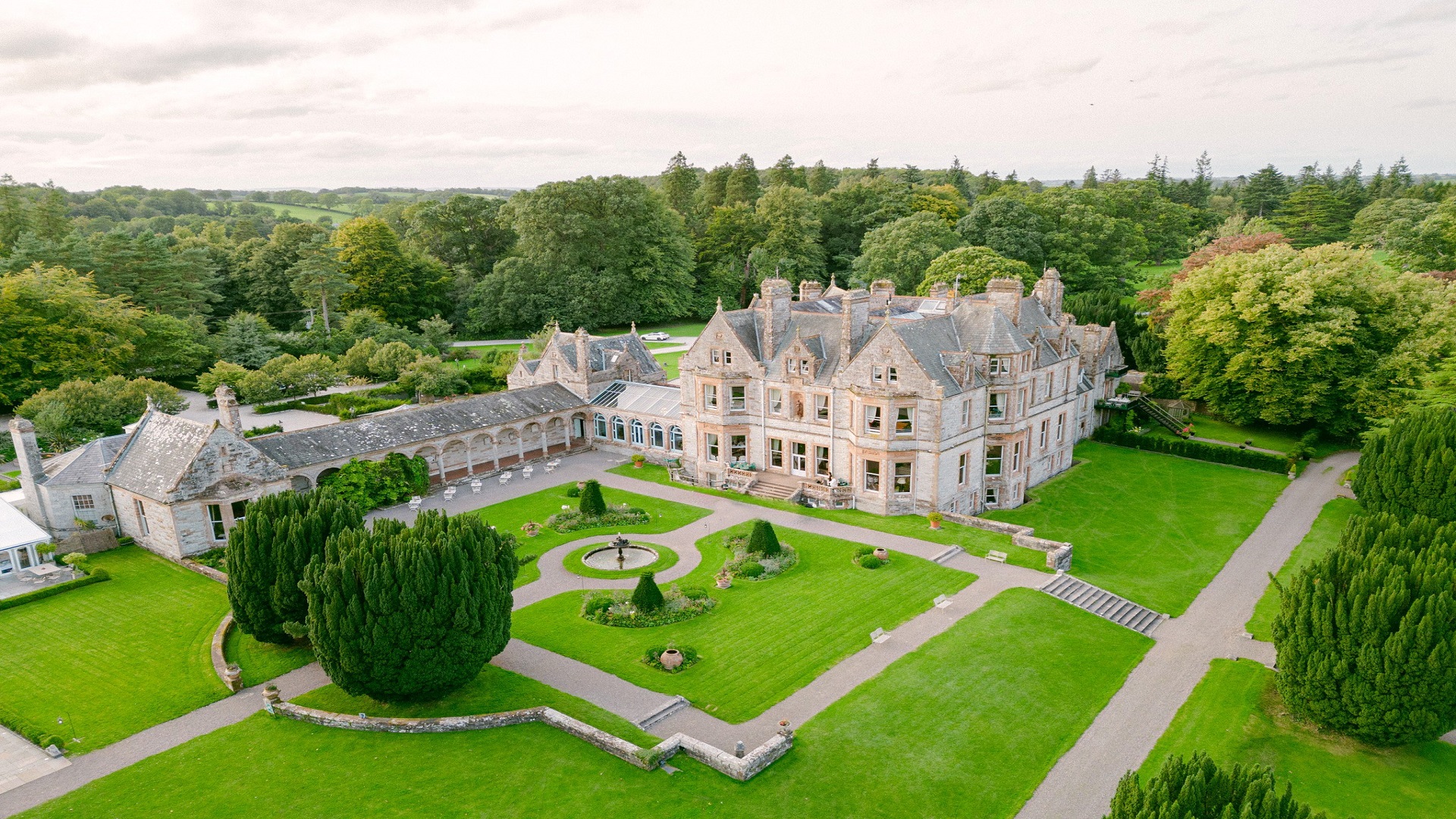 Embanked enclosureFairy fort / earthen ringfort · 889 yd
 LisnaspeenanMountain / peak · 901 yd
 Crannog in Clossagh MoreCrannog · 1568 yd
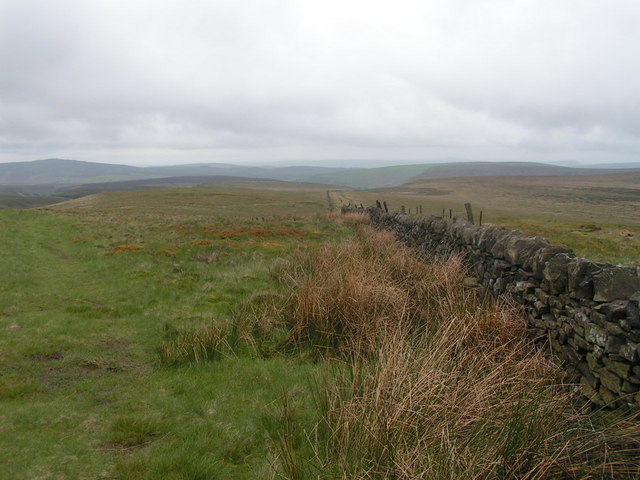 Fedd HillMountain / peak · 1604 yd
 Back WoodForest · 1.3 mi
 Dartrey ForestForest · 1.7 mi
 Site of Old CastleCastle, unclassified · 6.3 mi
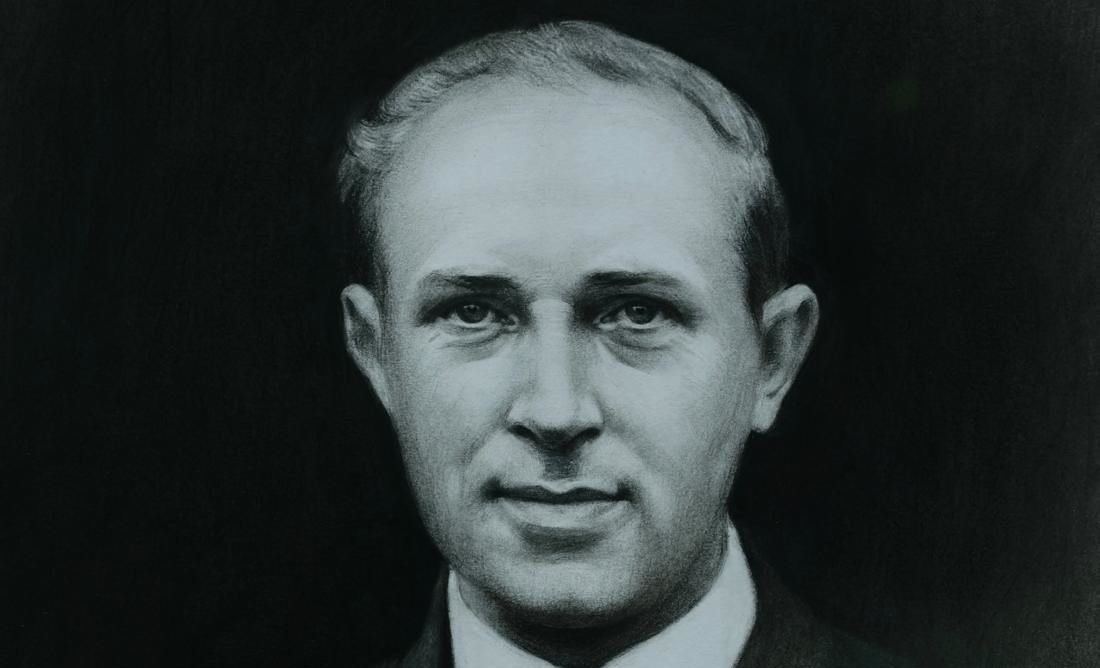 Senator Billy Fox 1939 - 1974Memorial · 6.3 mi
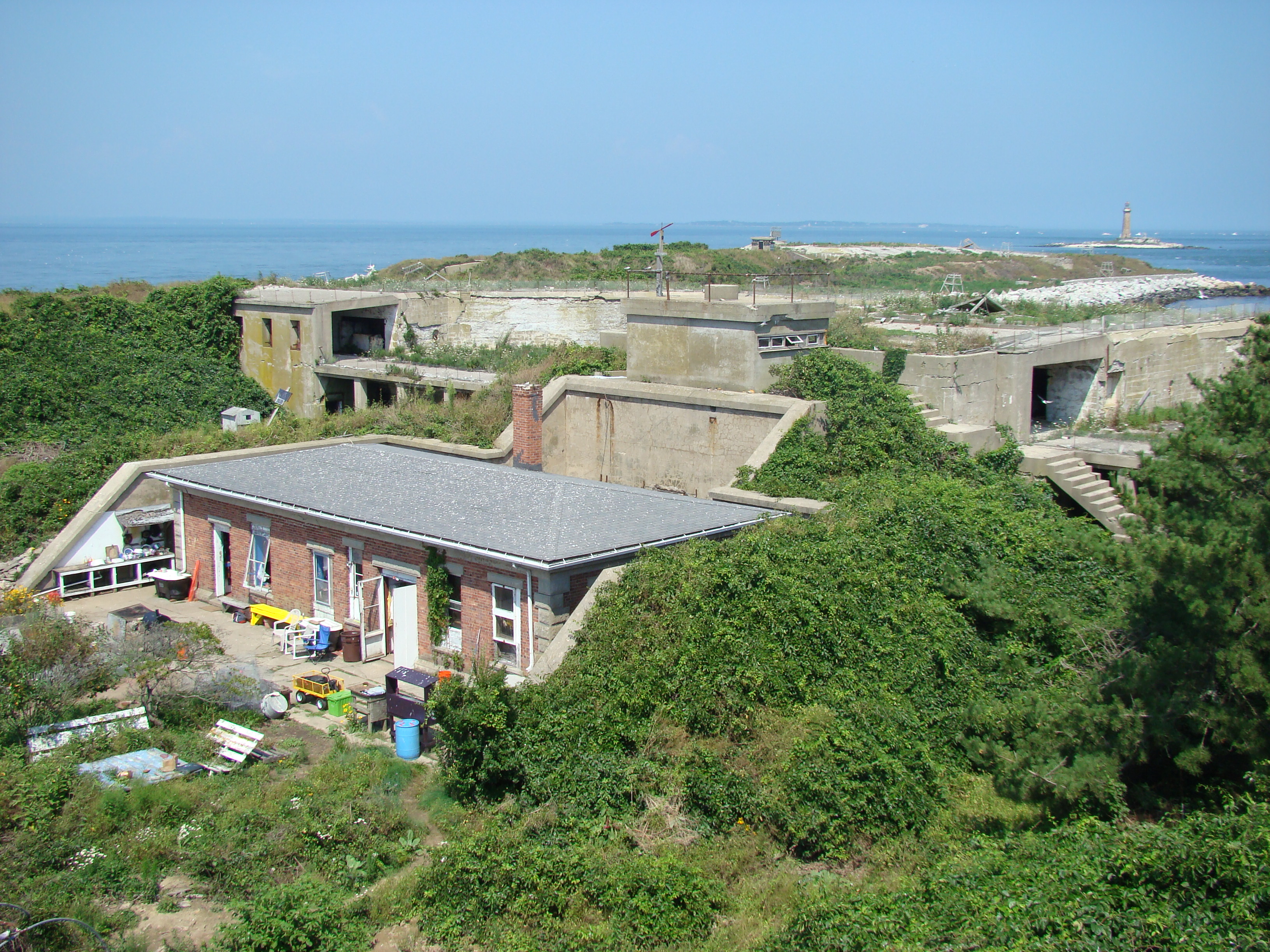 Gull IslandIslet · 9.0 mi
 Bush IslandIslet · 9.2 mi
Other information
Photo: National Inventory of Architectural Heritage · Website use allowed for educational or private purposes with source credit