What is recorded here
Heat-shattered stones and charcoal filled a curved trench beside a diverted stream in County Cork, marking a place where fire and human hands met before the early Bronze Age. The road bypass cut through that memory in 2005, exposing pits and stake-holes that had waited beneath the water’s path. What lived there is gone, but the cracked stones still hold the shape of its absence.
This group of features, located to the S of the bed of a diverted stream, was partially excavated in 2005 in advance of the construction of the N8 Rathcormac-Fermoy Bypass. The first of these comprised a curved feature (L c. 5.4m; Wth 1.2m; D 0.4m) which extended to the E, beyond the excavated area. It was filled with a black sandy silt which had inclusions of heat-shattered stones and charcoal. Between this feature and the stream bed was a stony spread (L 2m; D 0.16m) which overlay two pits: a large pit (1.1m x 0.42m; D 0.39m) and a smaller pit (0.4m x 0.23m; D 0.17m). The pits were situated 1.75m apart and both had been truncated by the stream bed. The fill of the larger of the pits included charcoal and heat-shattered stones. A further four pits, the smallest of which measured 0.54m x 0.53m; D 0.22m, and two stake-holes were excavated to the S of the linear feature. A flint flake was recovered from the fill of one of the pits. The fill from the largest of these pits (1.84m x 1.42m; D 0.3m) was radiocarbon-dated to the early Bronze Age, 2335-2036 cal. BC. (O'Reilly 2006)
The above description is derived from 'The Archaeological Inventory of County Cork. Volume 5' (Dublin: Stationery Office, 2009).
Date of upload: 22 December 2009
The monument record does not grant public access. Check the route and ask the landowner before entering private land.
- What survives
- Recorded monument
Places near here
 Pit-burial in FermoyPit-burial · 149 yd
 KilnKiln, corn-drying · 153 yd
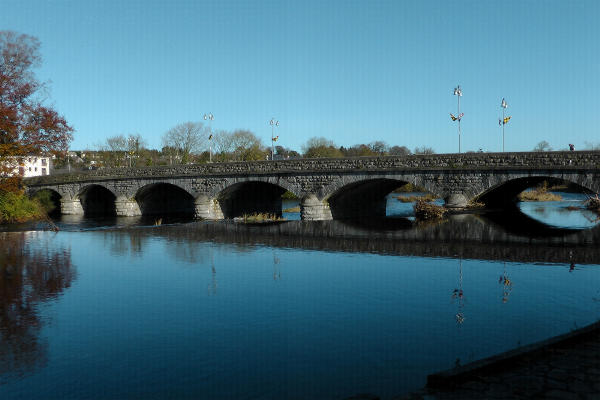 Fulacht fia in FermoyFulacht fia · 312 yd
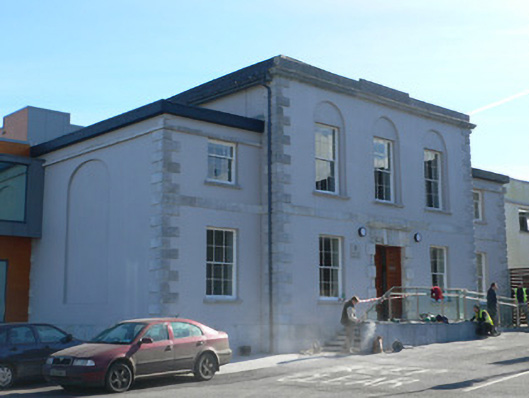 Fermoy Courthousecourt house · 556 yd
 Kent BridgeMemorial · 1058 yd
 Old Railway ViaductViewpoint · 1069 yd
 Carrigabrick Castle (in Ruins)Castle, tower house · 1077 yd
 Tourist InformationVisitor information · 1135 yd
 Graveyard in FermoyGraveyard · 1214 yd
 Ballybrack WoodForest · 1705 yd
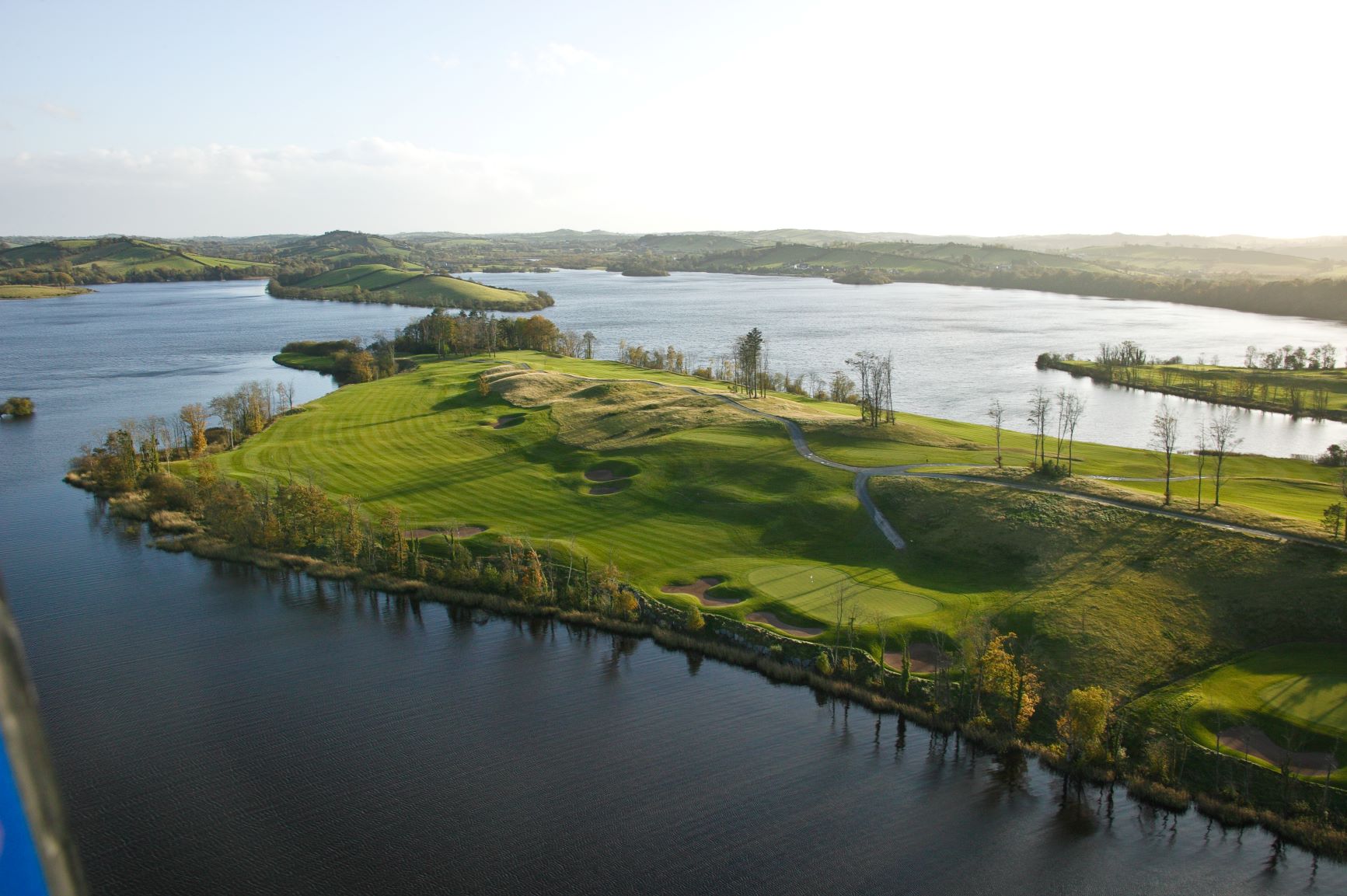 Strawhall WoodForest · 1.0 mi
 Licklash Castle (in Ruins)Castle, hall-house · 1.1 mi