
What is recorded here
The royal castle of Dungarvan was in existence by 1215, but building work was renewed in the 1260s and 1270s. It was granted to the Fitzgeralds in 1285 and they retained possession until 1535 when the castle was taken over by the Earl of Ossory. It changed hands four times during the Confederate Wars before Cromwell captured it in 1649. The castle continued in use as a garrison throughout the 17th century, and the barracks were built within it before 1746. It was used as a Garda station until 1987 (Bradley et al. 1989, vol. 1, 24). The remains are in good condition and include a shell-keep at the NW angle of a subrectangular ward with a curtain wall surviving complete at S and W. The curtain wall (H c. 5.5m) has gun loops and blocked arrow loops at wall-walk level. A gatehouse at the SE angle has two D-shaped towers linked by a vaulted passage with a portcullis groove and a murder-hole. A polygonal shell-keep at the NW angle partly survives to the first floor. The entrance was at the first floor, on the E side, and the ground level inside the keep was naturally high, except at the N side where a large building with a plank-centered vaulted chamber (dims. 17.4m x 5.2m) was built at ground-floor level. The loops in this chamber were later adapted for artillery. The keep has an original garderobe passage in the NW wall and a window embrasure at SW. An inserted mural passage through the wall at SW leads to the wall-walk of the W curtain wall. Excavation by D. Pollock (1996a) revealed that the shell-keep was originally surrounded by a moat. At the SW angle of the court is a large circular tower (ext. diam. 10.7m; H c. 11m) of three floors with an inserted vault over the ground floor. The entrance was at ground level leading to a chamber with three embrasures, and spiral stairs gave access to the upper floors. The wicker-centered vault partly obscures three arrow-loop embrasures at first-floor level. Access to the wall-walk of the S curtain wall is from the stairs at first-floor level, and the W wall-walk is accessible from the second floor of the tower through secondary use of one of its three embrasures. There is a garderobe at the second floor. Excavation in 1997 (Pollock 1998, 183-4) revealed a building at the S side of the keep and a cistern in the hall, while excavation inside the NE angle of the court revealed the base of a rectangular corner tower which was superceded in the 15th/16th century by another tower which no longer survives. Bradley, J., Halpin, A. and King, H. (1989) Urban archaeology Survey of Waterford City and County, 2 vols. Unpublished report commissioned by the Office of Public Works. Pollock, D. (1996a) “Dungarvan Castle”, Dungarvan; medieval castle. In I. Bennett (ed.) Excavations 1995; summary account of excavations in Ireland, 84-5, No. 265. Wordwell. Bray. Pollock, D. (1998) Dungarvan Castle, Dungarvan: Castle. In I. Bennett (ed.) Excavations 1997. summary account of excavations in Ireland, 183-4, No. 571. Wordwell. Bray.
The royal castle of Dungarvan was in existence by 1215, but building work was renewed in the 1260s and 1270s. It was granted to the Fitzgeralds in 1285 and they retained possession until 1535 when the castle was taken over by the Earl of Ossory. It changed hands four times during the Confederate Wars before Cromwell captured it in 1649. The castle continued in use as a garrison throughout the 17th century, and…
From the National Monuments Service (Archaeological Survey of Ireland) record WA031-040001
The monument record does not grant public access. Check the route and ask the landowner before entering private land.
- What survives
- Recorded monument
Places near here
 Dungarvan CastleCastle · 1 yd
 Park HouseHouse · 74 yd
 store/warehouse75 yd
 Waterford County MuseumMuseum · 241 yd
 Grattan SquareVisitor information · 348 yd
 Cunnigar PointHeadland · 651 yd
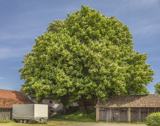 Horse-chestnut2.1 mi
 Master McGrathMemorial · 2.8 mi
 Battle of AffaneMajor battlefield · 9.7 mi
 Ogham StonesOgham stone · 9.9 mi
 Ferry PointViewpoint · 13 mi
 KnockmealMountain / peak · 14 mi
Pictures: Audrius Janecka, Wikimedia Commons · CC BY-SA 4.0; A.-K. D., Wikimedia Commons · CC BY-SA 4.0; P L Chadwick, Geograph · CC BY-SA 2.0; Slamforeman, Wikimedia Commons · CC BY 4.0; Colin Park, Geograph · CC BY-SA 2.0; Stephan van Helden, Wikimedia Commons · CC BY-SA 4.0; BrendanLacey72, Wikimedia Commons · CC BY-SA 4.0; TheLizardQueen, Wikimedia Commons · CC BY 2.0; Hywel Williams, Wikimedia Commons · CC BY-SA 2.0; john berry, Geograph · CC BY-SA 2.0
More castles and forts in County Waterford · All of County Waterford
What do you know about this place?