What is recorded here
Marianne and Seamus touched the tomb in 1975 while mapping Cavan, but its builders are no longer named. Two tall portal-stones still face north-west, admitting a narrow chamber beneath a single roofstone in rolling grassland. The name gives it a purpose the stones never record, while the stones preserve the shape of a doorway built before writing.
Situated close to the roadside in rolling grassland. This well-preserved polygonal chamber is formed by two portal-stones, two sidestones and a backstone, covered by a single roofstone. It is 2.3m long and 2m wide inside the portal-stones, narrowing to 1.1m at the backstone. The portal-stones, at the NNW, stand 0.75m apart and both are 1.55m high. Both sidestones lean inwards against the portal-stones and backstone. The inward-leaning backstone is 1.25m high. The roofstone measures 1.9m by 1.8m by 0.2m thick. (de Valera and Ó Nualláin 1972, 131, No. 32)
The above description is derived from the published 'Archaeological Inventory of County Cavan' (Dublin: Stationery Office, 1995). In certain instances the entries have been revised and updated in the light of recent research.
Date of upload/revision: 22 December 2008
See linked document with details from Ruaidhrí de Valera and Seán Ó Nualláin, Survey of the Megalithic Tombs of Ireland. Volume III. Counties Galway, Roscommon, Leitrim, Longford, Westmeath, Laoighis, Offaly, Kildare, Cavan. (Dublin: Stationery Office, 1972).
Portal dolmen; dates to the Neolithic period (c. 4000–2500 BCE). Its well-preserved structure provides insight into early megalithic construction techniques and ceremonial practices in the region.
The monument record does not grant public access. Check the route and ask the landowner before entering private land.
- What survives
- Recorded monument
Places near here
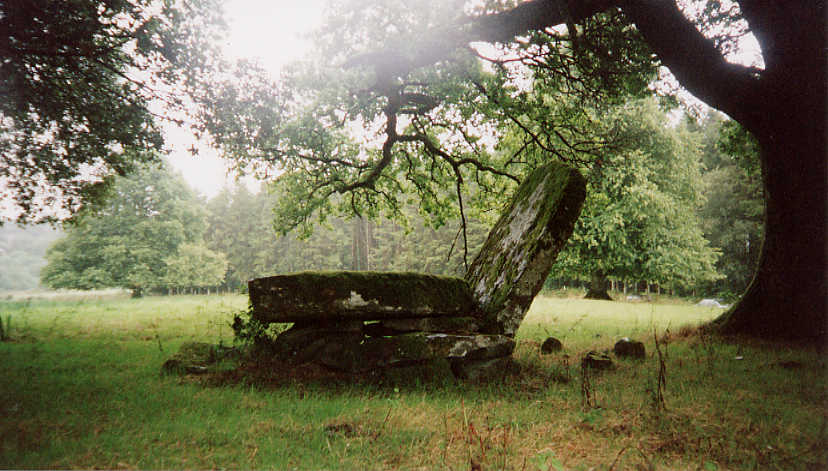 Druid's AltarArchaeological place · 40 yd
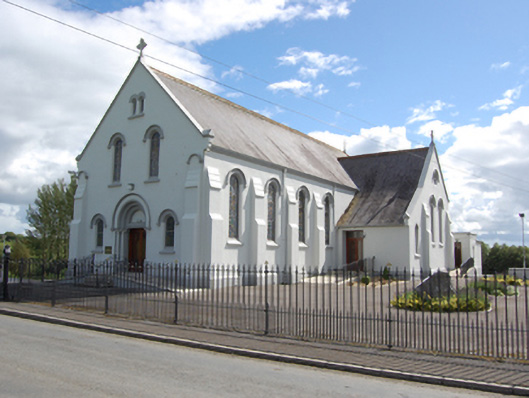 St Joseph’s Roman Catholic Churchchurch/chapel · 348 yd
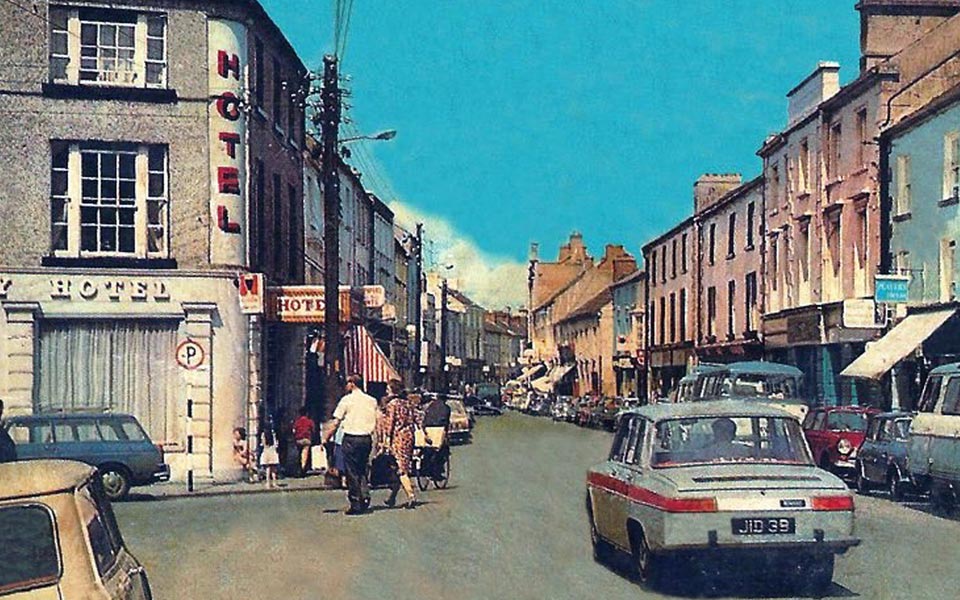 IndicatedEnclosure · 507 yd
 DrumhawnaghMountain / peak · 1014 yd
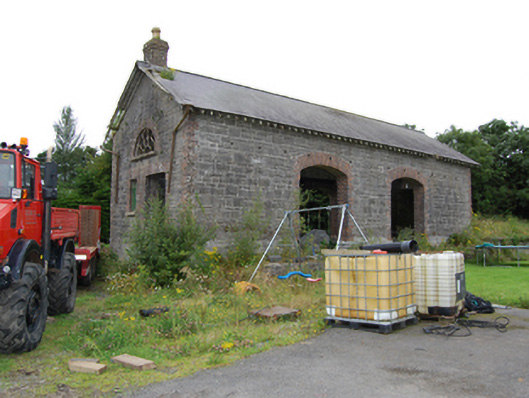 Drumhawnagh Stationgoods shed · 1501 yd
 Carnagh LowerMountain / peak · 1.4 mi
 Oghill Bog WoodWood · 1.7 mi
 Pottle WoodlandWood · 2.0 mi
 Red IslandIslet · 2.3 mi
 Scrabby IslandIslet · 2.8 mi
 Cloone Ho.Castle, unclassified · 3.1 mi
 IdicatedCastle, unclassified · 3.4 mi