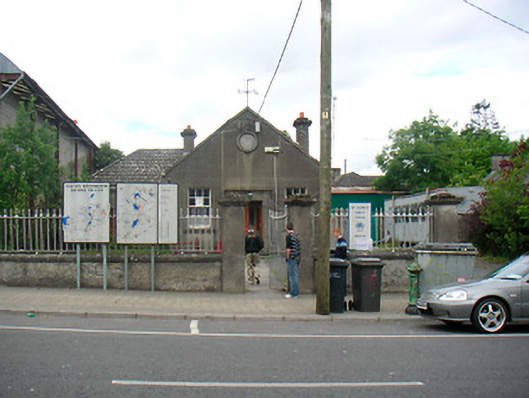
What is recorded here
Detached three-bay single-storey gable-fronted former court house and market house on L-shaped plan, built c.1850, and extended c.1920. Now in use as a youth club and credit union. Pitched and gabled tiled roofs with rendered chimneystacks and cast-iron rainwater goods. Cement rule-and-lined render to front gabled section, snecked limestone elsewhere. Engaged snecked limestone pillar on rectangular plan to south of gable-fronted projection. Moulded circular plaque to apex of gable-fronted section. Square-headed openings with six-over-six pane timber sliding sash windows, some with simple render surrounds. Projecting single-bay flat roofed entrance porch with square-headed door opening and replacement timber double-doors. Set slightly back from road with small gravel forecourt to front, bounded on road by low rendered wall with cast-iron railings, rendered gate posts and cast-iron gate.
This simple public building was built as a 'sessions house' to designs by Florence Mahony (died 1861), the County Surveyor, in 1850. It is marked as a 'Court House and Market House' on the Ordnance Survey Six-Inch Map of 1914. This modest but well-built structure is of social importance due to its former uses as a court house and market house, when it would have been one of the most important civic buildings in the locality. It retains its original character and much of its original fabric despite changes to its form over the years. The use of snecked limestone is a typical design feature of public buildings in the mid-to-late nineteenth-century. The engaged snecked limestone pillar is an indication of original decorative features prior to the erection of gable-fronted extension. This building makes a strong contribution to the historic nature of Delvin, while the cast-iron railings and gates adds character to the streetscape.
This does not grant access. Most recorded buildings are privately owned; view them only from public ground unless the owner allows entry.
Places near here
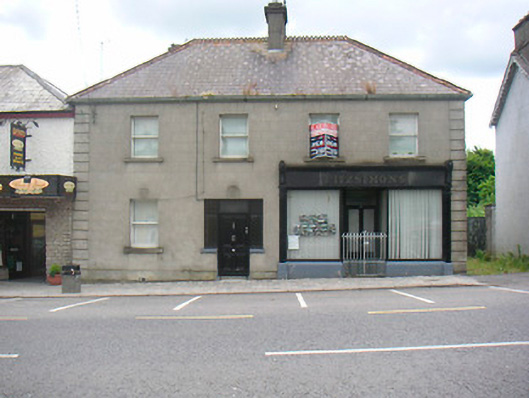 Fitzsimonshouse · 87 yd
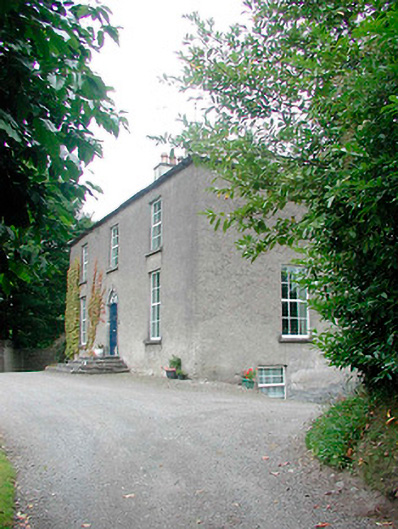 Laurel Grovehouse · 104 yd
 CastleCastle, tower house · 152 yd
 IndicatedCastle, motte · 162 yd
 Man-made underground passage in CastletowndelvinMan-made underground passage · 588 yd
 Enclosure in ClonynEnclosure · 959 yd
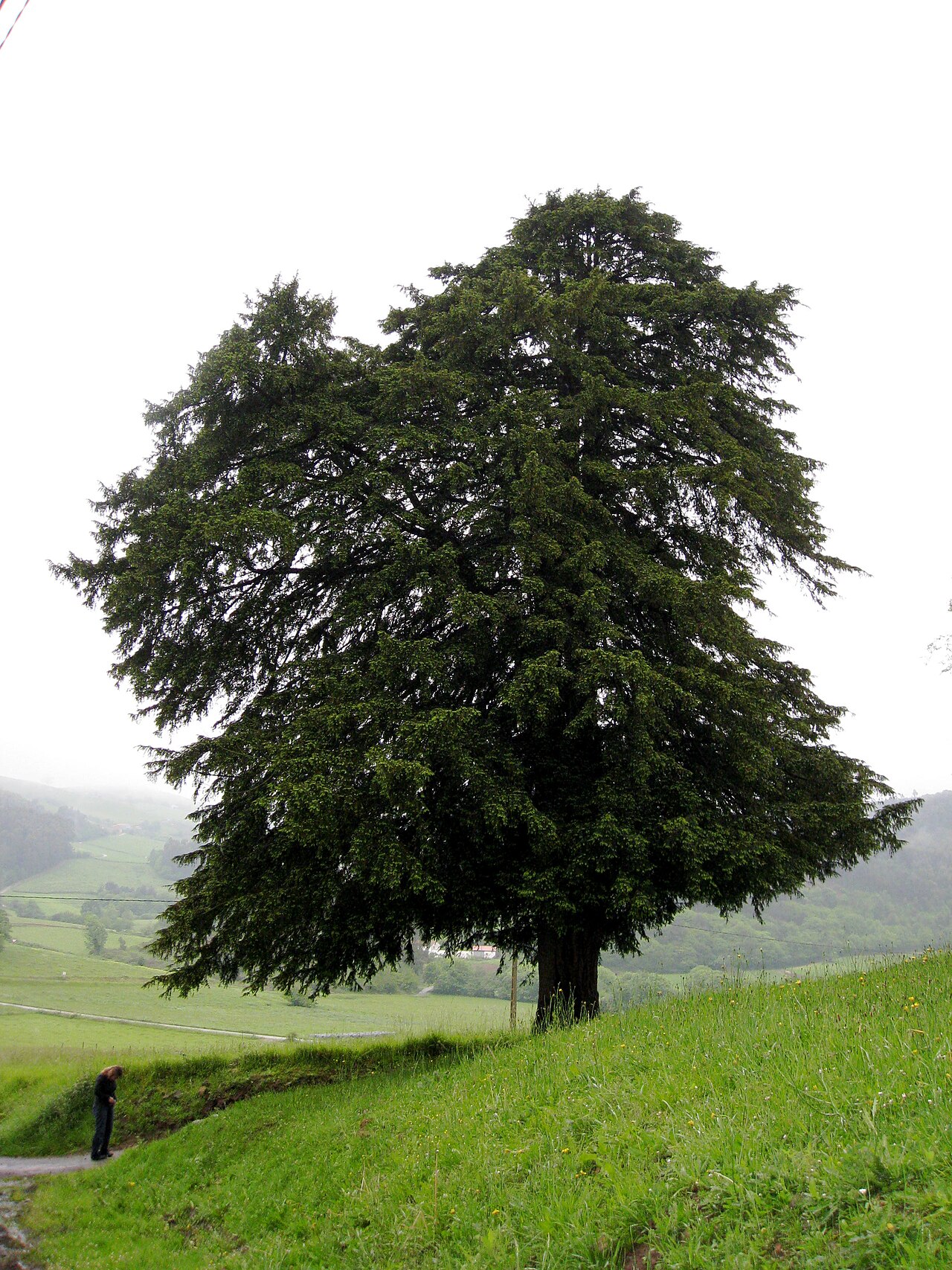 European YewEuropean Yew · 3.2 mi
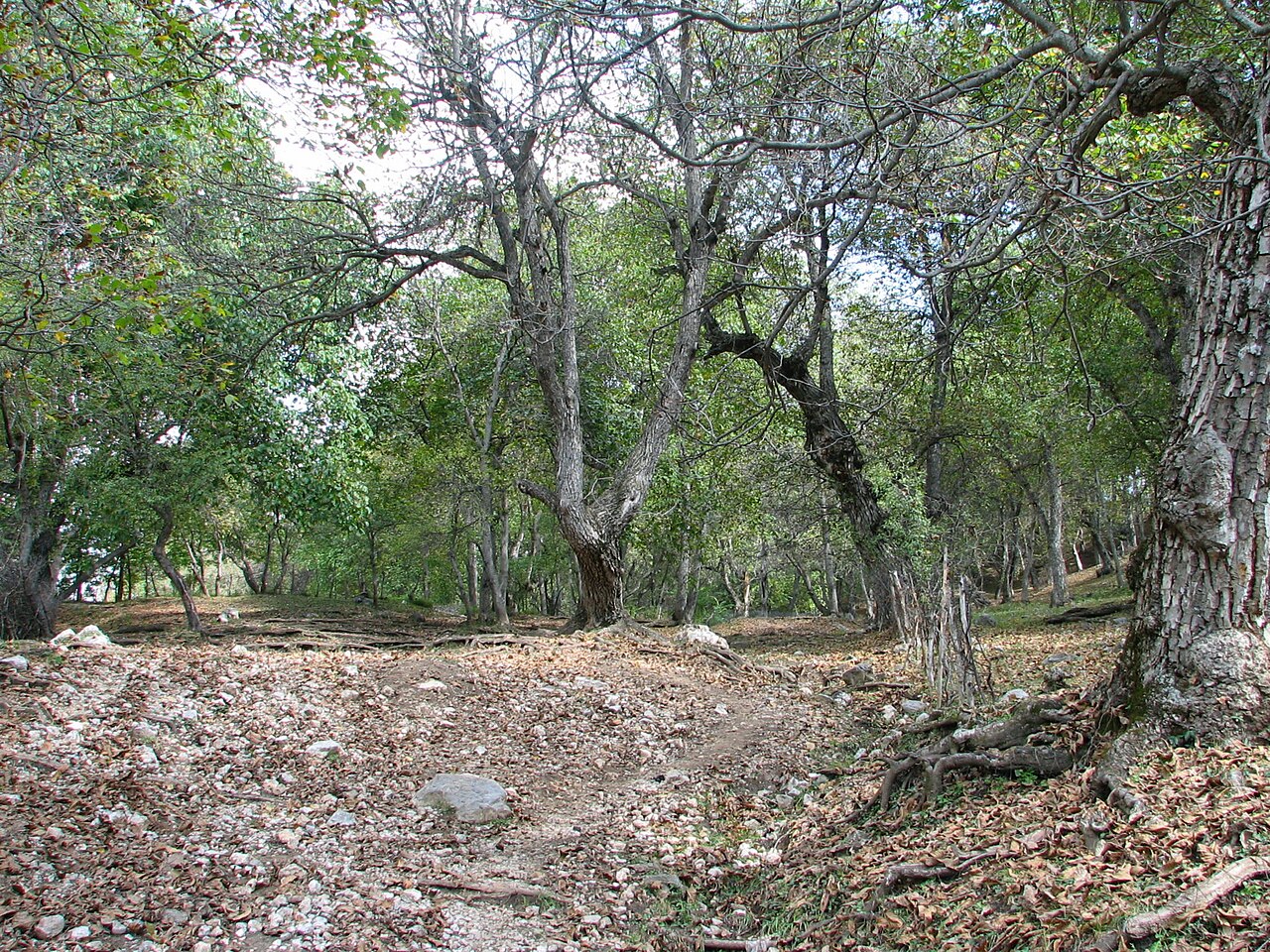 Persian WalnutPersian Walnut · 3.2 mi
 The Sloe HillMountain / peak · 5.0 mi
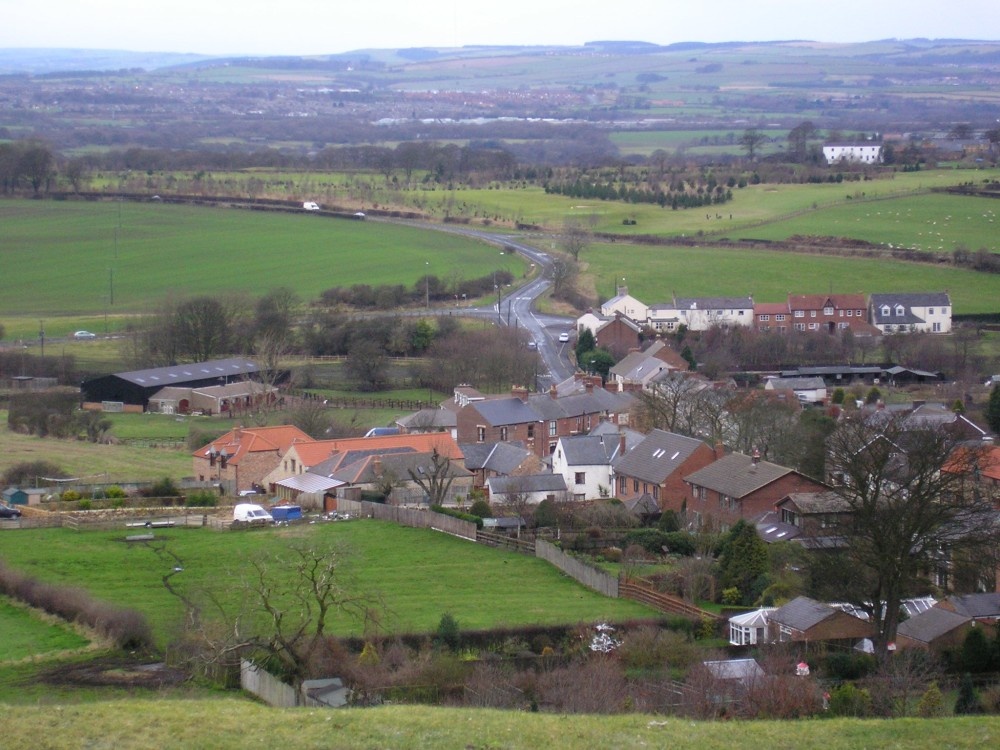 Noggin HillMountain / peak · 5.7 mi
 Zip WireHeritage attraction · 8.6 mi
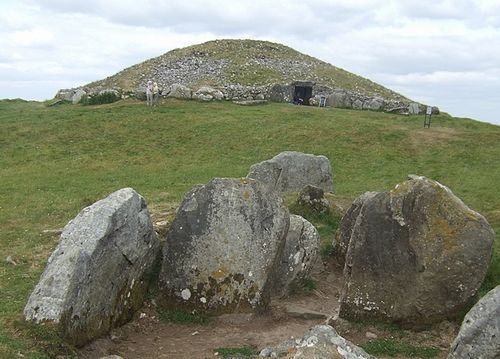 LoughcrewMegalithic tomb cemetery · 9.1 mi
Other information
Photo: National Inventory of Architectural Heritage · Website use allowed for educational or private purposes with source credit