What is recorded here
One of two cross-slabs on a large circular platform in Iniskea North, this stone stood half-buried in sand with a ring of loose stones and burnt clay at its base. Its face carries a cross of arcs inside a double circle, paired spirals below, and small Maltese crosses at either side. Henry excavated it in 1945; now it rests in the National Museum of Ireland while its companion still marks the platform edge.
This cross-slab is one of two cross-slabs associated with a large circular platform (MA023-014033-). It originally stood at roughly this location towards the S edge of a large circular platform (MA023-014033-) on the SE side of Inishkea North. It is now in the National Museum of Ireland. The other cross-slab (MA023-014034-) remains in situ on the E perimeter of the platform.
This cross slab was excavated by Henry (1945, 141-143; Slab 4) who found it roughly in the centre of the S half of the platform, ‘three quarters buried in the sand’, with only part of the decorated W face visible. Excavation revealed that the cross-slab was enclosed on its E side by a semi-circular wall/bank of loose stones and black earth, and a layer of burnt clay, ashes and shells lay at the base of the cross, within the arc of the wall.
The slab is subrectangular in shape with a gently rounded top. The incised design fills almost the full available space on one broad face (originally W-facing) of the stone. It consists of a cross of arcs in a double circle. The circle rests on a symmetrical back-to-back arrangement of paired spirals flanked by two small Maltese crosses each in a circle. Traces of a plait-like motif fill the narrow space intervening between the upper arc of the circle and the top edge of the stone. The cross-slab is a National Monument in state ownership (no. 379).
Attached image:
MA023-014035-_01.JPG Cross-slab in the National Museum
Compiled by: Jane O’Shaughnessy
Date of upload: 28 July 2023
Date likely to the early medieval period, given its form as a cross-slab. Such stones were often associated with Christian worship or memorial sites, possibly linked to an early church or monastic foundation.
The monument record does not grant public access. Check the route and ask the landowner before entering private land.
- What survives
- Recorded monument
Places near here
 Enclosure in Inis Gé ThuaidhEnclosure · 114 yd
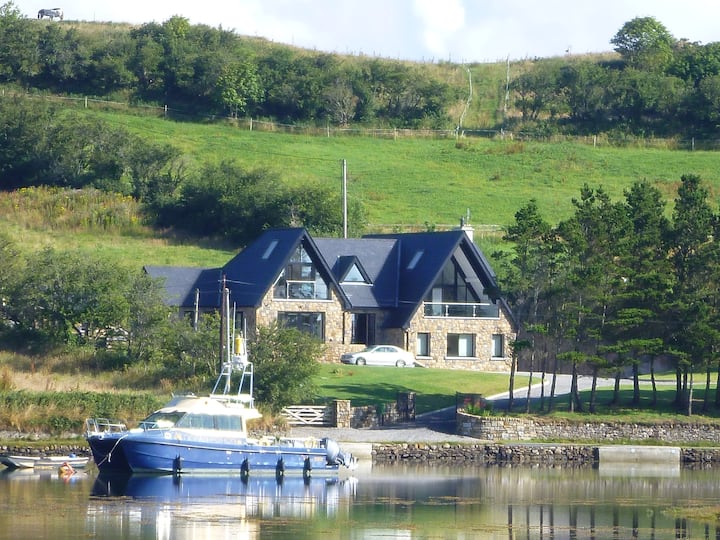 Cross in Inis Gé ThuaidhCross · 199 yd
 Inis Gé ThuaidhIsland · 714 yd
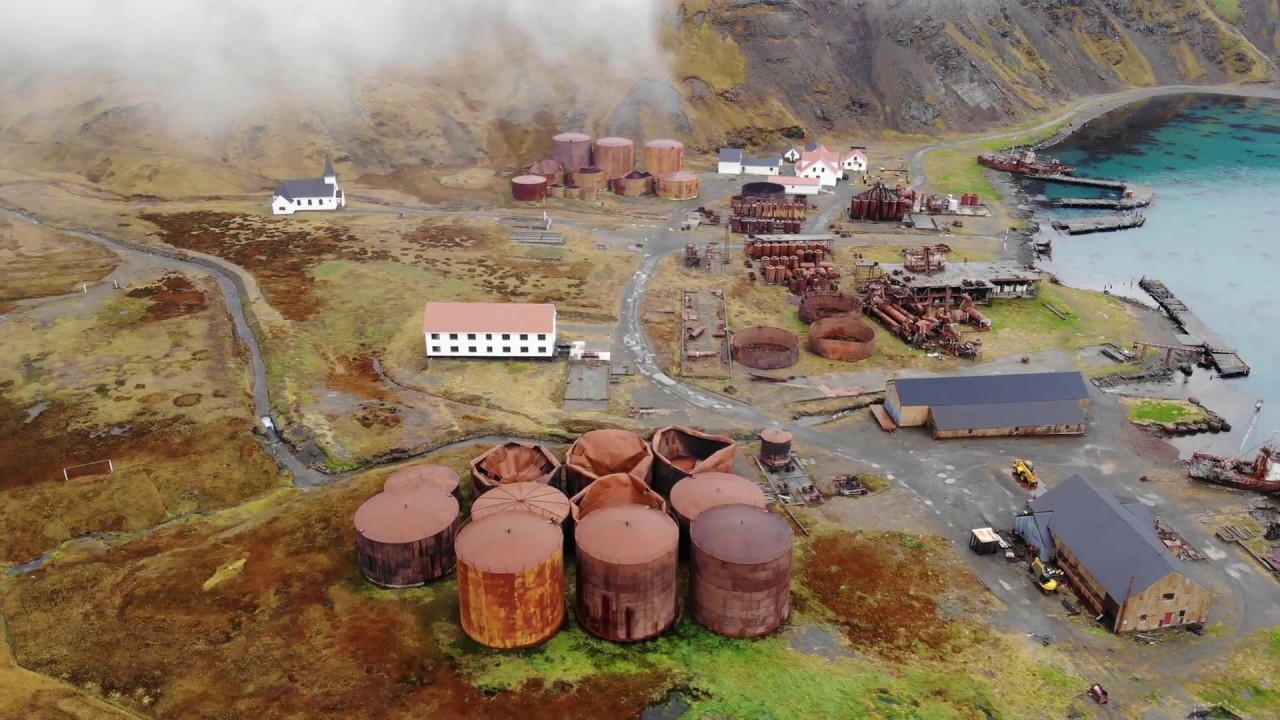 Rusheen Island Whaling StationRuins · 1661 yd
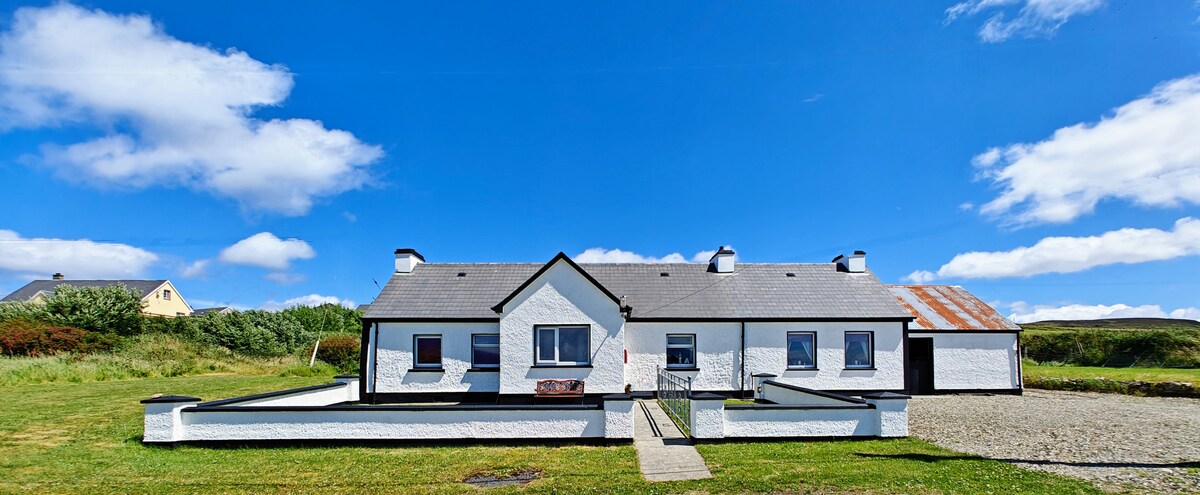 RoisínIslet · 1714 yd
 Church (in Ruins)Church · 1.1 mi
 Site of Redmond Barretts CastleCastle, unclassified · 3.2 mi
 Termon BeachBeach / strand · 4.0 mi
 Trá OilíBeach / strand · 4.6 mi
 Barranagh Castle in RuinsCastle, unclassified · 5.7 mi
 Cuan an Fhóid DuibhBay · 7.8 mi
 Saddle HeadHeadland · 8.0 mi