What is recorded here
An early monastic graveyard in Lullymore East still holds one of three surviving cross-inscribed stones, preserving a worship area now reduced to fragments scattered through walls and museums. The small sandstone slab bears a broad cross flanked by two smaller incised crosses, marking it as Kelly's Cross 12 rather than an ordinary grave marker. Most of the graveyard's crosses were removed for a 1798 memorial, leaving this stone behind like a forgotten sentence from a longer prayer.
One of three cross-inscribed stones (see also KD012-006009- and KD012-006010-) built into the wall of a graveyard (KD012-006005-) which forms part of an early monastic site (KD012-006----). A small sandstone slab (dims. L 0.31m; Wth 0.21m) bears a broad cross together with two small incised crosses flanking the shaft of the main cross. This is M. Kelly's 'Cross 12'. (Kelly 2006, 180) Seven other cross-inscribed stones (KD012-010----, KD012-010001- to KD012-010005- and KD012-010008-) and two cross-slabs (KD012-010006- and KD012-010007- ) were removed from this graveyard and built into a 1798 memorial, while an eleventh cross-inscribed stone (KD012-020----) lies in the Bog of Allen Nature Centre Museum.
Compiled by: Gearóid Conroy
Date of upload: 10 June 2011
Cross-inscribed stone in Lullymore East likely dates to the early Christian period (5th–9th century AD) and was probably used as a Christian memorial or waymarker. The presence of cross symbols suggests a religious function, possibly associated with the nearby early monastic site.
The monument record does not grant public access. Check the route and ask the landowner before entering private land.
- What survives
- Recorded monument
Places near here
 Church in Lullymore EastChurch · 20 yd
 Cross in Lullymore EastCross · 43 yd
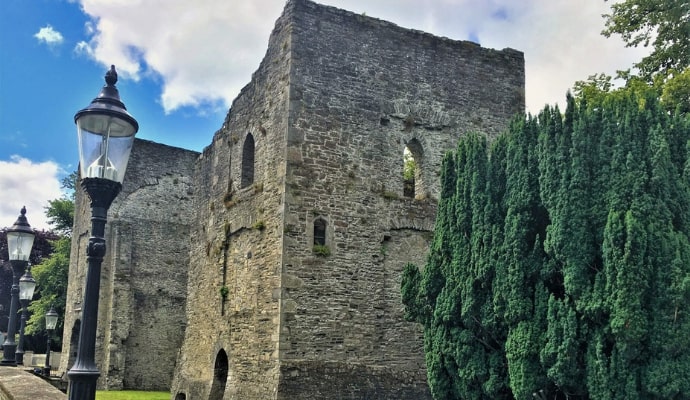 Lullymore MonasteryArchaeological place · 66 yd
 Lullymore Heritage ParkHeritage attraction · 1190 yd
 Foran's WoodForest · 1281 yd
 The Fairy BowerHeritage attraction · 1324 yd
 Killina BogWood · 1742 yd
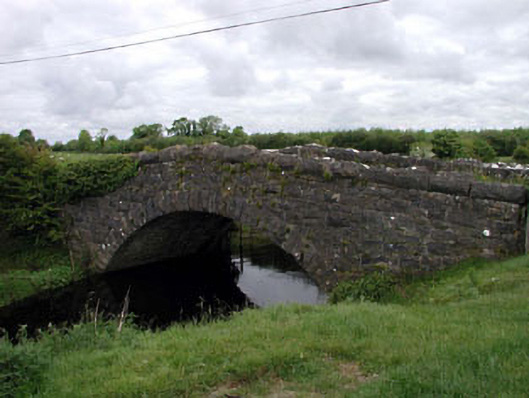 Agar Bridgebridge · 2.4 mi
 Bawn in Grangeclare WestBawn · 3.6 mi
 Kilmeague CastleRuins · 4.4 mi
 Bithia Mary CrokerMemorial · 4.5 mi
 Grand Canal WayVisitor information · 5.0 mi