Places near here
Photo credits
- National Inventory of Architectural Heritage
- National Library of Ireland on The Commons, Wikimedia Commons · Public domain
- Richard Croft, Wikimedia Commons · CC BY-SA 2.0
- Yair Haklai, Wikimedia Commons · CC BY-SA 4.0
- Wikimedia Commons contributor · Public domain
- Gerald England, Geograph · CC BY-SA 2.0
- J.-H. Janßen, Wikimedia Commons · CC0
- The White House, Wikimedia Commons · Public domain
- Jeffrey O. Gustafson, Wikimedia Commons · CC BY-SA 3.0
- Angilbas at English Wikipedia, Wikimedia Commons · Public domain
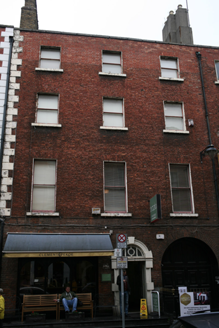 Clement & PekoeHouse · 65 yd
Explorer Tom Clement & Pekoe used to be a home with a carriage arch, now it’s a restaurant. The plaster frieze probably has faces on it judging you. Don't let the menu distract you from the history!
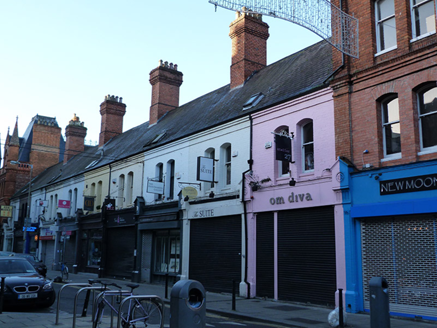 shop/retail outlet82 yd
Explorer Tom Shop on Drury Street is part of the South City Markets, looking very Victorian and proud of its brick details. The shopfronts are all lined up like soldiers waiting for inspection. I bet they sell something you don’t need but will buy anyway.
 Battle of DublinMajor battlefield · 279 yd
Explorer Tom Battle of Dublin in County Dublin was a week of street fighting that blew up the Public Records Office. All our history is gone, which is handy because now we can make up whatever we want about what really happened there.
Thomas MooreMemorial · 282 ydExplorer Tom The Thomas Moore Memorial in County Dublin is probably singing to itself right now. The guy wrote all those lovely songs, so the statue must be doing a full performance every time the wind hits the right angle. Listen out for a tune!
 Fusiliers' ArchMonument · 323 yd
Explorer Tom At the Green's entrance stands an arch with a Roman shape and a very Irish argument behind it. The Fusiliers' Arch went up in 1907, its proportions said to follow the Arch of Titus. Wicklow granite and limestone from near Drogheda carry names of 222 Royal Dublin Fusiliers who died in the Second Boer War. I can joke about my inability to copy a Roman doorway, but not about those men. Critics of the monument's imperial message called it Traitor's Gate, a sharp reminder that a public stone can mean different things to neighbours. Crossfire in the 1916 Rising later damaged the arch, adding another chapter to its surface. It is part of the public entrance to Saint Stephen's Green, so you can see both sides without a ticket when the gates are open. Look beneath, read a few names, then turn around and see the city that kept debating it.
 Special Olympics MemorialMonument · 326 yd
Explorer Tom Special Olympics Memorial in County Dublin is a cool spot where athletes probably ran faster than my uncle on a bad day, which is saying something massive. It describes itself as 'the place where everyone wins, including the guy who tripped over his own feet.' Bring the dog, it'll have opinions.
 Dublin CastleHeritage attraction · 332 yd
Explorer Tom If I guide you through Dublin Castle, ask me to bring a map. Dublin Castle has a river under it and a city name hiding behind it. The dark pool called Dubh Linn lay beside the original fortification and gave Dublin its name; the River Poddle that fed it now runs beneath the complex. King John ordered a strong castle here in 1204, but much of what you see today is later Georgian building rather than a complete medieval fortress. King John could order a fortress, but even he could not order the Poddle to run elsewhere. I would have liked the original builders to leave a little sign saying “mind the river under the floor”. In 1922 the British administration handed the complex to the new Irish government, and in 1938 Douglas Hyde was inaugurated here as the first President of Ireland. Those ceremonies still use the castle. Look for the State Apartments, now part of the museum side of a working government complex, and remember that some rooms may be needed for official events. There is plenty of history above ground without trying to follow the Poddle down below.
 O'Donovan RossaMonument · 350 yd
Explorer Tom O'Donovan Rossa is a round plaque set in granite, which Saint Patrick would have probably called 'overkill' while trying to drive out all the snakes from his own monument next door. He’s just standing there looking grumpy because nobody brought him a proper cup of tea or a decent story to cheer him up. Stand where the owner stood and practise looking smug.
 Veronica GuerinHeritage attraction · 358 yd
Explorer Tom Veronica Guerin in County Dublin was a journalist who dug up too much dirt and paid for it on June 16th, 1996. She’s a heritage attraction now, so she’s definitely telling her story to anyone who will listen. Don’t interrupt her!
 CastleCastle, Anglo-Norman masonry castle · 391 yd
Explorer Tom Castle in County Dublin has been hosting imaginary fiddlers for centuries who just never seem to get tired of playing the same tune all night. It’s the kind of place that makes a dull Tuesday interesting, mostly because it looks like it’s about to collapse into the river Poddle. It's the kind of place that makes a dull Tuesday interesting.
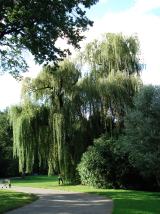 Weeping willow448 yd
Explorer Tom Weeping willow in County Dublin took roughly four thousand cups of tea to build, which explains why it looks so tired and dramatic all the time. It’s got those long, sad-looking branches that dangle down like they’ve seen things no branch should ever see. Leave nothing but footprints and a bad pun, because this tree really needs the comfort.
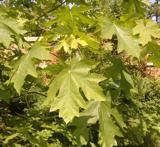 Bigleaf Maple490 yd
Explorer Tom Bigleaf Maple: Locals swear this maple is older than the village, which is either impressive or just plain nonsense. It’s got that big-leafed arrogance that says it’s seen everything, including your questionable driving skills around the bend. Find a local and ask them the real story, then come back and tell me.
More things to do in County Dublin · All of County Dublin

What do you know about this place?Tap to add a comment or ask a question