What is recorded here
Cist Burial is a cist in Knocknashammer OR Cloverhill, County Sligo, Ireland. The roofless chamber sits on a south-southwest pasture slope and contains nine upright slabs, four of which display curvilinear motifs. Wood-Martin recorded that the monument was originally roofed with a single slab, covered by a mound, and enclosed by a stone circle before ploughing disturbed it in 1830. Scholars continue to debate whether this decorated structure is a cist or a possible passage tomb.
On a SSW slope in pasture with good views in all directions. The structure is visible as a roofless chamber (L 2.72m; max. Wth. 1.20m) set in the ground. It is aligned approximately E-W and is open to the E. Constructed of nine upright slabs, four of which are decorated with curvilinear motifs (one has been removed). Wood-Martin (1887-8, 68-9, figs. 77-81) recorded that the monument was originally roofed with a single slab, covered by a mound and enclosed by a stone circle and had been disturbed in 1830 during ploughing. The floor was found to be paved with slabs and quantity of cremated bone and a cinerary urn were found. There are conflicting views as to the nature and date of this cist-like structure and its decoration (see Evans 1966; Herity 1974; Shee Twohig 1981, the latter two with earlier references; Weir 1980, 207-8). It has been listed as a possible passage tomb by Ó Nualláin (1989, 92).
Compiled by: Paul Walsh
Date of upload: 9 January 2012
See linked document with details from Seán Ó Nualláin, Survey of the Megalithic Tombs of Ireland. Volume V. County Sligo. (Dublin: Stationery Office, 1989)
Cist burial, likely dating to the Early Christian or Bronze Age period. Its position on an open slope suggests a possible ritual or commemorative function within a wider landscape of ancient activity.
This remains an important historical record, but the official description says the monument is no longer visible or has been destroyed. The monument record does not grant public access. Check the route and ask the landowner before entering private land.
- What survives
- No visible remains or recorded as destroyed
Places near here
 Carrowmore 22Archaeological place · 521 yd
 Carrowmore 19Archaeological place · 565 yd
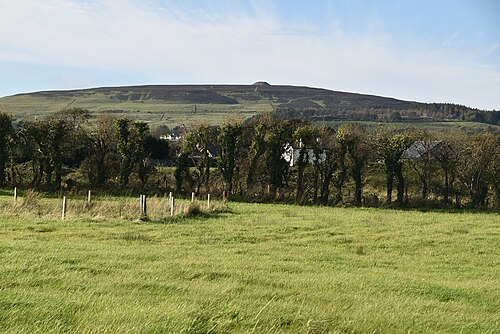 Carrowmore Megalithic CemeteryHeritage attraction · 838 yd
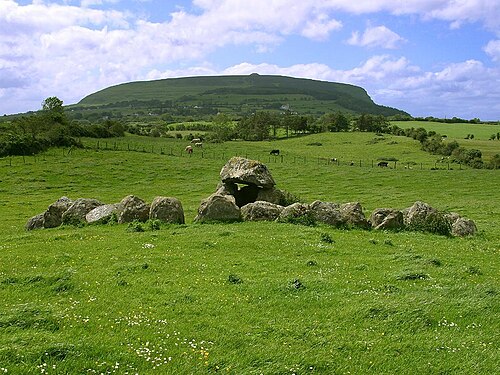 Carrowmore Visitors CentreVisitor information · 976 yd
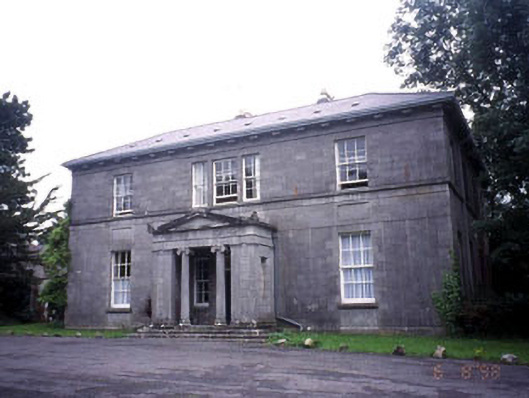 Kevinsfort Househouse · 1.4 mi
 Kiln in BreeogeKiln · 1.6 mi
 St. John's CathedralMemorial · 1.8 mi
 Discover IrelandVisitor information · 2.0 mi
 CastleCastle, Anglo-Norman masonry castle · 2.0 mi
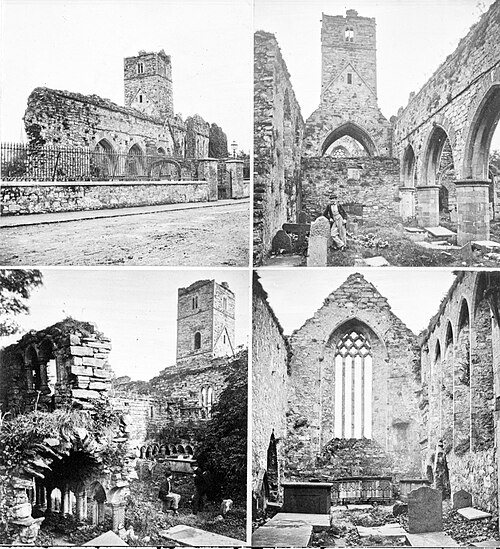 Sligo AbbeyMuseum · 2.1 mi
 Famine MemorialMonument · 2.1 mi
 Tobernalt Holy WellSpring · 2.4 mi