What is recorded here
Located at the W edge of a slight N-S ridge. This is the site of the parish church of Screen – Irish: scrín meaning a shrine - within a raised rectangular graveyard (dims. 39m E-W; 27m N-S). According to a Visitation by Thomas Ram, the Protestant bishop of Ferns, in 1615 this church was impropriate to Henry Wallop and the name of the priest, if any, is not recorded. Nor is the condition of the church building recorded (Hore 1900-11, vol. 6, 268). John O'Donovan writing c. 1840 (O'Flanagan 1933a, vol. 1, 354) records the former existence of a church, no trace of which is visible at ground level. An oval stone (dims. 0.52m x 0.35m; H 0.35m) with an oval socket, which is almost buried in the NE part of the graveyard, is regarded as a font but may be a cross-base. There is a natural spring c. 100m to the W, where patterns were held on 27th September until c. 1820. (ibid.).
A geophysical survey (16R185) conducted by Earthsound Archaeological Geophysics in the field to the W (dims c. 60m E-W; c. 60m NW-SE) tentatively identified two possible ditches as well as a number of pits. Archaeological testing (16E0616) uncovered a number of archaeological features consistently across the area consisting mostly of pits, none of which were excavated but the pottery and other material recovered, including a late fifteenth century Geraldine groat suggests a high medieval date. (McLoughlin 2017)
See the attached section from the Down Survey (1656-8) parish map (N at top) reproduced courtesy of the National Library of Ireland (Ms 725)
The above description is derived from the published 'Archaeological Inventory of County Wexford' (Dublin: Stationery Office, 1996). In certain instances the entries have been revised and updated in the light of recent research.
Compiled by: Michael Moore
Date of upload/revision: 4 September, 2012
Amended: 7 January 2019
The church in Ballymore, dedicated to St. Cronan, was likely founded in the early medieval period, with its raised graveyard and rectangular layout typical of Irish monastic sites. It served as the parish church of Screen and reflects the ecclesiastical traditions of the region.
The monument record does not grant public access. Check the route and ask the landowner before entering private land.
- What survives
- Recorded monument
Places near here
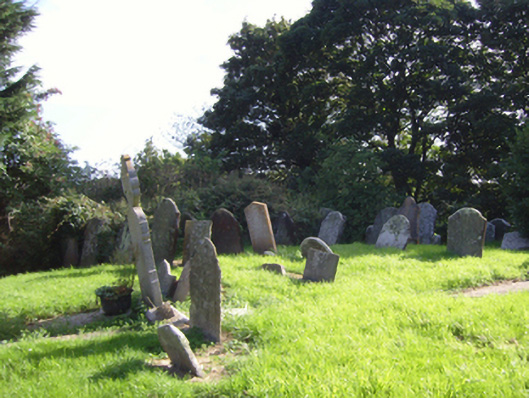 graveyard/cemeterygraveyard/cemetery · 4 yd
 Patrick Fortunehouse · 27 yd
 Holy well in Ballymore (ballaghkeen By.)Holy well · 113 yd
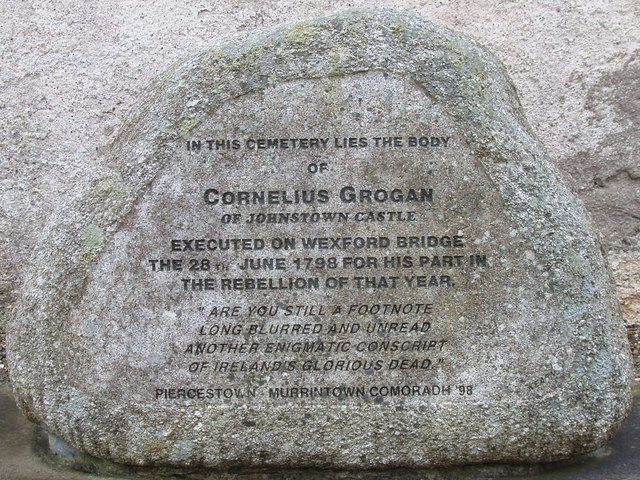 1798 MemorialMemorial · 1428 yd
 CastleCastle, unclassified · 1.1 mi
 Font (present location) in Ballinacoola MoreFont (present location) · 1.5 mi
 Ballywish SouthForest · 2.2 mi
 Ballinesker BeachBeach / strand · 2.3 mi
 Rectory Hall ForestWood · 2.6 mi
 Peace GardenMemorial · 2.7 mi
 IndicatedCastle, unclassified · 2.7 mi
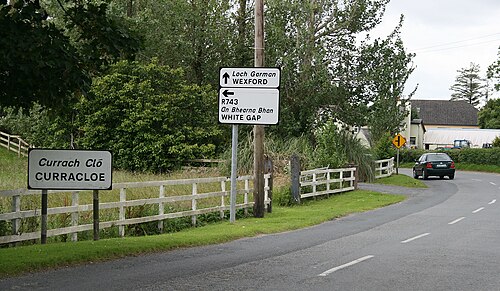 Curracloe BeachBeach / strand · 2.7 mi