
What is recorded here
Façade of attached three-bay two-storey Primitive Methodist preaching house, built 1835, on a symmetrical plan centred on single-bay two-storey gabled breakfront. Sold, 1882, to accommodate alternative use. Adapted to alternative use, 1919. Rubble stone walls originally rendered with yellow brick English bond battlemented parapet on yellow brick header bond stringcourse having cut-granite coping. Pointed segmental-headed central door opening with remains of yellow brick block-and-start surround having chamfered reveals. Lancet window opening in tripartite arrangement (first floor) with yellow brick block-and-start surrounds having chamfered reveals framing timber fittings having cruciform glazing bars. Remodelled door opening (west) with pointed segmental-headed door opening (east). Lancet blind window opening (west) with remodelled window opening (east). Street fronted with concrete footpath to front.
The façade of a preaching house representing an integral component of the early nineteenth-century built heritage of Dublin with the architectural value of the composition, one succeeding a makeshift preaching house opened (1826) by Reverend Adam Averell (1754-1847), suggested by such attributes as the strict symmetry centred on a faceted breakfront; the construction in a brownstone and silvery calp with yellow brick dressings producing a mild polychromatic palette; the slender profile of the openings underpinning a "medieval" Gothic theme; and the monolithic battlements embellishing the roofline. The preaching house was subsequently adapted as Saint Mary's National School when the congregation relocated (1882) to the Methodist Church (1881-2; demolished 2011), Jones's Road, Drumcondra, but was described as 'in bad repair and in need of extensive improvements' at the turn of the twentieth century (Reports from Commissioners, Inspectors, and Others...Education (Ireland) 1902, 126). The preaching house was then leased (1919) by Delia Larkin (1878-1949) for the Irish Workers' Club, with the playwright Seán O'Casey (1880-1964) as caretaker, which led to a falling out with her brother, James Larkin (1876-1947), when it was claimed that she was the leaseholder 'of a place [called Langrishe Hall] where the game of "House" was carried on'. Larkin did not approve of his sister running a game of Bingo amongst the poor of Dublin, or at the very least profiting from rent from a hall used for that purpose, and pressed Delia to close Langrishe Hall down when he became General Secretary of the Workers' Union of Ireland (Watts in History Ireland 2017). The preaching house has since been substantially altered but the façade continues to make a picturesque impression closing the vista in Langrishe Place.
This does not grant access. Most recorded buildings are privately owned; view them only from public ground unless the owner allows entry.
Places near here
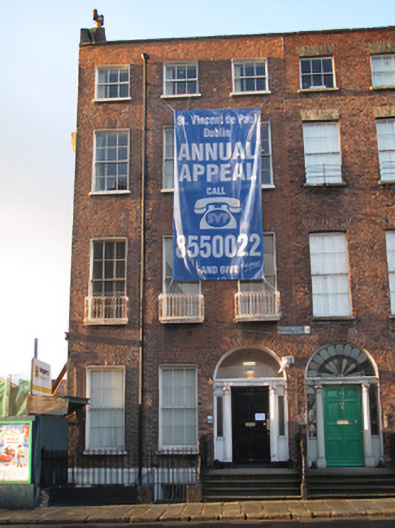 Ozanam Househouse · 125 yd
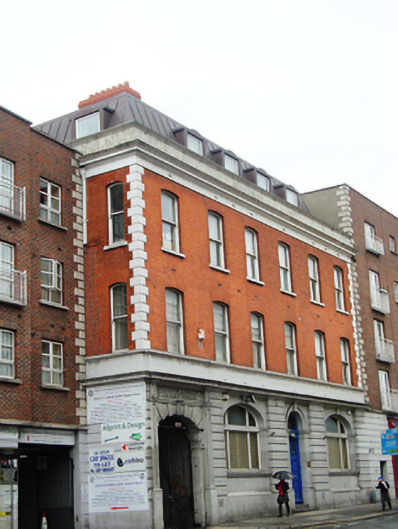 bakerybakery · 152 yd
 The James Joyce CentreMuseum · 281 yd
 Sir Samuel FergusonMemorial · 319 yd
 Burial ground in Unknown TownlandBurial ground · 321 yd
 1974 Dublin BombingMemorial · 365 yd
 IndicatedMonumental structure · 480 yd
 Burning of the Custom Housearmed conflict · 842 yd
 Burial in Unknown TownlandBurial · 884 yd
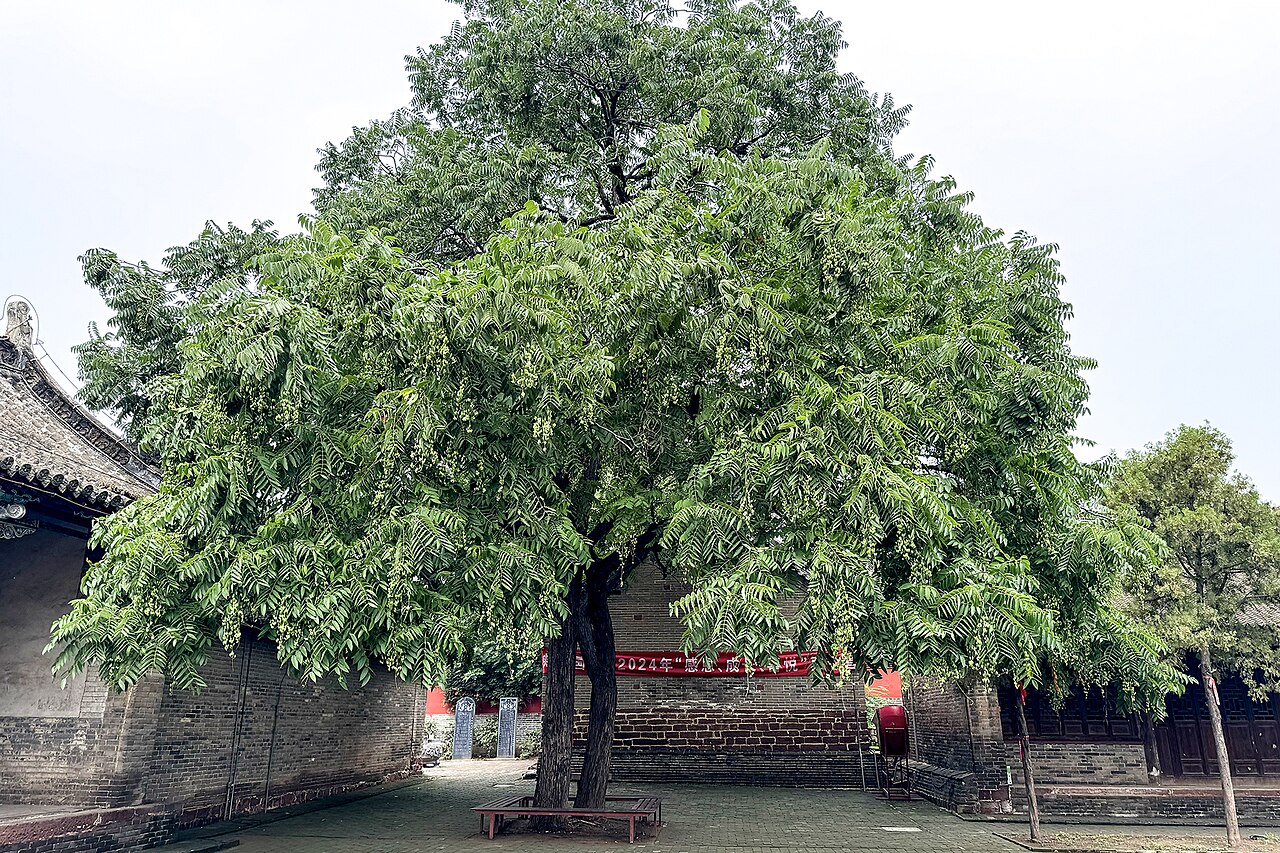 Chinese ToonChinese Toon · 937 yd
 Hungry TreeHeritage attraction · 1259 yd
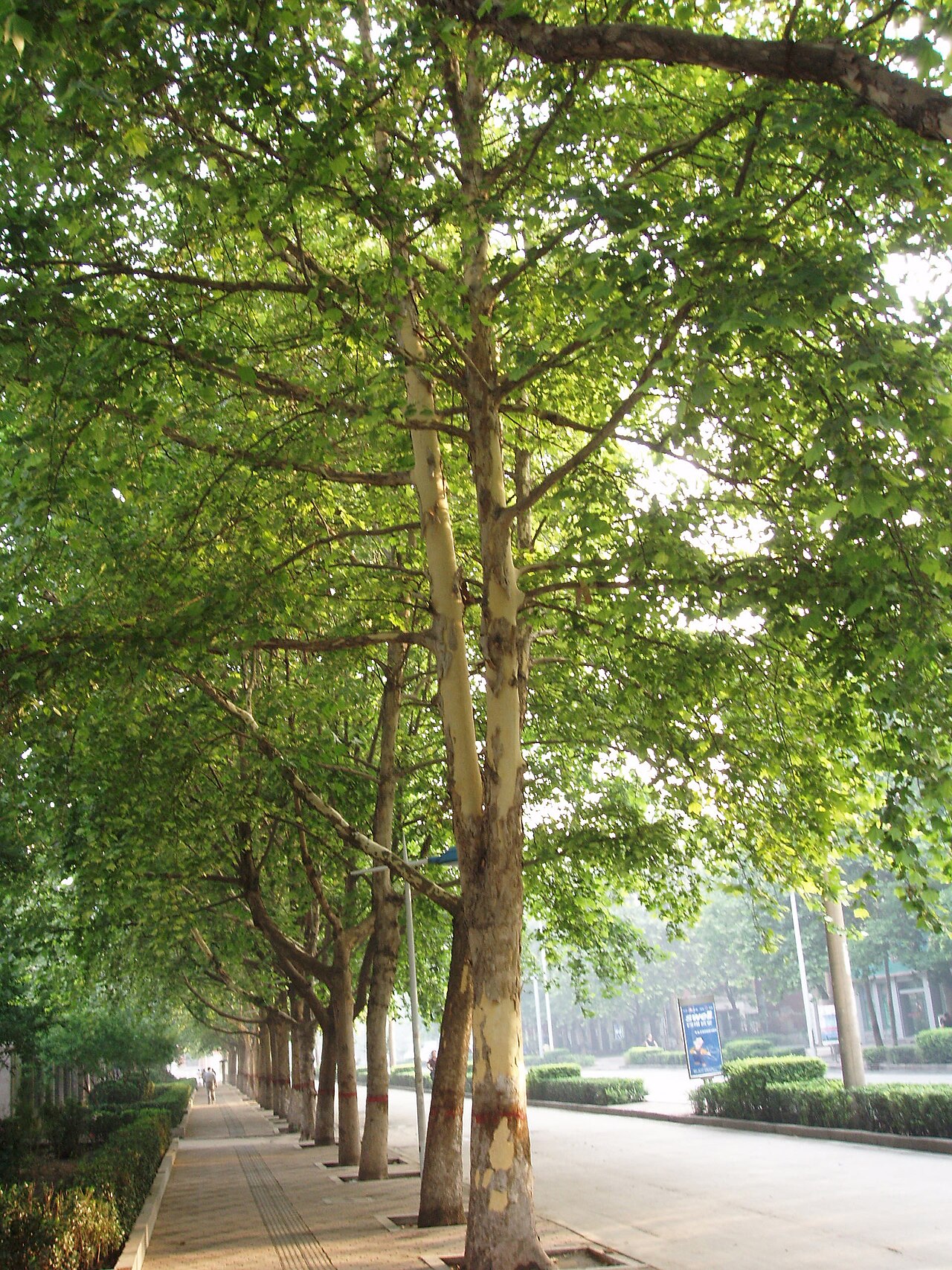 London PlaneLondon Plane · 1263 yd
Other information
Photo: Dwmalone · CC BY-SA 4.0