What is recorded here
Curragower Castle stood beside a working weir in Limerick before it became a castle at all. Water turned mills, mills fed people, and people built stone around the busy place. That is clearer than inventing a noble origin. The name changed its spelling while the function stayed the same: hold back water, take its force, and live beside it.
Curragower Castle described in the Urban Survey of Limerick (Bradley et. al. 1989, 259) as following; ‘In 1657 this was located near the Curragour weir [LI005-110----] parish of St. Nicholas (Westropp 1906-7, 81)'.
Westropp (1906-7, 81) recorded the following details on Curragower Castle; 'The weir [LI005-110----] of Coradoguir is named in 1201 in the Inq. M. f. Henry (B.B.L., p. 15). 1577 The mills [LI005-017074-/075-] of Cordower granted to Hercules Rainsford (Fi. 3027). 1627 W. Creagh f. Martin held the C[astle]. and two mills of Carrowdarrower in the parish of St. Nicholas (Inq. Chan. 50). 1657 Curragowr stone house and C[astle] (C.S., xxviii., p. 64).
Compiled by: Caimin O'Brien
Date of upload: 21 November 2019
Curragower Castle was built in the 17th century, with references to its location near a weir in the parish of St. Nicholas in Limerick. It is remembered as part of the local historical landscape and as an example of early modern Irish castle architecture in the region.
The monument record does not grant public access. Check the route and ask the landowner before entering private land.
- What survives
- Recorded monument
Places near here
 Bridge in Englishtown,limerick CityBridge · 28 yd
 Heritage FountainMonument · 46 yd
 prison/jailprison/jail · 82 yd
 Curragower FallsWaterfall · 103 yd
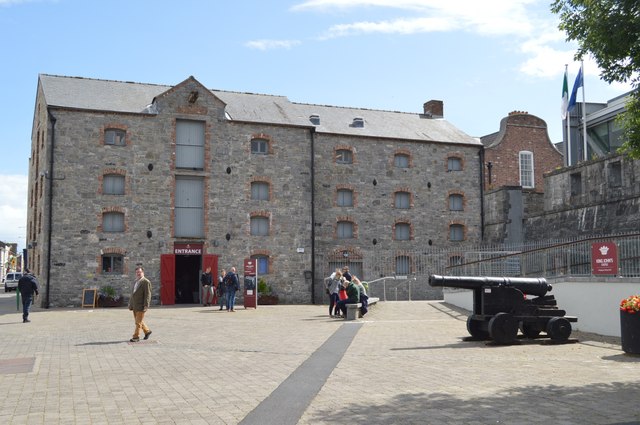 King John's Visitor's CentreMuseum · 111 yd
 Graveyard in Limerick CityGraveyard · 122 yd
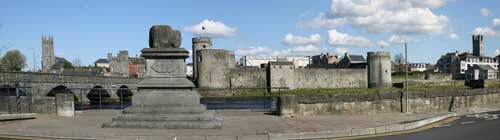 King John's CastleHeritage attraction · 123 yd
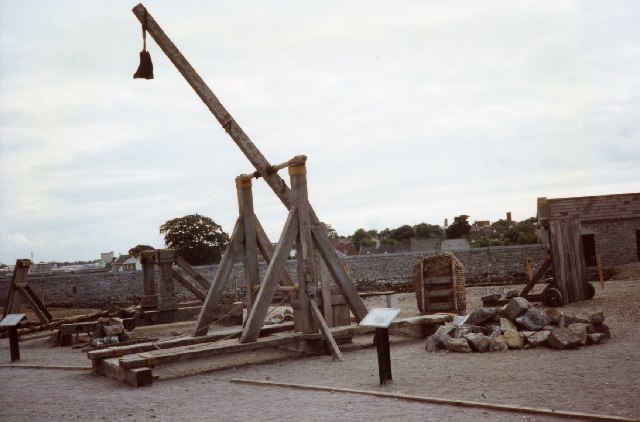 Castle BarracksCastle, Anglo-Norman masonry castle · 131 yd
 Anthony Foley MemorialMemorial · 167 yd
 Merchants QuayQuay · 177 yd
 OutlinedCastle, tower house · 307 yd
 Siege of Limericksiege · 428 yd