
What is recorded here
In March 1945 a number of human burials were discovered while ploughing a field on a farm at Faddan Beg, Ferbane, Co. Offaly (Cahill and Sikora 2011, vol.2, 416-18). The remains were found at a depth of 0.5-0.75m below the ground surface. Some of the remains were re-interred on the spot, and a ring was apparently found close to one of the burials. Accounts of the discovery differ, one states that the ring was on a finger of a skeleton while the second states that the ring was found approximately '3 yards' from where the burials were. The site was reported to the NMI through Mr Richard Duff, Dundrum, Dublin, who brought the ring to the Museum. The following February an investigation was carried out by Ellen Prendergast accompanied by Mr Duff. The field is known locally as 'Andy's hill'. According to Prendergast's report the whole site had been heavily disturbed, but the landowner was able to indicate the area in which the bone was found. A number of bones were noticed directly under the ploughed soil. Prendergast also describes finding a finger bone on which verdigris was noticed. There was no evidence of grave cuts. According to the landowner, the skeletons had lain side by side, fully extended, supine and facing east. The depth of topsoil varied from c.0.1m to 0.75m over the burials. Prendergast uncovered the remains of nine skeletons, all of which appeared to have been extended. A bronze finger ring was reportedly found with the burial in grave 1, which was immediately south of grave 2. To the west of these two were the remains of seven other burials, three complete and four partial. Grave 4 contained a fully extended and supine skeleton with the hands extended by the side. The feet do not appear to have been particularly close together. Grave 5 lay at a slight angle, with the head of the interred placed to the south-west and the feet to the north-east. Prendergast describes how a 'smaller skeleton (in grave 6) lay in confusion with the pelvis of that in grave 5, and it is possible that these were foetal bones. The skeleton in grave 7 was extended, supine and oriented west-south-west/east-north-east. Some skull bone and leg bones (numbered skeleton 8) were found over the lower limbs of this skeleton. The burial in grave 9 consisted of a skull and some other bone fragments, but no other parts of the skeleton were found.
Compiled by: Mary Cahill and Maeve Sikora
Date of upload: 09 August 2012
Early Christian burial; 6th–7th century AD. The site is significant for providing archaeological evidence of early Christian funerary practices in the midlands of Ireland.
The monument record does not grant public access. Check the route and ask the landowner before entering private land.
- What survives
- Recorded monument
Places near here
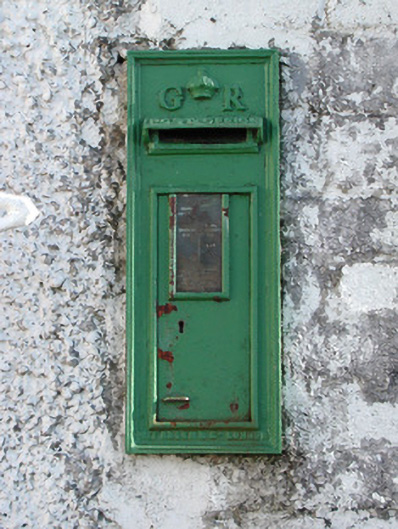 post boxpost box · 453 yd
 IndicatedEnclosure · 536 yd
 Enclosure in CamusEnclosure · 1297 yd
 Kilcummin Ho.Castle, unclassified · 1351 yd
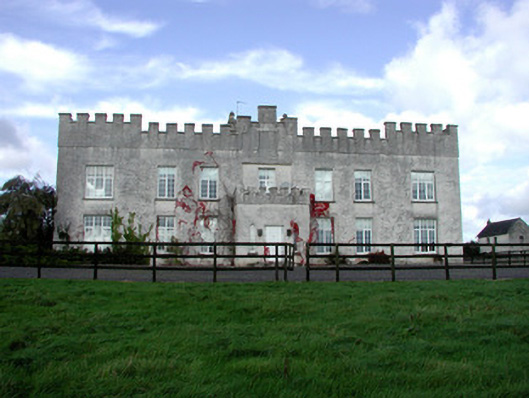 Belmont Housecountry house · 1451 yd
 Site of Bellmount CastleCastle, unclassified · 1474 yd
 St. Saran's WellSpring · 1.6 mi
 Kilbeg WoodWood · 2.4 mi
 LehinchIsland · 3.1 mi
 Cloghan HillMountain / peak · 3.1 mi
 InchinaskeaghIsland · 3.3 mi
 Ballylin Bog BoardwalkHeritage attraction · 3.8 mi
Other information
Photo: Credit not shown in the picture search · Rights wording not checked; contact us if this picture should be removed