What is recorded here
Half a metre of sandstone, hollowed like a cup, still sits on the rebuilt church wall in the north graveyard. Rain may have cut the bowl or a human hand may have shaped it for oil, water or prayer. The stone predates the concrete pedestal beneath it, meaning the church and graveyard rose around an older marker rather than the marker arriving later.
Located at the site of a church (MA117-009001-), in the N half of a graveyard (MA117-009002-).
This bullaun stone consists of a block of sandstone (Wth 0.4m by 0.42m at top, 0.14m by 0.3m at base; H 0.26m) with a bowl-shaped, circular depression (diam. 0.25m; D 0.1m) in the upper surface. The stone is roughly square in horizontal cross-section at top but narrows at the base, so that in vertical cross-section it is roughly V-shaped, with a blunted base. It has rounded or gently curved edges, except on one side (now at W) where there is a sheer vertical face. The top of the circular depression grades gently into the top surface of the stone; the sides incline inwards steeply to a narrow base. The bullaun stone is set on a small pedestal of cement, on top of the low rebuilt E wall of a church (MA117-009001-).
Images:
MA117-009003-_01.JPG
MA117-009003-_02.JPG
Compiled by: Jane O'Shaughnessy
Date of revised upload: 25 July 2017
Likely dating to the early Christian period, bullaun stones were often used for ritual purposes, such as the preparation of holy water or as baptismal fonts. They are sometimes associated with local saints or folklore, though specific traditions for this stone are not recorded.
The monument record does not grant public access. Check the route and ask the landowner before entering private land.
- What survives
- Recorded monument
Places near here
 Church in ruinsChurch · 4 yd
 Runnet HillMountain / peak · 1279 yd
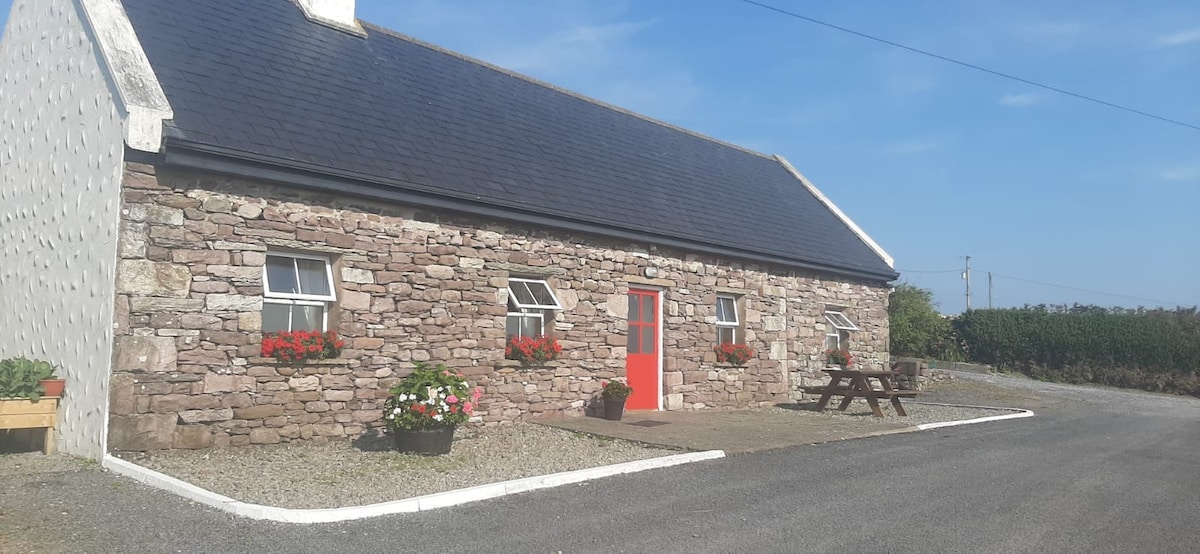 ToberkeelaghHoly well · 1390 yd
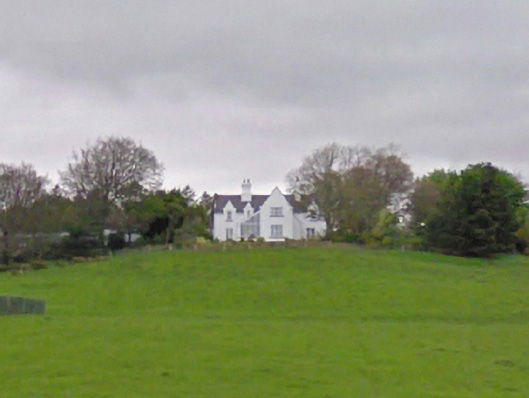 The Grangehouse · 1590 yd
 Coill Thuar Mhic ÉadaighWood · 1.7 mi
 Black RockIslet · 1.7 mi
 Dash IslandIslet · 1.7 mi
 CarrigeenbaunNamed rock · 2.0 mi
 Devenish RocksNamed rock · 2.2 mi
 St. Brigets WellHoly well · 3.4 mi
 Castle in ruinsCastle, unclassified · 4.2 mi
 Loughmask Castle in ruinsCastle, tower house · 4.9 mi