What is recorded here
Situated at the NW end of a 19th-century house and appears to have been considerably altered by the occupiers of the house. The remains of the castle are situated on top of a motte-like earthwork (OF026-005002-) with possible surrounding bawn wall which is visible at E angle. Only the W wall of this Tower house…
Read the whole record
Situated at the NW end of a 19th-century house and appears to have been considerably altered by the occupiers of the house. The remains of the castle are situated on top of a motte-like earthwork (OF026-005002-) with possible surrounding bawn wall which is visible at E angle. Only the W wall of this Tower house (OF026-005001-) remains with a later door inserted into the W gable. The Tower house survives three storeys high and is built with roughly coursed limestone boulders with slight base batter visible. 19th-century church located on site of medieval church (OF026-004001-) to SW of castle. Fireplace and chimney stack at SW angle with possible curtain tower at E angle of bawn. Attacked by the Irish confederate army in 1641 when it was occupied by Lettice, Lady Offaly (Fitzgerald 1918-22, 27-8). According to Leask (1918, 4) ground floor was vaulted. (Cooke 1875, 43: O' Flanagan 1933, vol. 1, 53-6)
The above description is derived from the published 'Archaeological Inventory of County Offaly' (Dublin: Stationery Office, 1997).
From the National Monuments Service (Archaeological Survey of Ireland) record OF026-005003
Places near here
Picture notes
- National Inventory of Architectural Heritage
- Trenchspike, Wikimedia Commons · CC BY-SA 4.0
- Computer-made picture. It does not show this monument.
- Computer-made picture. It does not show this playground.
Geashill Castle (ruins)Castle · 3 yd Geashill CastleBuilding misc · 66 ydSaint Mary's Church (Geashill)Church/chapel · 89 ydGraveslab in DalganGraveslab · 110 ydComputer-made pictureIndicatedDesigned landscape, avenue · 139 ydComputer-made pictureFather BurbageMemorial · 183 ydGeashill Glebe WalkVisitor information · 292 ydFurzehill WoodWood · 1444 ydRaheen Castle (site of)Archaeological place · 1.6 miLady's WellSpring · 3.0 miRath HillMountain / peak · 3.0 miChildren's playground4.4 miComputer-made picture
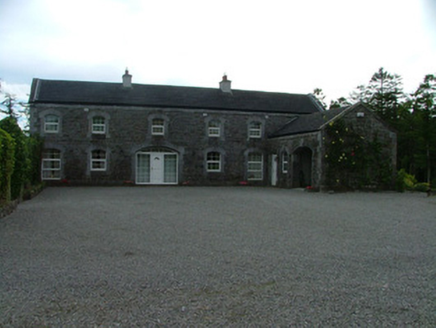 Geashill CastleBuilding misc · 66 yd
 Saint Mary's Church (Geashill)Church/chapel · 89 yd
 Graveslab in DalganGraveslab · 110 ydComputer-made picture
 IndicatedDesigned landscape, avenue · 139 ydComputer-made picture
 Father BurbageMemorial · 183 ydGeashill Glebe WalkVisitor information · 292 ydFurzehill WoodWood · 1444 ydRaheen Castle (site of)Archaeological place · 1.6 miLady's WellSpring · 3.0 miRath HillMountain / peak · 3.0 mi
 Children's playground4.4 miComputer-made picture
More castles and forts in County Offaly · All of County Offaly

What do you know about this place?Tap to add a comment or ask a question