What is recorded here
Marianne paused beside the ruin, measuring its shadow against the grass. She remembered Colonel Dunne building the house in 1680, not as a monument but as a warning to anyone who approached Tinnahinch. The ivy had since swallowed much of that warning, leaving only limestone angles and chimney stacks proud against the sky.
Ivy-covered roughly coursed rubble and limestone building (17.90m E-W, c. 22m N-S, wall T 0.73m), L-shaped with projections at three of its angles, Jacobean chimney stacks similar to Castle Cuffe (LA002-008----). Probably an early seventeenth- century fortified house. According to O'Hanlon this castle was built in 1680 by Colonel Dunne (O'Hanlon and O'Leary 1907, vol. 1, 268).
The above description is derived from the published 'Archaeological Inventory of County Laois' (Dublin Stationery Office, 1995) compiled by P. David Sweetman, Olive Alcock and Bernie Moran. In certain instances the entries have been revised and updated in the light of recent research.
Date of upload: 17 December 2007
Ballynakill Castle was likely built by the Cuffe family in the late 16th or early 17th century. It is remembered for its architectural similarities to Castle Cuffe, reflecting the family's influence in the region during the Jacobean period.
The monument record does not grant public access. Check the route and ask the landowner before entering private land.
- What survives
- Recorded monument
Places near here
 Ballynakill Castle (ruins)Castle · 9 yd
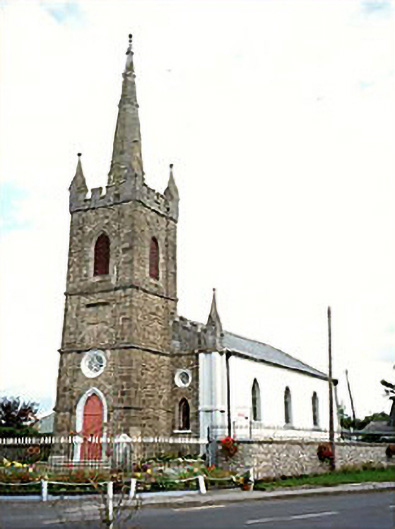 Clonaslee Heritage Centrechurch/chapel · 424 yd
 Saint Manman's Catholic Churchchurch/chapel · 499 yd
 Kilmanman church (in Ruins), GraveyardChurch · 1.3 mi
 Ecclesiastical enclosure in KilmanmanEcclesiastical enclosure · 1.3 mi
 IndicatedEnclosure · 1.3 mi
 Turrets (in Ruins)Bawn · 1.6 mi
 Mullagh HillMountain / peak · 3.9 mi
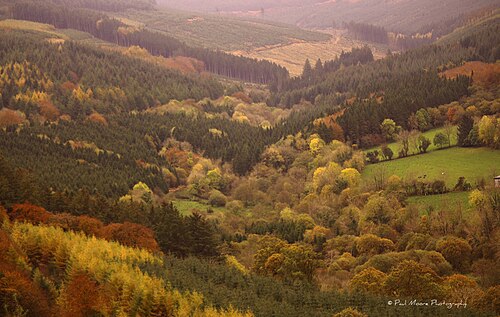 Slieve Bloom MountainsMountain range · 4.0 mi
 Red HillMountain / peak · 4.2 mi
 Church (in Ruins), Graveyard, CarrigeenChurch · 4.5 mi
 Derryad WoodForest · 4.8 mi