
What is recorded here
Ballyloughan Castle is a late thirteenth-century Anglo-Norman fortress in County Carlow, built with a rectangular court, double-towered gatehouse, and low corner towers. Its granite walls still stand around an empty space where chambers, stairwells, and passages once turned a military stronghold into a lived-in house. The ruin preserves the shape of that world even when the names and events have thinned into silence.
The following description is derived from the published 'Archaeological Inventory of County Carlow' (Dublin: Stationery Office, 1993). In certain instances the entries have been revised and updated in the light of recent research.
Date of upload/revision: 17 July 2007
National Monument No. 351. Late thirteenth-century fortress consisting of rectangular court (c. 43m N-S, c. 46m E-W) enclosed by poorly defended curtain walls with double-towered gatehouse at centre of S wall. Low square towers on NE and SW angles and foundations of small square structure inside NW angle. Walls of squared granite bocks, irregularly coursed and enclosed by fosse (uncovered during excavations in 1955 (JRSAI 1962, 7). Rectangular gatehouse with two circular towers of three storeys flanking arched entranceway. Stairwells in wall thickness and machicolation over entrance to towers at second floor level. Small rectangular tower on NE angle, also excavated by de Paor. Of thirteenth-century date, reconstructed as cottage in eighteenth century. The SW angle tower (int. dims. 6m x 5.6m) has two storeys and has intermural passages and chambers. (JRSAI 1962, 1-14; Leask 1973, 72)
Ballyloughan Castle was built in the 17th century by the Butler family, who were prominent landowners in the region. The castle is remembered as an example of early Irish domestic architecture and as a historical site reflecting the influence of the Butler dynasty in County Carlow.
The monument record does not grant public access. Check the route and ask the landowner before entering private land.
- What survives
- Recorded monument
Places near here
 Enclosure in BallyloughanEnclosure · 518 yd
 Enclosure in GormonaEnclosure · 690 yd
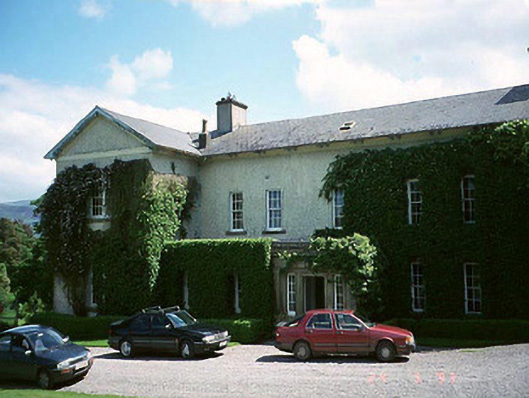 Corris Househouse · 1.0 mi
 Carrig WoodWood · 1.4 mi
 Good Shepherd Church (Lorum)church/chapel · 1.4 mi
 Ballymoon Castle (in ruins)Castle, Anglo-Norman masonry castle · 1.9 mi
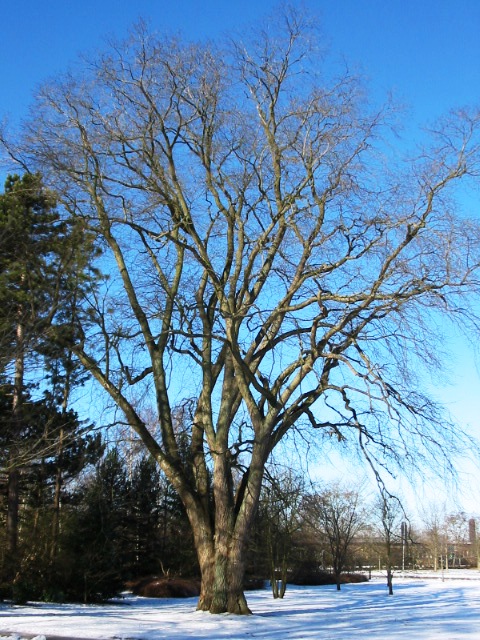 Wych ElmWych Elm · 2.0 mi
 Site of CastleCastle, unclassified · 2.9 mi
 The Columban WayVisitor information · 3.2 mi
 Lock Keeper's House and Lodge MillsVisitor information · 3.5 mi
 Church (in ruins), GraveyardChurch · 4.1 mi
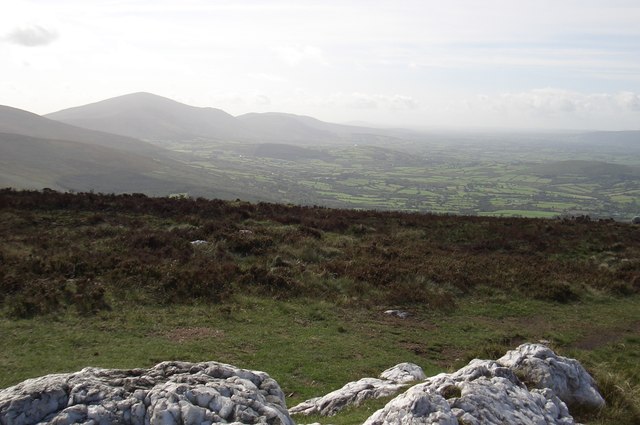 SlievebawnMountain / peak · 4.4 mi
Other information
Photo: VisionsofthePast · CC BY-SA 4.0