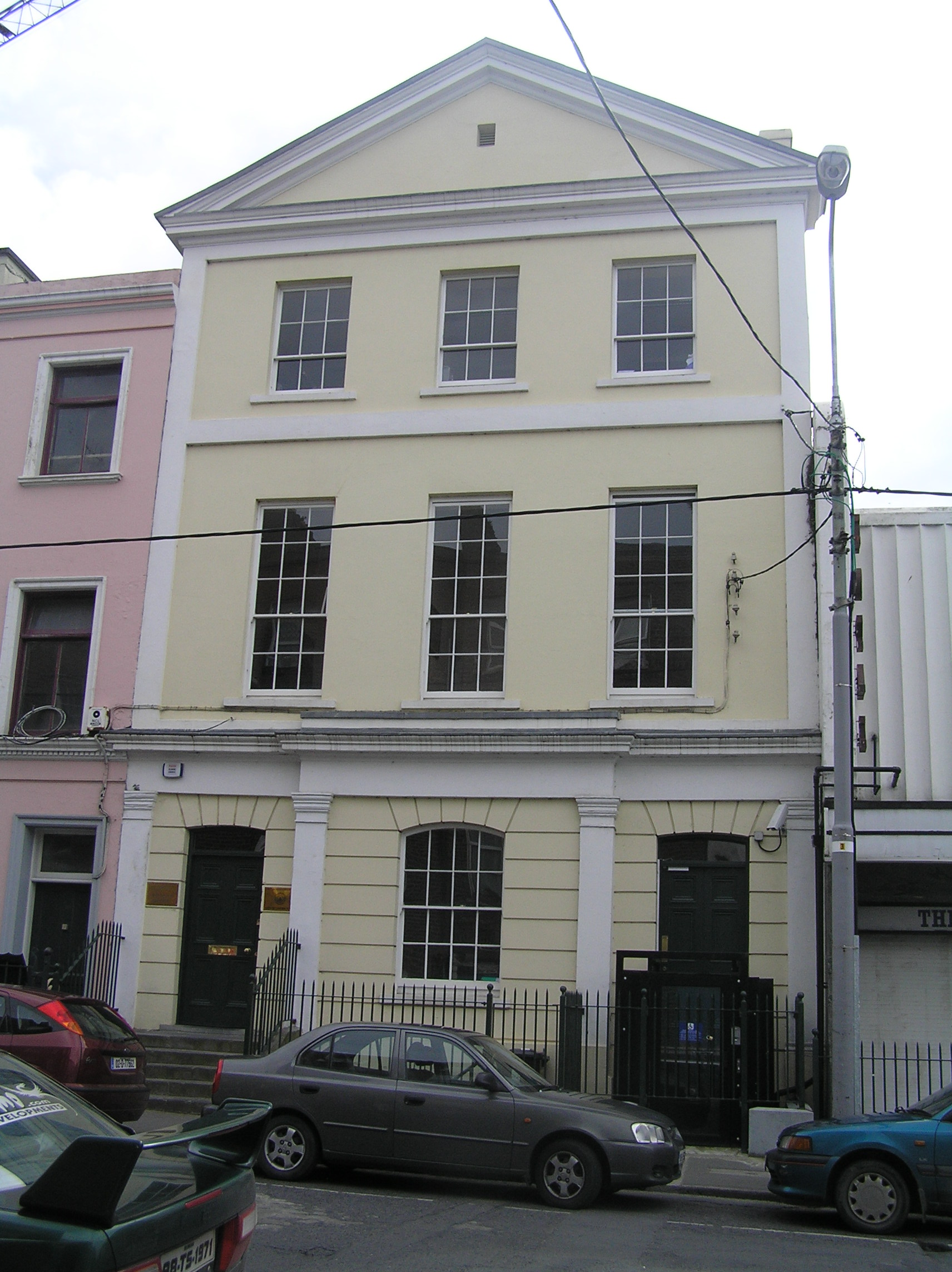
What is recorded here
Attached three-bay three-storey over basement rendered building, built in 1856, with a pediment spanning the full-length of the façade. Pitched natural slate roof with a substantial rendered chimneystack with clay pots to both party walls. Heavy cornice to the pediment with lead flashing. Painted rendered walls with a tripartite projecting cornice to the ground floor. Rusticated render to the ground floor. With pilasters separating each bay. Square-headed window openings with limestone sills and replacement six-over-three and nine-over-six timber sash windows, c. 2002. Segmental-headed window opening to ground floor central bay with eight-over-eight timber sash window and a two-over-two timber sash to the basement elevation. Flanking camber-headed door openings to end bays with identical timber-panelled doors with central fillet moulding and brass furniture, opening onto a flight of limestone steps and modern steel railings on a new limestone plinth course enclosing the basement area. Disabled access lift replaces the steps to the west entrance bay. Large rubble limestone building to the rear associated with the Athenaeum.
This classical pedimented stuccoed building was constructed to the designs of John Fogarty, County Engineer, as the headquarters of Saint Michael's Parish Commissioners. It served as the town hall for Newtown Pery for twenty years. In 1854 it was purchased by the Limerick Athenaeum Society who with the aid of public subscription, built the adjoining Athenaeum Hall as a public lecture theatre. This building is designed in a restrained manner, without excessive detailing to distract from its pleasing classical proportions. In 1898 this building and the adjoining building came under the control of the Limerick Technical Instruction Committee and its successor the VEC. It stands as the focal point of Cecil Street, and together with the theatre structure to the rear, render it of great importance to this section of the Georgian city and has much historical and social importance to Limerick City.
This does not grant access. Most recorded buildings are privately owned; view them only from public ground unless the owner allows entry.
Places near here
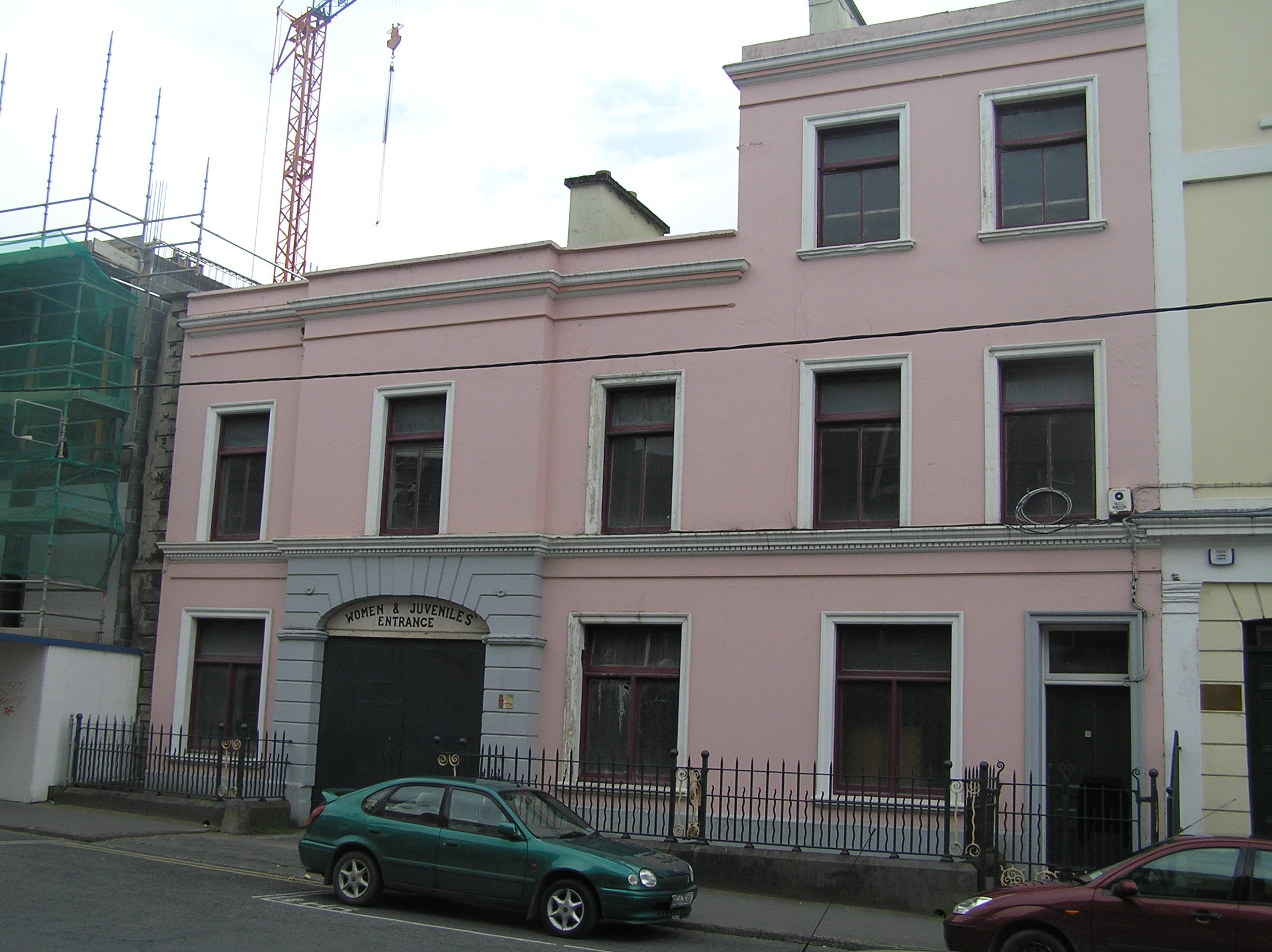 Athenaeum Halltheatre/opera house/concert hall · 16 yd
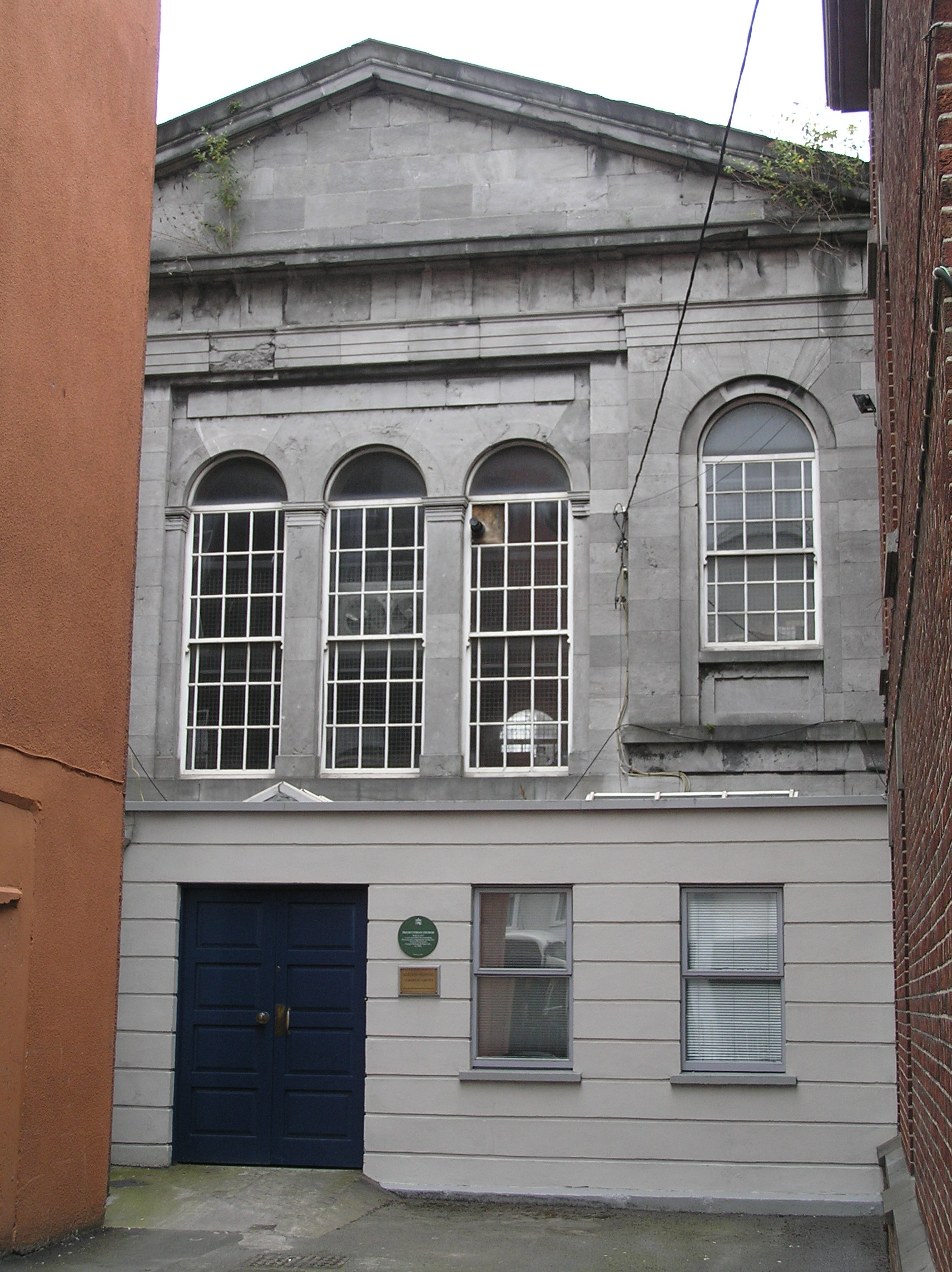 McKerns Printing Workschurch/chapel · 63 yd
 Limerick War MemorialMemorial · 250 yd
 The Singer from QuimperMemorial · 377 yd
 O' Connell MonumentMonument · 429 yd
 SarsfieldMonument · 668 yd
 Sarsfield Memorialmonument · 670 yd
 Castle Blake or Farranshone (Site of)Castle, unclassified · 1035 yd
 King's IslandIsland · 1456 yd
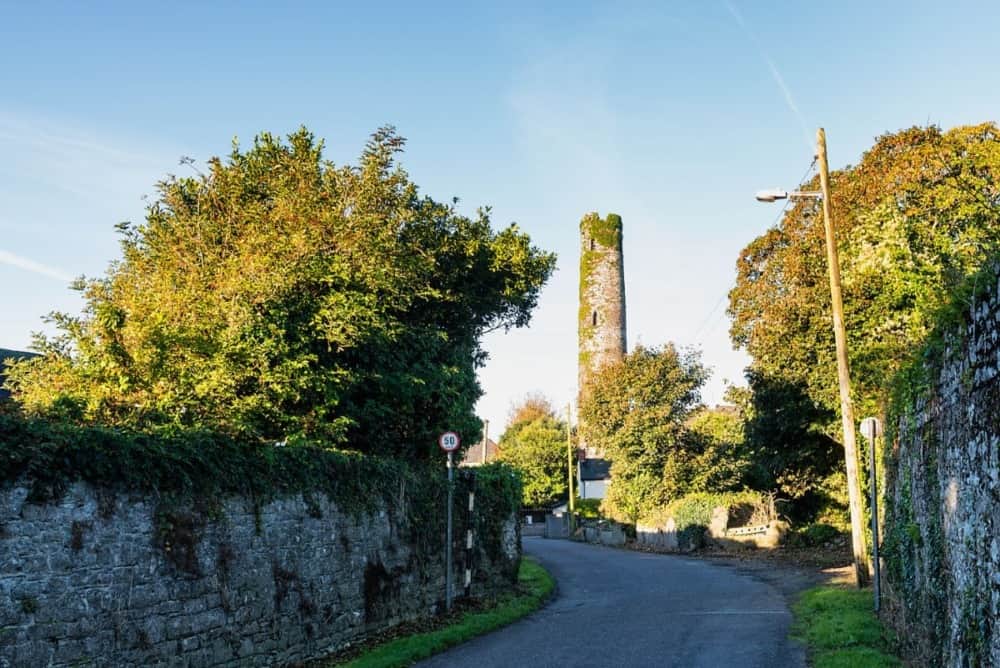 Round Tower (Site of)Castle, tower house · 1.0 mi
 Fountain SculptureHeritage attraction · 2.4 mi
 Visitor CentreVisitor information · 2.5 mi
Other information
Photo: National Inventory of Architectural Heritage · Website use allowed for educational or private purposes with source credit