What is recorded here
Ardnaglogh rises seven metres above the Donegal landscape, a vast sand and stone dish wide enough to swallow several houses before fading into grass. People have argued for centuries whether it hides a ringfort, a burial place or a motte-and-bailey, yet the mound itself refuses to choose. It stands like a forgotten stage set, waiting for someone brave enough to imagine which play ended there.
Known as Ardnaglogh the site consists of a massive mound of sand and stone roughly flat-topped with steep sides and vegetated over. The mound is c. 7m to 8m in height with a basal diameter of 39m and a top diameter of 29m-35m. There has been much speculation about the nature of this site. It has been suggested as the site of a ringfort, a burial place and a motte-and-bailey.
(D'Evelyn 1933, 88-100; McGill 1970, 10)
The above description was derived from the 'Archaeological Survey of County Donegal. A description of the field antiquities of the County from the Mesolithic Period to the 17th century.' Compiled by: Brian Lacey with Eamon Cody, Claire Cotter, Judy Cuppage, Noel Dunne, Vincent Hurley, Celie O'Rahilly, Paul Walsh and Seán Ó Nualláin (Lifford: Donegal County Council, 1983). In certain instances the entries have been revised and updated.
Date of upload: 22 September 2008
Neolithic passage tomb; constructed c. 3700–2500 BCE. It represents a significant prehistoric funerary monument, reflecting early communal burial practices and ritual landscape use in the region.
The monument record does not grant public access. Check the route and ask the landowner before entering private land.
- What survives
- Recorded monument
Places near here
 Maghera CavesSea caves · 529 yd
 Maghera StrandBeach / strand · 784 yd
 Assaranca Waterfallwaterfall · 1156 yd
 Maghera WaterfallWaterfall · 1167 yd
 Cloghboy Stone RingfortFairy fort / stone ringfort · 1.4 mi
 O'Boyle's Fort at StonebrookNamed fort remains · 1.4 mi
 IllancreeveIslet · 1.5 mi
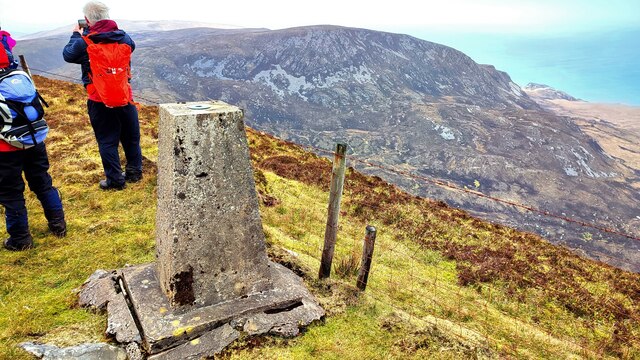 Sliabh TuaidhMountain / peak · 2.1 mi
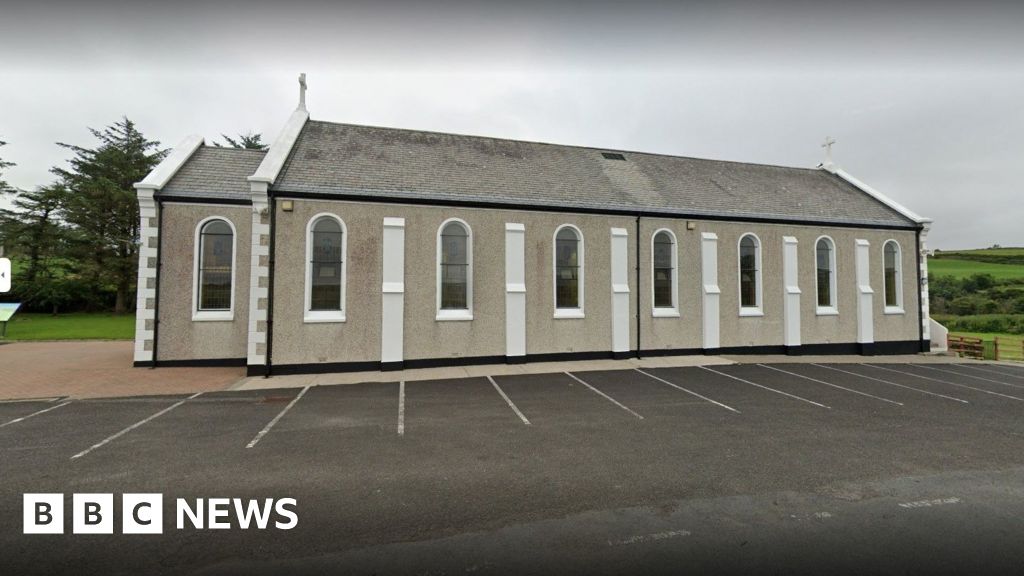 Church in KilcashelChurch · 2.4 mi
 outbuildingoutbuilding · 2.6 mi
 Carrickalahagh HeadlandPublicly named cliff or headland · 2.8 mi
 Tramore StrandBeach / strand · 3.0 mi