DDiscover AloneMapAbout

Abbey in Abbeylands

Religious house, Augustinian canons

What is recorded here

The Urban Survey of Limerick recorded the following details about St. Mary's Augustinian Priory of Rathkeale (Bradley et. al. 1989, 222-4); 'This is said to have been founded by Gilbert Harvey in the early thirteenth century (Gwynn and Hadcock 1970, 190). In 1436 an indulgence was granted to penitents visiting and…

Read the whole record
The Urban Survey of Limerick recorded the following details about St. Mary's Augustinian Priory of Rathkeale (Bradley et. al. 1989, 222-4); 'This is said to have been founded by Gilbert Harvey in the early thirteenth century (Gwynn and Hadcock 1970, 190). In 1436 an indulgence was granted to penitents visiting and giving alms for the repair of the church (ibid., 191). The monastery was suppressed in 1542 but a small community may have remained until the Desmond Rebellion in the 1580s. Subsequently the monastery was granted to Sir Henry wallop (ibid.). This thirteenth century abbey with fifteenth and sixteenth century additions is located at the north-east end of the town. It was built of rubble masonry with sandstone jambs while later additions are in limestone. It was a single aisled nave and chancel church with evidence for a possible southern cloister in the form of a gable line for a two storied eastern range and a low roof line for a north ambulatory in the south wall. It had a vaulted north tower of uncertain height and a two to three floored building of the north side of the chancel. The west tower was possibly of four floors. The surviving remains consist of the south and east walls of the church, the chancel end of the north wall and the ground floor of the north tower. Part of the north wall of the west tower also survives. Church The east stepped gable is almost intact although the coping stones on the north side are missing. The thirteenth century window with sandstone jambs almost filled the east wall but this was filled in and a four-light window with switchline tracery inserted probably in the fourteenth or fifteenth century. Externally the window has a limestone hood moulding with tapering chamfered stops. The inner face of the wall below the window is damaged and there are sandstone blocks built into the wall. Only the eastern half of the north wall survives and the only original feature appears to be the east splay of a window with sandstone jambs near the east end. There is a blocked round arch, also near the east end, into which a (?)sixteenth century tomb recess was inserted. The wall facing within the recess is missing. The south wall is c. 8.5m high and the drainage course and chutes are fairly intact. The chancel was originally lit by five very narrow splayed lancets with chamfered sandstone jambs and rounded rear arches. These are all damaged now and a twin-light ogee-headed window (also badly damaged) was inserted into the fifth window from the east. There is a wall recess (?sedilia) below the second window from the east and possibly another below the fourth. A possible round arched door opened to the east cloister garth while further west there is an inserted high pointed opening with roughly dressed voussoirs and jambs above which there is a ?bellcote. A further blocked round arched opening occurs close to the west end of the wall. Only one short section of the west wall c. 5m high remains but as this is battered internally it is probably not the original west wall of the church but rather the east wall of the west tower. North tower Only the barrell vault of the ground floor remains. The external facing of the featureless east wall is gone while the north wall is missing. Much of the south wall is rebuilt but there is a round arched doorway at the east end opening into the church with flat lintelled rear arch set into the barrell vault. There was another splayed opening at the west end of the wall to the church but this is now blocked. West tower Only 4m of the north wall remains along with a pile of rubble. There is evidence that the first floor was supported on wooden beams and there were small flat lintelled splayed slits at ground and first floor levels. A view of the tower late in the last century shows that it was then covered in ivy (Hewson 1879,86-90)'. See attached drawing of Abbey taken from Hewson 1879.

From the National Monuments Service (Archaeological Survey of Ireland) record LI029-031006

The monument record does not grant public access. Check the route and ask the landowner before entering private land.

What do you know about this place?Tap to add a comment or ask a question

What you write will be public.

Places near here

Photo credits
  • National Inventory of Architectural Heritage
  • Mike Searle, Geograph · CC BY-SA 2.0
  • Picturesque Views of the Antiquities of Ireland (1830); artist unrecorded, Wikimedia Commons · Public domain
  • Willow, Wikimedia Commons · CC BY 2.5
  • Created by Kglavin Modified Aug 2007 by Mike Christie, Wikimedia Commons · CC BY-SA 3.0
  • Roger McLachlan, Wikimedia Commons · CC BY-SA 2.0
  • Vadim Manuylov, Wikimedia Commons · CC BY-SA 3.0
  • A.-K. D., Wikimedia Commons · CC BY-SA 4.0
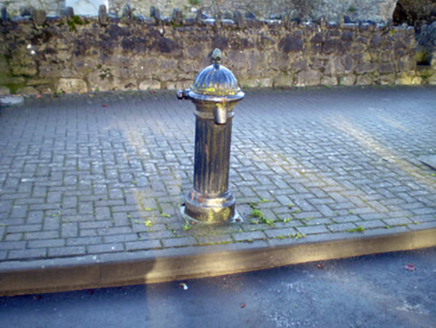
water pump26 yd

Explorer Tom Abbeylands water pump hides a treasure that is definitely just a biscuit tin from 1954. It’s got an acorn finial, so it pretends to be royal street furniture. Ideal for checking if your hands are clean enough.
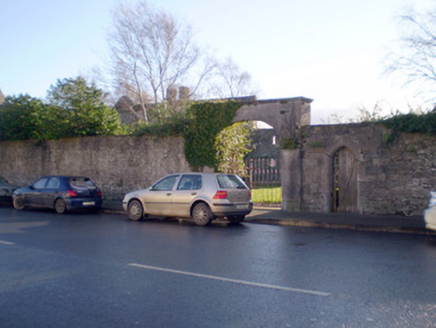
gates/railings/walls33 yd

Explorer Tom Gates in Abbeylands have a prophecy that they’ll open to reveal a dragon, but we’re all waiting for a bus instead. The stonework is impressive, especially the pointed arch, which looks like it’s judging your life choices. Ideal spot for a dramatic sigh and a photo op.
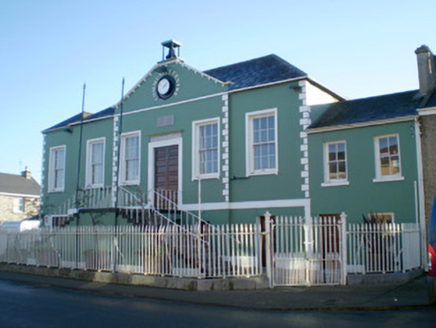
Áras Pobail Ráth CaolaCourt house, prison/jail · 96 yd

Explorer Tom Áras Pobail Ráth Caola in Rathkeale used to hold prisoners, but now it just holds grudges against bad parking. Locals swear if you touch the railing, your car breaks down. Have a look and decide if you’re brave enough.
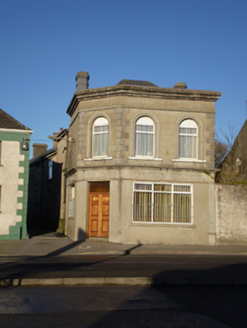
Round HouseHouse · 131 yd

Explorer Tom Round House in Rathkeale has an unlikely celebrity friend who swears they saw it in a dream once. Its chamfered corner and tall parapet make it stand out like a sore thumb. Pop by and tell it it’s looking absolutely round about now.

Allied Irish BankBank/financial institution · 238 yd

Explorer Tom Allied Irish Bank in Rathkeale thinks the road leading to it is a bit too casual. The steps up make you feel like you’re entering a cathedral of cash. Go with someone who likes stairs.

Castle MatrixCastle, tower house · 1.1 mi

Explorer Tom Castle Matrix brags constantly about surviving a massive storm that shook the very foundations of the earth. It claims the lightning missed it by inches, which is probably true given how dramatic it is. Give it a pat on the way past, it's had a long and eventful life.

Cappagh Castle (in ruins)Castle, tower house · 2.5 mi

Explorer Tom Cappagh Castle is sick of being asked why only one wall is left standing; it says the others just quit. It’s basically a very tall, lonely slice of history sitting on a rock. Visit, then text me what you think. I'll pretend to read it.
European ash2.8 mi

Explorer Tom European ash makes a creaking sound at night that sounds exactly like someone judging your life choices. It’s just a tree, but it acts like it has a podcast. Take a breath of that air, it's older than your car.
Ardagh FortArchaeological place · 6.1 miFoynes Flying Boat & Maritime MuseumMuseum · 9.6 miMonterey Cypress11 mi

Explorer Tom Monterey Cypress in County Limerick is deeply suspicious of the postman, thinking he's spying on its private moments. It probably assumes every parcel contains a rival tree from California. Take the long way round, it deserves the effort.

Saint Ite's WellSpring · 11 mi

More historic places in County Limerick · All of County Limerick

Add to this placeAdd a picture Add a detailed tip Add a story

Explore the map1,093,392 places to discover

Next place · or swipewater pump