
More pictures of this place


What is recorded here
The walls are only the start of this story. The façade is finely executed in local sandstone and its eclectic style with Tudor motifs and fine internal joinery is a good example of the architecture of the turn of the nineteenth century.
Attached four-bay three-storey Tudor Revival style bank, built c.1910, with three-storey return to rear. Pitched slate roof with pair of half-dormers, sandstone chimneystacks over party walls, rendered stack to return gable and cast-iron rainwater goods. Sandstone ashlar front elevation with painted ashlar bankfront at ground floor. String course and hood mouldings over paired window openings at first floor. Ashlar corbel to eaves and dentillated cornice to half-dormers. Smooth rendered gable elevations. Shopfront comprising tripartite transom-and-mullioned window, door opening with transom light and chamfered surround, all proud of the main façade, and surmounted by cornice with recent fascia. Pairs of square-headed openings to first and second floor with uPVC windows. Ground floor slightly raised above street level with recent concrete entrance steps. Joinery remaining in entrance lobby with glazed partitions separating banking area and former residential accommodation upstairs. Interior substantially altered.
The façade is finely executed in local sandstone and its eclectic style with Tudor motifs and fine internal joinery is a good example of the architecture of the turn of the nineteenth century.
This finely crafted bank building by Blackwood & Jury assumes a strong presence in the Main Street by virtue of its architectural detail, its larger scale, and greater height, making a key contribution to the streetscape. Typical for bank branches of this period, the architectural expression communicates stability and solidity. It forms a strong counterpoint to the modest street architecture of Ballyconnell, demonstrating the standing of banking institutions in the economy of a small market town. The façade is finely executed in local sandstone and its eclectic style with Tudor motifs and fine internal joinery is a good example of the architecture of the turn of the nineteenth century.
The story behind this place
The façade is finely executed in local sandstone and its eclectic style with Tudor motifs and fine internal joinery is a good example of the architecture of the turn of the nineteenth century.
This does not grant access. Most recorded buildings are privately owned; view them only from public ground unless the owner allows entry.
Places near here
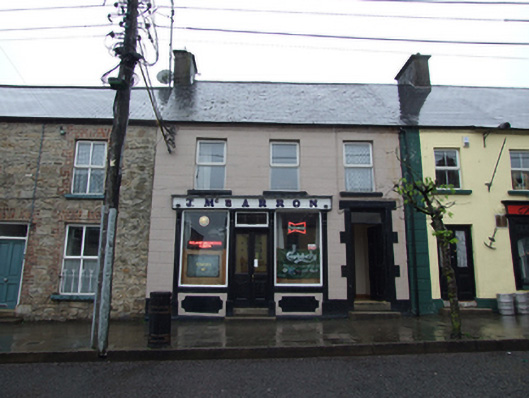 J. Mc Barron Public Househouse · 31 yd
 Ballyconnell Market Housemarket house · 56 yd
 Kieran Doherty TD Cavan Monaghan MemorialMonument · 175 yd
 Court tomb in Doon (ballyconnell Ed)Court tomb · 565 yd
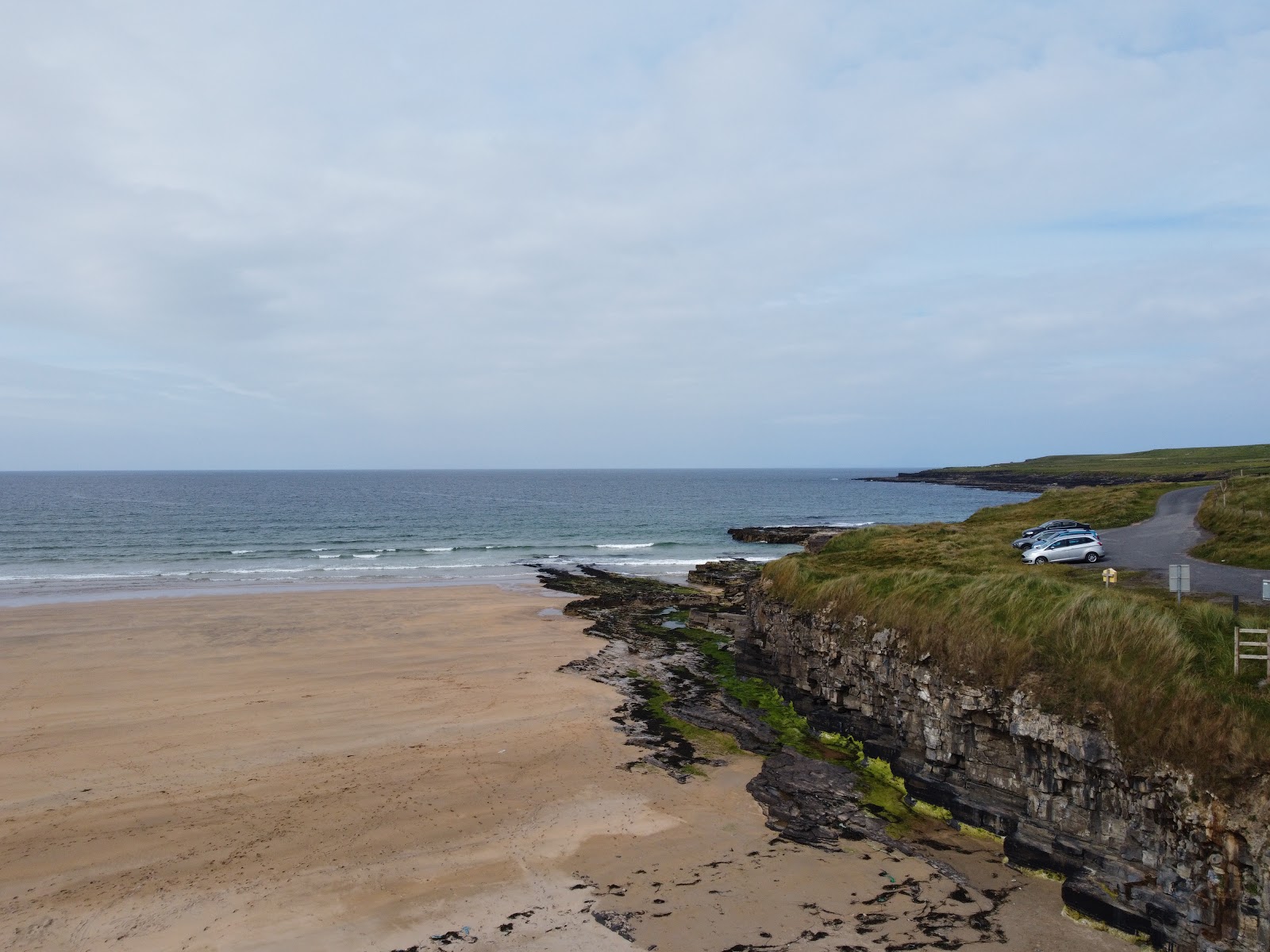 Carrowmore Lecharrownahone ForestForest · 1512 yd
 Bray WoodWood · 1.0 mi
 Swallow HoleCave · 1.5 mi
 Church HillMountain / peak · 1.5 mi
 ENCLOSURE in GortineddanENCLOSURE · 1.8 mi
 KnockateggalMountain / peak · 2.0 mi
 CrannodIslet · 2.4 mi
 LissanoverCastle, unclassified · 2.7 mi
Other information
Photo: Jrzshore · CC BY-SA 4.0