
What is recorded here
Tobermanaghan/Tobar Manacháin: A spring well located about 150m S of St. Manachan's early church site. The earthen bank which formerly surrounded it (Ó Danachair 1960, 72) is no longer extant and the well is now covered by a modern concrete structure. A pattern, with games, dancing etc. was held up to about the turn of the century and rounds are still made at the site on Easter Sunday. The turas includes a visit to St. Managhan's oratory and Poulnasaggart (KE043-140001-).
Ó Danachair (1960, 72) recorded the following details about this holy well; ' "Tobar Manacháin" and "Tobar Monica" - local. A little pool of water with a good spring surrounded by the remains of an earth bank, situated about 200 yards from the ruined oratory known as Teampall Manacháin [KE043-140002-] or Teampall Geal. Rounds are still made on Easter Sunday, but not by as many as formerly; the rounds are made partly at the oratory, partly at the well and partly at another pool called "Poll na Sagart" [Priest's hole] which is close to the oratory. Water from the well is drunk and a small coin or other object dropped into Poll na Sagart as an offering. A pattern, with games, dancing and so on was held up to about sixty years ago. The well cures backache, headache and toothache. Legends : A fish is seen in the well. Stones from the well were taken to repair a fence; next morning they were seen to be covered with blood. The first person to bathe in the well on Sunday morning will get a cure'.
See attached colour photographs courtesy of Amanda Clarke.
The above description is derived from J. Cuppage, ‘Corca Dhuibhne. Dingle Peninsula archaeological survey. Ballyferriter. Oidhreacht Chorca Dhuibhne’ (1986), no. 922. In certain instances the entries have been revised and updated in the light of recent research.
Date of upload: 7 August 2013
Linked to St. Manachan, an early Irish monk and saint associated with several sites in the west of Ireland, the well was traditionally used for healing and pilgrimage. It is believed that the well's waters held curative properties, particularly for skin ailments, and was likely a site of seasonal or votive rituals.
The monument record does not grant public access. Check the route and ask the landowner before entering private land.
- What survives
- Recorded monument
Places near here
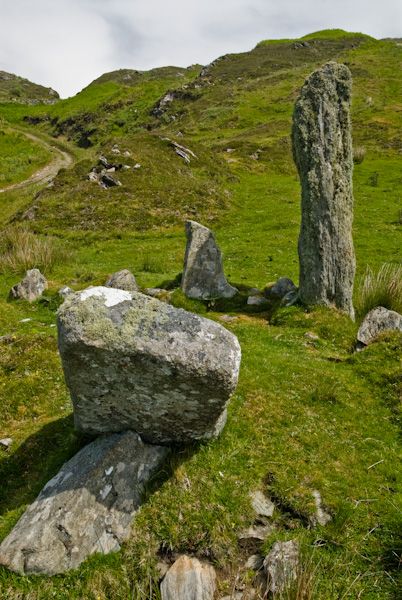 PoulnasaggartMan-made underground passage · 189 yd
 Templemanaghan (Oratory)Church · 200 yd
 ToberbreedaHoly well · 229 yd
 Binn BreacMountain / peak · 1104 yd
 Church in Cill FhiontainChurch · 1.1 mi
 An Chathair AirdMountain / peak · 1.2 mi
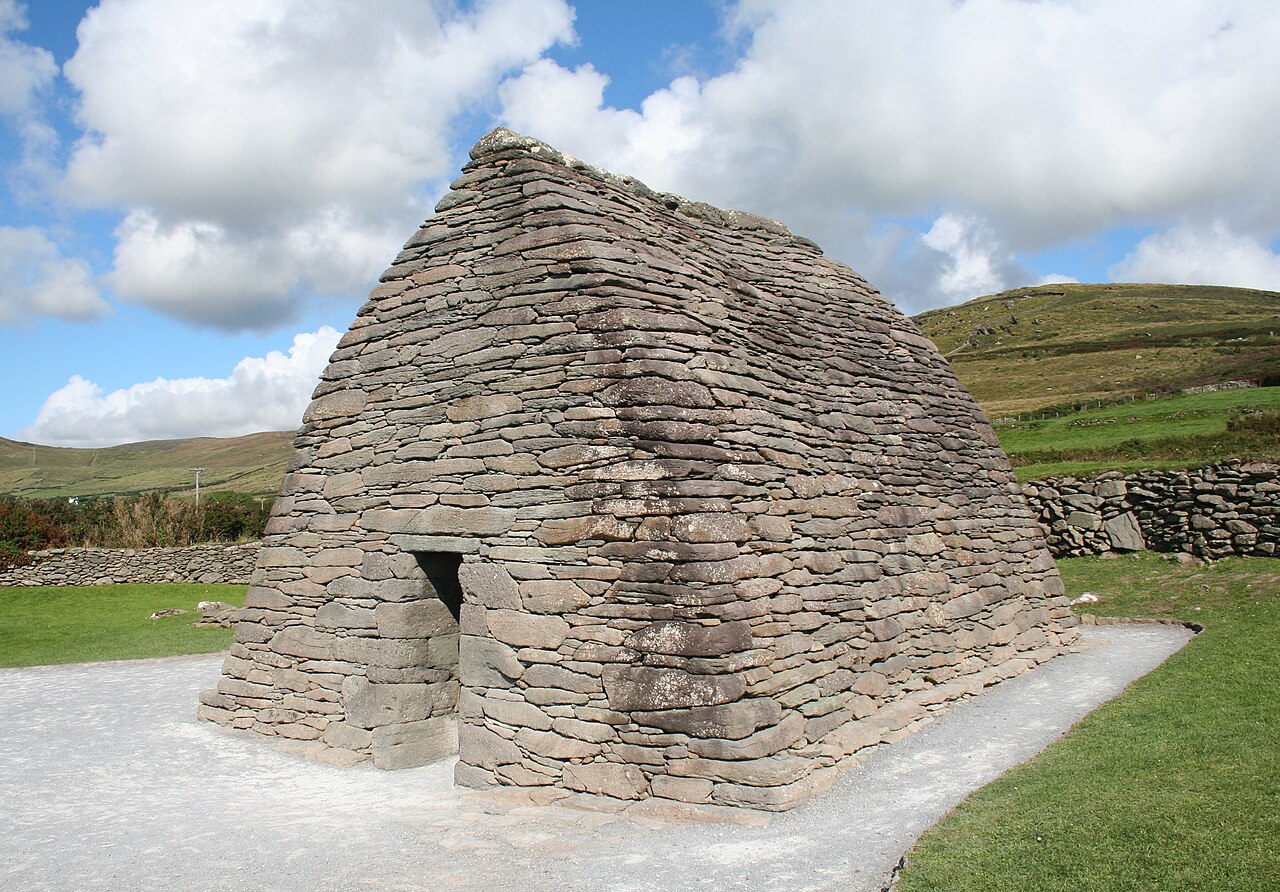 Gallarus OratoryHeritage attraction · 1.6 mi
 Gallarus CastleCastle · 1.9 mi
 Gallarus Castle (in ruins)Castle, tower house · 1.9 mi
 Dingle Marina Dive CentreHeritage attraction · 2.4 mi
 Charles HaugheyMemorial · 2.5 mi
 Memorial to all who lost their lives in our seas.Memorial · 2.5 mi
Other information
Photo: Credit not shown in the picture search · Rights wording not checked; contact us if this picture should be removed