
What is recorded here
Seven-arch rock-faced limestone road bridge, built in 1836, spanning the River Shannon, with pointed curved breakwaters and short quadrant abutments. Masonry parapet rises from rock-faced platband, with hammered limestone ashlar face to road side, and rock-faced finish to river side, terminating with continuous rock-faced coping. Mild steel lamp standards and flower basket supports, both c. 1990, fixed to parapet coping. Rock-faced voussoirs and spandrels, to both elevations. Half conical limestone ashlar breakwaters. Inscription to commemorative plaque, on road side of parapet reads: 'This bridge was built A.D. 1840 at the Expense of the Corporation of the Borough of Limerick. This tablet was placed there by order of the town council A.D. 1843. The Right Worshipful Martin Honan Mayor John F. Raleigh Esq. Town Clerk Francis O'Neil Esq. Treasurer James and G.R. Pain Architects.' Benchmark inscription to side.
The building of a wider and more accessible Thomond Bridge, which was constructed between 1836-1838 to the design of James Pain and George Pain, gave better access to the agricultural districts of Clare. It replaced a series of previous bridges dating to the twelfth or thirteenth century, linking the west side of the River Shannon with King's Island. The previous medieval bridge was of fourteen arches. It is believed to incorporate pier foundations from the bridge which it replaced, as survey drawings dated to 1814, demonstrating the re-use of existing historic fabric by James Pain. The proposal for the replacement was made to the Corporation in 1816 but the bridge was not built until between 1836-40. William Henshaw Owen was the resident engineer for the bridge works. The bridge forms an arresting and commanding presence on the River Shannon, not least because of the straightforward yet accomplished design by the Pain brothers, but also because of its proximity to the ensemble of structures, which include: the thirteenth-century Norman castle of King John; the toll house, also by the Pain brothers, and the Church of Ireland Church of Saint Munchin's, whose tower and spire are visible from the bridge. The strong plain design of the bridge contrasts with the ornate almost folly-like characteristics of the toll house.
This does not grant access. Most recorded buildings are privately owned; view them only from public ground unless the owner allows entry.
Places near here
 The Toll Housetoll house · 79 yd
 The Treaty StoneMemorial · 83 yd
 Town WallTown defences · 91 yd
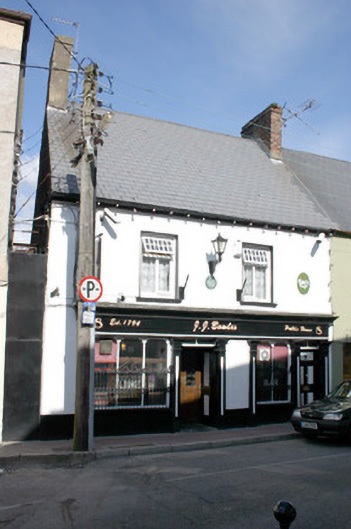 J.J. Bowlespublic house · 104 yd
 Bastioned fort in Deaneryland,limerick City,priorsland (killeely Par.)Bastioned fort · 105 yd
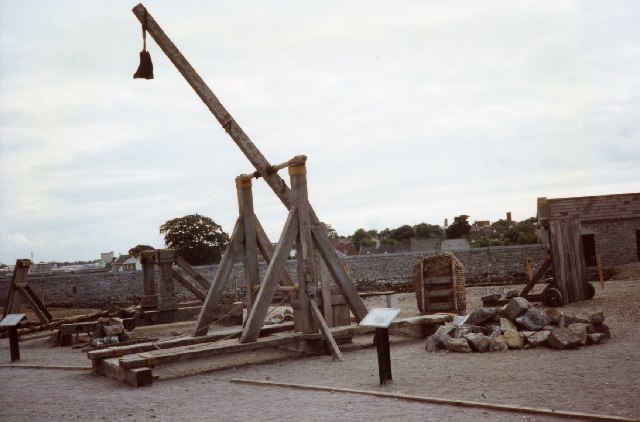 Castle BarracksCastle, Anglo-Norman masonry castle · 133 yd
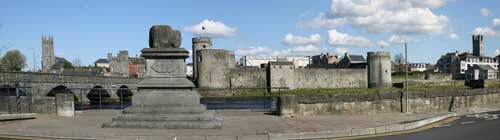 King John's CastleHeritage attraction · 137 yd
 Michael HoganMemorial · 171 yd
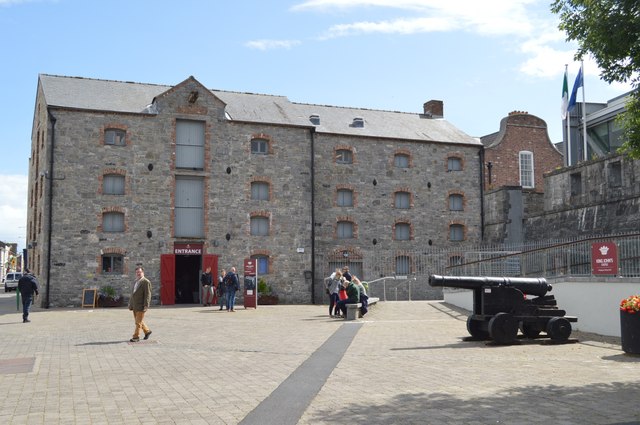 King John's Visitor's CentreMuseum · 191 yd
 Curragower FallsWaterfall · 234 yd
 Castle Blake or Farranshone (Site of)Castle, unclassified · 332 yd
 King's IslandIsland · 372 yd
Other information
Photo: N Chadwick · Creative Commons Attribution-ShareAlike 2.0