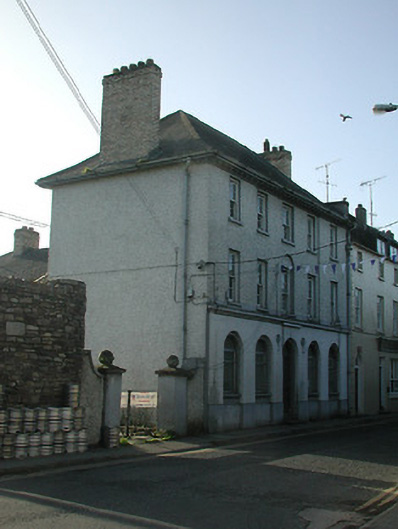
What is recorded here
End-of-terrace five-bay three-storey building, c.1900, possibly originally bank or Royal Irish Constabulary barracks with three-bay two-storey recessed central bay to upper floors. Renovated, 1928, to accommodate use as Garda Síochána Station. Part refenestrated, c.1975. Now disused. Hipped and pitched slate roof with clay ridge tiles, yellow brick English Garden Wall bond chimney stacks, sproketed eaves, and cast-iron rainwater goods on overhanging rendered eaves having consoles. Painted rendered, ruled and lined wall to ground floor with moulded cornice, and painted roughcast wall to upper floors. Round-headed openings to ground floor in round-headed recesses with cut-stone sills, replacement aluminium windows, c.1975, having casement sections, and timber panelled door on two cut-limestone steps having overlight with moulded rendered flanking medallions. Square-headed window openings to upper floors (in round-headed recessed panel to centre first floor) with cut-stone sills, and four-over-four timber sash windows having six-over-six timber sash windows to central bay. Interior with timber panelled shutters to window openings. Road fronted with concrete footpath to front, unpainted roughcast boundary wall having rendered coping, painted rendered piers having rendered capping with ball finials, and iron double gates.
A very well composed substantial building incorporating a range of Classically-derived elements including an 'arcade' to the ground floor, a variety of glazing patterns, decorative rendered accents, and so on, all of which contribute to the architectural value of the site: an elegantly-profiled roof further distinguishes the composition in the locality. Adapted to accommodate a Garda Síochána Station the building is thereby of additional local interest on account of the associations with the civic services put in place by the Irish government shortly following Independence in 1921. Although now disused the building has historically been well maintained to present an early aspect: however, the external expression of the site at street level has not benefited from the insertion of inappropriate replacement fittings to the openings.
This does not grant access. Most recorded buildings are privately owned; view them only from public ground unless the owner allows entry.
Places near here
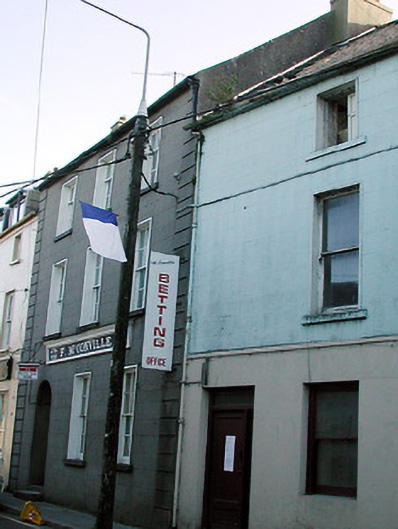 F. McConvillehouse · 20 yd
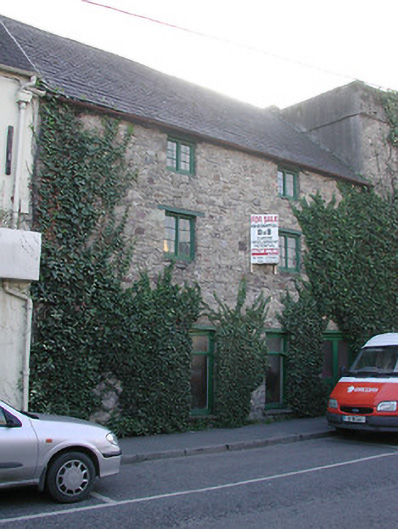 outbuildingoutbuilding · 59 yd
 Font in ThomastownFont · 83 yd
 The Yellow GateMemorial · 149 yd
 CrossCross, High cross · 151 yd
 Oliver (Ollie) WalshMemorial · 327 yd
 CastleCastle, Anglo-Norman masonry castle · 928 yd
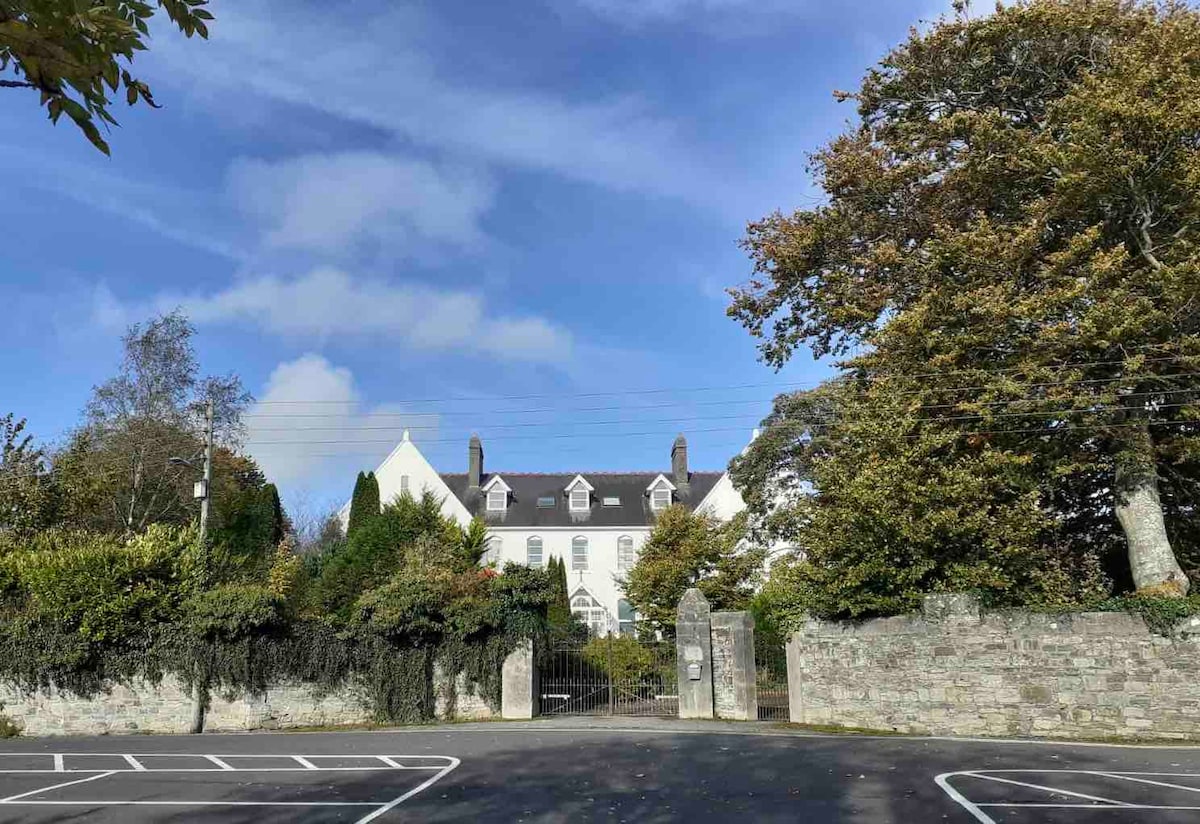 Thomastown QuarryNature reserve · 1252 yd
 Fox CovertForest · 1751 yd
 Bawn in LeganBawn · 1.2 mi
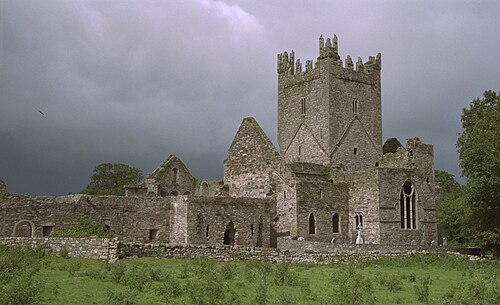 Jerpoint AbbeyHeritage attraction · 1.3 mi
 Holy WellSpring · 1.4 mi
Other information
Photo: National Inventory of Architectural Heritage · Website use allowed for educational or private purposes with source credit