
What is recorded here
At foot of NE-facing slope with good views from N-E only. According to the OS Letters (1839), ‘Tradition says that this Church belonged to the Vicars Choral of St. Kenny’s Church. The Priest used to say mass in this ruin on every St. Martin’s Day till about 30 years ago [c. 1809]’ (O’Flanagan ed. 1930, 247-50 (83-4)). The church, composed of roughly coursed limestone rubble, forms the N side of an irregularly shaped graveyard (KK020-009002-). It consists of an originally undivided church (int. dims. 13m E-W x 7m N-S; wall T 0.8m), of which the S wall, E gable and W end of N wall survive. The original E gable of the church was broken through and a chancel (ext. dims. 8.75 N-S x 5.8m E-W) added, only the lower courses (H c. 1m) of which survive. There is an entrance in the form of a pointed, chamfered and punch-dressed doorway at the W end of the S wall of the nave. The OS Letters (1839) state that there was another doorway oppose, in the N wall, ‘which was destroyed about 20 years ago [c. 1819] by one who felt the effect of the vengeance of St. Martin’ (ibid.). The breach accessing the chancel is flanked to the N and S by rectangular loops set into deep splayed embrasures, widening towards the nave. The S loop is blocked by a 19th-century wall memorial. At the E end of the N wall of the church there is portion of a square limestone holy water stoup (D 0.32m; surviving Wth 0.25m) with a circular basin (D 0.17m; rim T 0.05m). There is also a curving chamfered architectural fragment (L 1.1m; max. Wth 0.33m) within the nave and near this, immediately E of the doorway, there are two 13th/14th-century graveslabs (KK020-009004-; KK020-009005-). In the chancel, along the S wall, there are two 16th-century graveslabs (KK020-009003- and KK020-009006-). Also within the church interior there are a number of 19th-century table tombs and headstones. Though there are no diagnostic dating features, Carrigan (1905, vol. 3, 362) suggests that the church, ‘can scarcely be later than the 13th century’ and the presence of two 13th/14th-century graveslabs implies that the church was in use at this period.
Compiled by: Jean Farrelly
Date of upload: 9 November 2020
St. Martins Church, dedicated to St. Martin of Tours, was likely built in the medieval period and may have been associated with the Vicars Choral of St. Kenny’s Church, as noted in 1839 OS Letters. Its ruined state and location suggest it was a small rural church with local ecclesiastical significance.
This remains an important historical record, but the official description says the monument is no longer visible or has been destroyed. The monument record does not grant public access. Check the route and ask the landowner before entering private land.
- What survives
- No visible remains or recorded as destroyed
Places near here
 Grave YardGraveyard · 11 yd
 St. Martins WellHoly well · 219 yd
 Site of Raheenmore CastleCastle, unclassified · 869 yd
 Lyrath Housecountry house · 875 yd
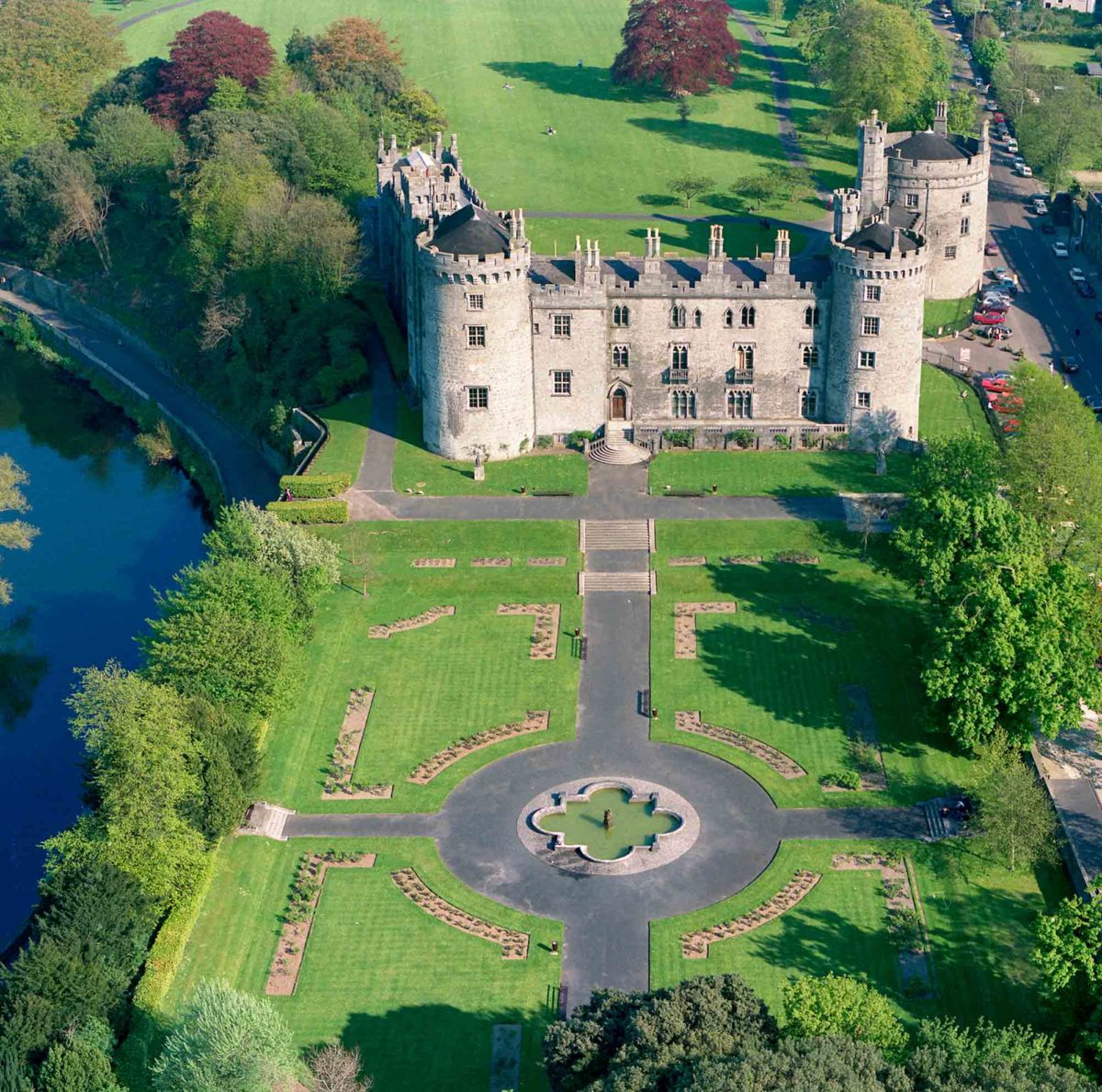 Site of Lavistown CastleCastle, unclassified · 1.0 mi
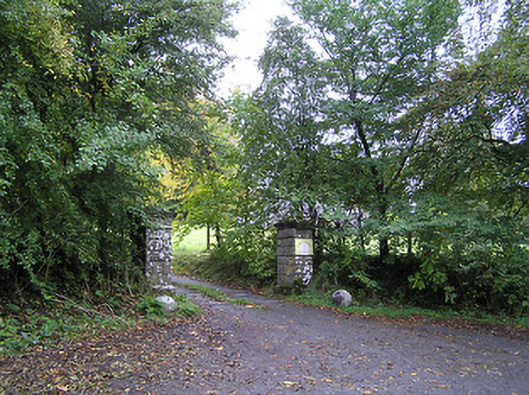 Lavistown Housegates/railings/walls · 1.1 mi
 Saint Molagga's WellSpring · 1.3 mi
 Ivan PowerMemorial · 2.1 mi
 St. Mogarra’s WellSpring · 2.1 mi
 HawthornHawthorn · 2.4 mi
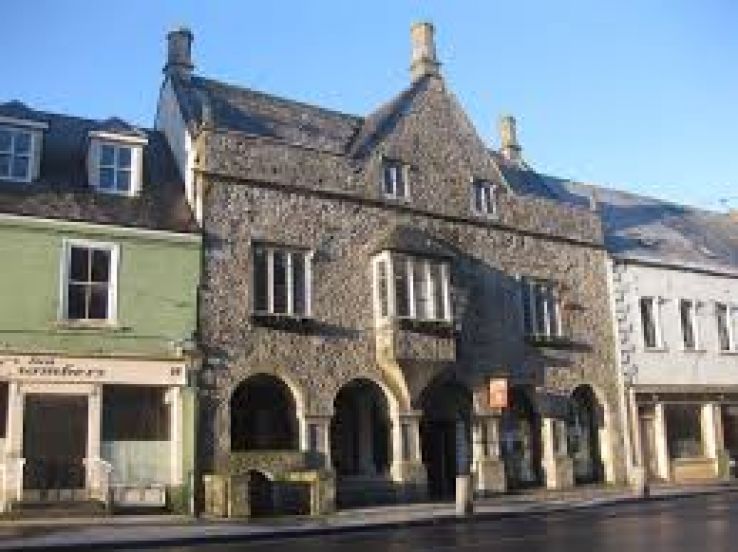 Rothe familyMemorial · 2.8 mi
 WelcomeVisitor information · 2.8 mi
Other information
Photo: kevin higgins · CC BY-SA 2.0