What is recorded here
Kilmore is the oldest continuous townland in Ireland. It was the first place named when the island was divided into townlands. Every other townland was named later. The name Kilmore appeared before the rest of the country was listed. That is why it is the oldest.
Found at the site of Lavey church (CV026-052001-). Described by Guest (1936,109) as having arms flexed in front of splayed thighs and hands directed towards the lower abdomen. Now located in the Cavan County Museum (CV038-071----). According to Guest the sheela-na-gig was 'found about 1842 by Dr. Chas. Halpin laid loosely on a gate pier built "recently" at the entrance of the old church-yard. The finder believed it to come from the old church, of which scarcely a trace was then left' (Guest 1936, 109).
This sheela-na-gig has been moved from the NMI to the County Museum in Ballyjamesduff, Cavan where it is on display. One of two sheela-na-gigs (CV038-070----) on display at the County Museum in Ballyjamesduff. Described by Freitag as a sheela-na-gig (dims. H 0.43m; Wth 0.23m) with ‘right side damaged from top to bottom giving the impression that figure was cut off vertically. Big head; ovoid eyes with pupils; fleshy nose with clearly cut nostrils; open mouth with protruding tongue and beading round lips, possibly representing teeth. Two or three bands round forehead, and hair seems to be indicated’(Freitag 2004, 127-8).
The above description is derived from the published 'Archaeological Inventory of County Cavan' (Dublin: Stationery Office, 1995). In certain instances the entries have been revised and updated in the light of recent research.
Compiled by: Caimin O'Brien
Date of upload/revision: 24 May 2012
Probably medieval in origin, the Sheela-na-gig figure is associated with themes of fertility, childbirth, or apotropaic symbolism. Similar carvings are found across Ireland and Britain, often linked to ecclesiastical sites, though their exact ritual or symbolic function remains uncertain.
The monument record does not grant public access. Check the route and ask the landowner before entering private land.
- What survives
- Recorded monument
Places near here
 Sheela-na-gig (present location) in Kilmore (castlerahan By., Ballyjamesduff Ed)Sheela-na-gig (present location) · 1 yd
 Cavan County Museumconvent/nunnery · 23 yd
 Scouts wind vaneMonument · 36 yd
 The GPO ExhibitionMuseum · 90 yd
 St Joseph's Roman Catholic Churchchurch/chapel · 150 yd
 Saint Joseph's ChurchMemorial · 167 yd
 Site of the Fever HospitalMemorial · 239 yd
 Cornahilt ForestWood · 592 yd
 CarnMountain / peak · 1460 yd
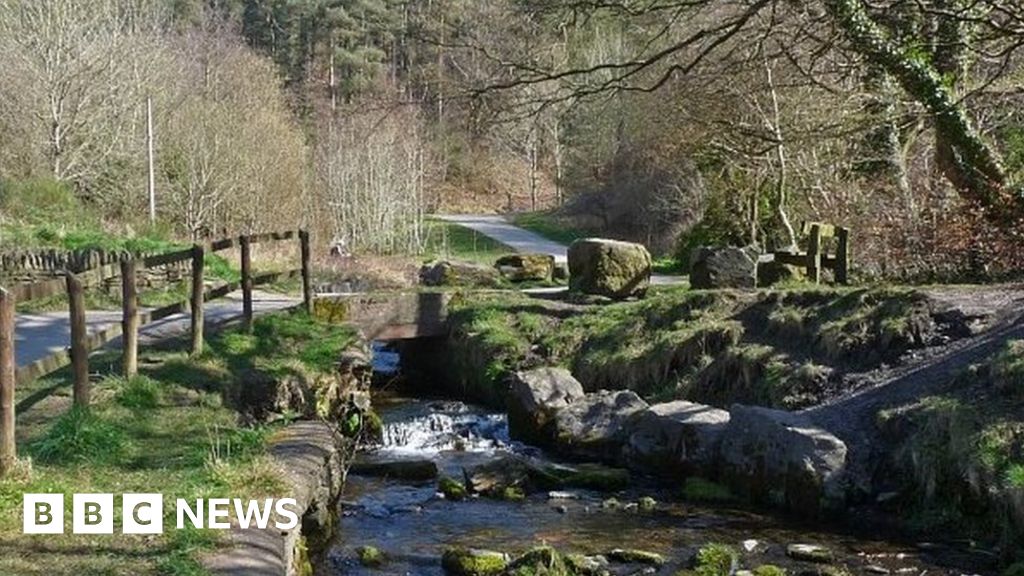 Carn ForestForest · 1.1 mi
 AghaloughanMountain / peak · 1.6 mi
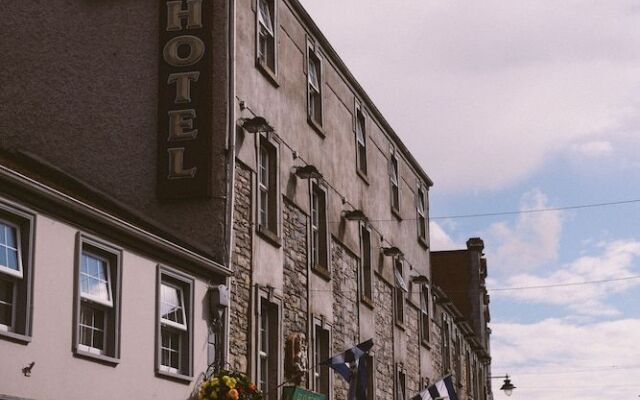 Reflective SpaceMonument · 110 yd