What is recorded here
Gowlin holds a massive granite boulder marked with three cupmarks, one surrounded by a faint circle. The stone likely traveled from a nearby field before joining the cashel wall, carrying its ancient identity into a new boundary. Someone struck that hard surface repeatedly, perhaps marking ownership, prayer or memory, while natural grooves nearby remind us that rock keeps both human and earthly histories.
Massive granite boulder now lying on cashel wall (CW024-025----). Thought to have come from somewhere in the field to the NE of cashel. Three cupmarks, one surrounded by faint circle, scattered over surface. Two grooves appear to be natural as similar marks appear on other boulders nearby. (See CW024-056---- for present location record).
Compiled by: Claire Breen
Date of upload: 19 August 2011
Likely dating to the Neolithic or Bronze Age, the rock art at Gowlin may have had ritual or symbolic significance, possibly linked to territorial markers or ceremonial practices. The cupmarks and grooves are typical of prehistoric rock art found across Ireland and Britain, often associated with ritual use or astronomical alignments.
The monument record does not grant public access. Check the route and ask the landowner before entering private land.
- What survives
- Recorded monument
Places near here
 Fairy fort / stone ringfort in Ballybeg BigFairy fort / stone ringfort · 599 yd
 Enclosure in SlievedurdaEnclosure · 1.1 mi
 Marley Bridgebridge · 1.8 mi
 White MountainMountain / peak · 2.2 mi
 SlievebaunMountain / peak · 2.2 mi
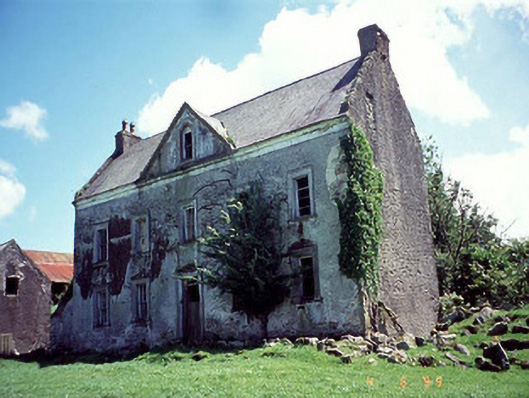 Knockduff Househouse · 2.4 mi
 Kilcullaun Church (in ruins), GraveyardChurch · 2.4 mi
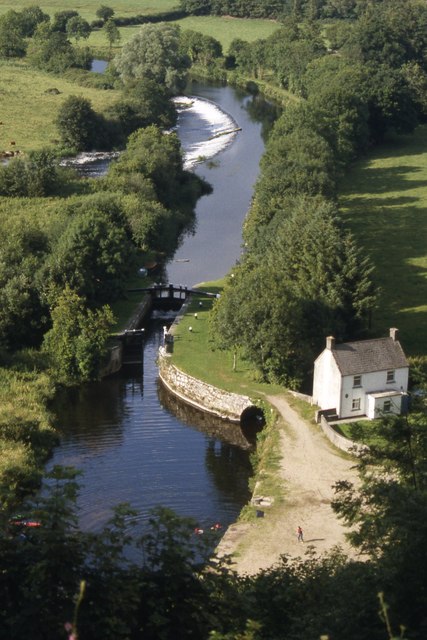 The Barrow WayVisitor information · 3.0 mi
 Coonogue WoodForest · 3.2 mi
 Castle (in ruins)Castle, tower house · 3.3 mi
 ClashgannyWood · 3.3 mi
 General Thomas CloneyMemorial · 4.2 mi