What is recorded here
Three stones bearing cup-and-circle markings still hide somewhere in Gowlane East, having eluded modern locate despite Hitchcock’s discovery and Graves’s 1877 drawings. Two appear to be fragments of a larger monument, suggesting a broken structure rather than isolated markers. The precise location remains unknown, but the surviving sketches preserve cups enclosed by one to four circles, waiting for someone to walk the correct field and recognize them.
Three stones with cup-and-circle markings were discovered by Hitchcock in the townland of Gowlane, and drawings of each were published by Graves (1877, 288) who noted that 2 appeared to be fragments of a larger monument. Du Noyer (Antiquarian Sketches, vol.1) identified the townland as Gowlane East, but the precise location of the stones has not been established. The decoration on each consisted of plain cup-marks and cup-marks enclosed by from 1 to 4 circles.
The above description is derived from J. Cuppage, ‘Corca Dhuibhne. Dingle Peninsula archaeological survey. Ballyferriter. Oidhreacht Chorca Dhuibhne’ (1986), no. 185. In certain instances the entries have been revised and updated in the light of recent research.
Date of upload: 4 August 2013
Three stones bearing rock art were discovered by Hitchcock in the townland of Gowlane, and drawings of each were published by Graves (1877, 421-431) who noted that two appeared to be fragments of a larger monument. Du Noyer (Antiquarian Sketches, vol.1) identified the townland as Gowlane East, but the precise location of the stones has not been established. According to the Graves drawings (1877, 426 Fig. VI & VII), the first is a sub-oval boulder bearing approximately eleven decorative elements. The motifs consist of a cup-and-three-ring motif, two cup-and-two-ring motifs, two cup-and-ring motifs and six cupmarks. The second is a subrectangular stone bearing a large cup-and-four-ring motif, a small cup-and-two-ring motif, a small cup-and-one-ring motif and two cupmarks. The third stone (KE044-130001-) has similar motifs.
Compiled by: Alison McQueen and Vera Rahilly
Date of upload: 7 July 2017
Likely dating to the Neolithic or Bronze Age, the cup-and-circle markings on the stones may have held ritual or symbolic significance, possibly linked to water sources or territorial markers. Their fragmented condition suggests possible disruption or re-use of the stones over time.
The monument record does not grant public access. Check the route and ask the landowner before entering private land.
- What survives
- Recorded monument
Places near here
 Man-made underground passage in An Gabhlán ThoirMan-made underground passage · 949 yd
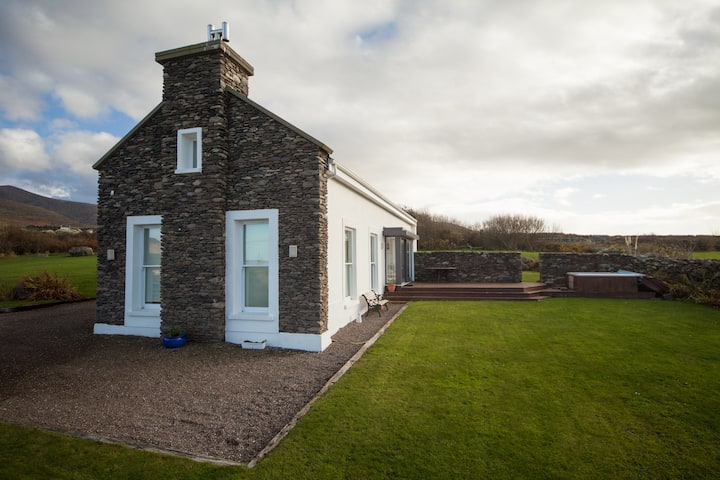 Enclosure in An Gabhlán BeagEnclosure · 1218 yd
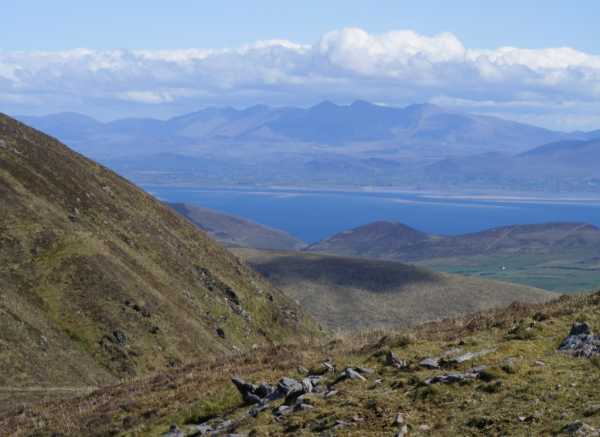 An Cnapán MórMountain / peak · 1677 yd
 Cnoc na BánóigeMountain / peak · 1.1 mi
 Lispole Viaductbridge · 1.8 mi
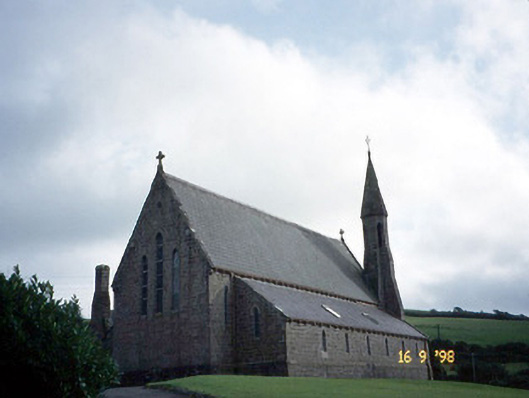 Séipéal Eoin Baiste [Catholic Church of Saint John the Baptist]church/chapel · 1.8 mi
 Lispole Ambush MonumentWayside cross · 1.9 mi
 Maughanablagher CliffsCliff · 2.5 mi
 Graveyard in BallynacourtyGraveyard · 2.8 mi
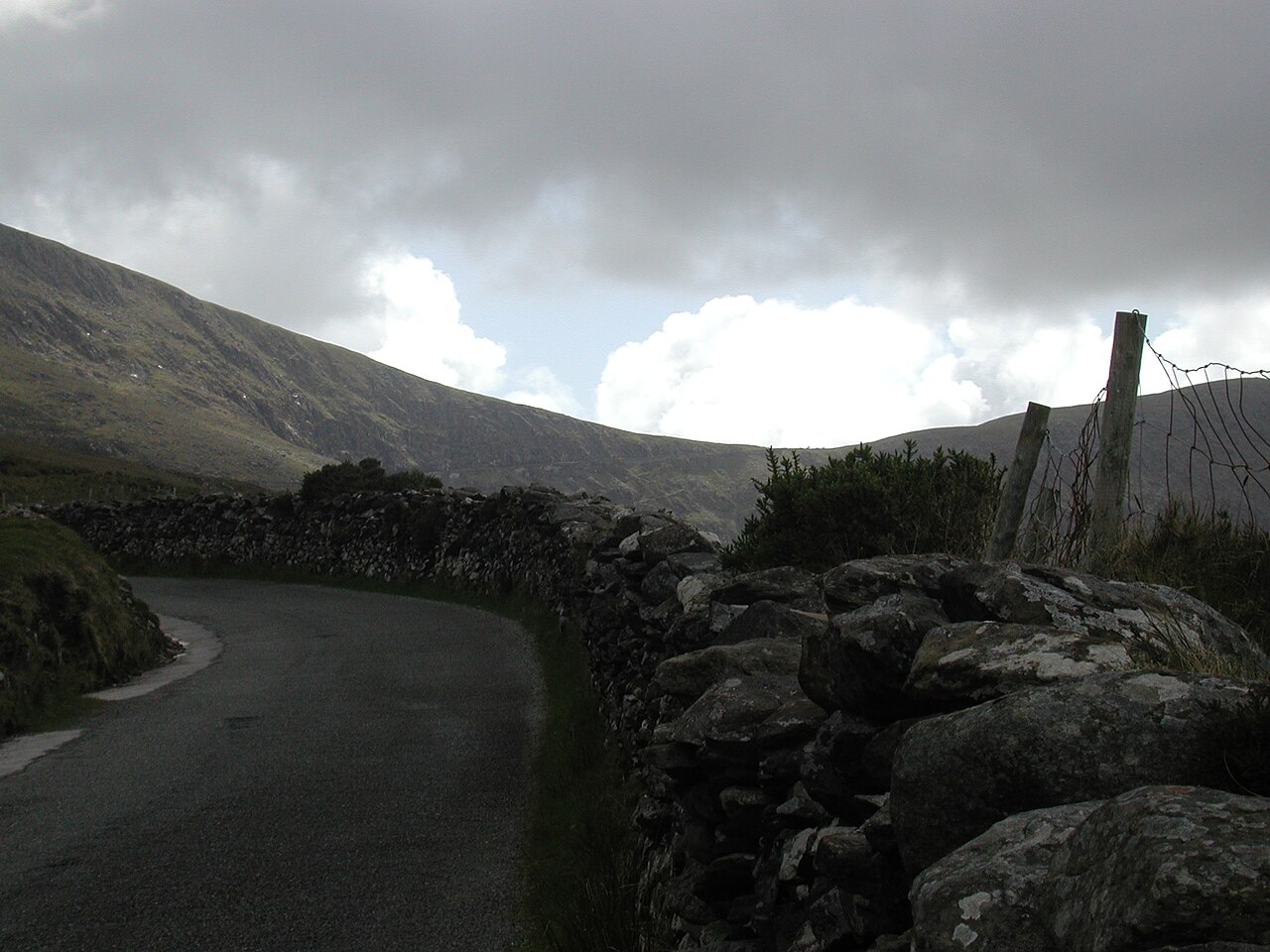 An ChonairViewpoint · 3.0 mi
 Caisleán na Mine AirdeCastle · 3.1 mi
 Minard Castle (in ruins)Castle, tower house · 3.1 mi