What is recorded here
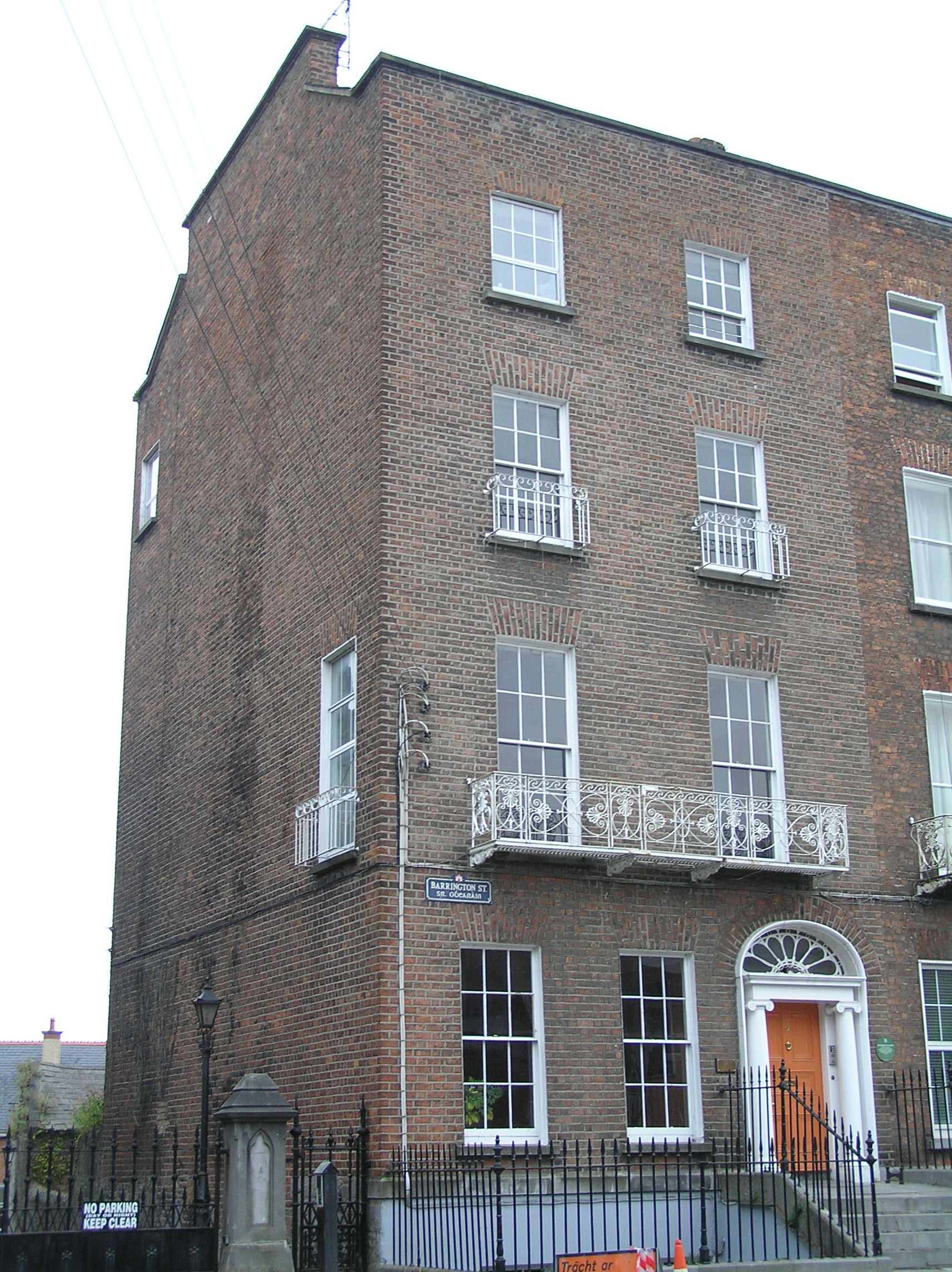
End-of-terrace two-bay four-storey over basement brick townhouse, built c. 1835, with a front railed basement area, a three-storey return and a stone coach house to rear lane. M-profile natural slate roof and pair of brick chimneystacks with clay and terracotta pots, one to east gable wall, one to west party wall. Red brick wall laid in Flemish bond with cement re-pointing with limestone coping to parapet wall. Rendered basement elevation with a limestone ashlar plinth course delineating ground floor level. Gauged brick flat-arched window openings with rendered reveals, limestone sills and timber sash windows. Replacement uPVC windows to side elevation and easternmost bay at third floor level. Six-over-three timber sash window, to third floor level and six-over-six timber sash window to second floor, with modern steel balconies; six-over-six timber sash windows to first floor with decorative cast-iron balcony supported on decorative brackets; six-over-six timber sash window to ground floor and replacement sash window to basement elevation. Some cylinder glass. Gauged brick three-centred arched door opening with moulded surround and original timber-panelled door flanked by painted sandstone Ionic columns on base blocks supporting heavy plain entablature and decorative webbed fanlight above, opening onto limestone platform with Gothic style cast-iron bootscraper; front door platform accessed by five limestone steps flanked by spear-headed wrought-iron railings and cast-iron rail posts on limestone plinth which return encloses basement area.
A very fine late Georgian townhouse, which forms part of a terrace of four houses. While retaining many important external features, this house remains in residential use. As a whole this terrace is one of the finest in the city. A plaque on the front of the building announces that Barrington Street was named after the Barrington family who made great contributions to the development of the City in the eighteenth and nineteenth centuries.
This does not grant access. Most recorded buildings are privately owned; view them only from public ground unless the owner allows entry.
Places near here
 Saint Michael's Churchchurch/chapel · 28 yd
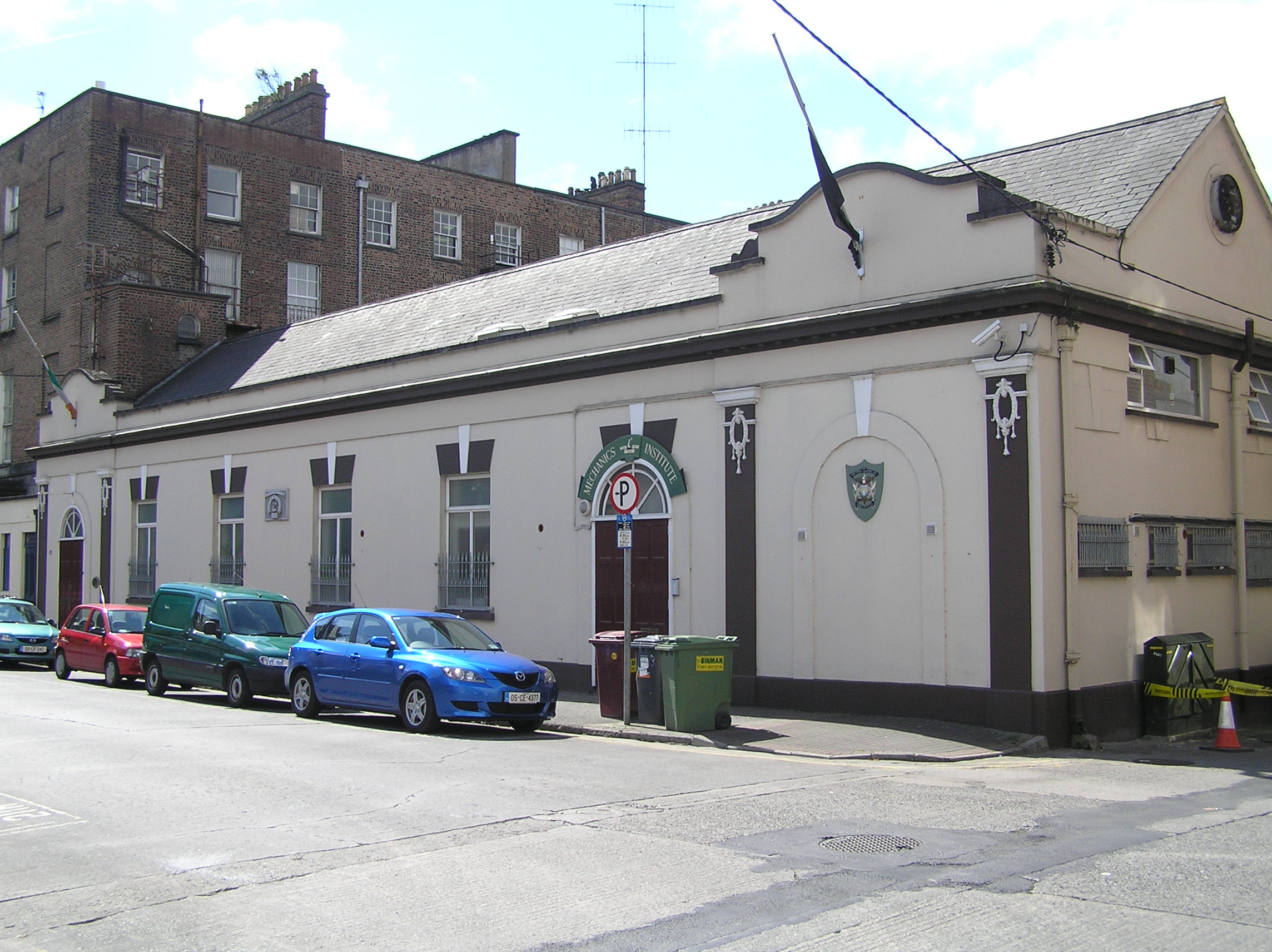 Mechanics' Instituteworkshop · 90 yd
 O' Connell MonumentMonument · 170 yd
 Limerick War MemorialMemorial · 191 yd
 Limerick Seamen's MemorialMemorial · 513 yd
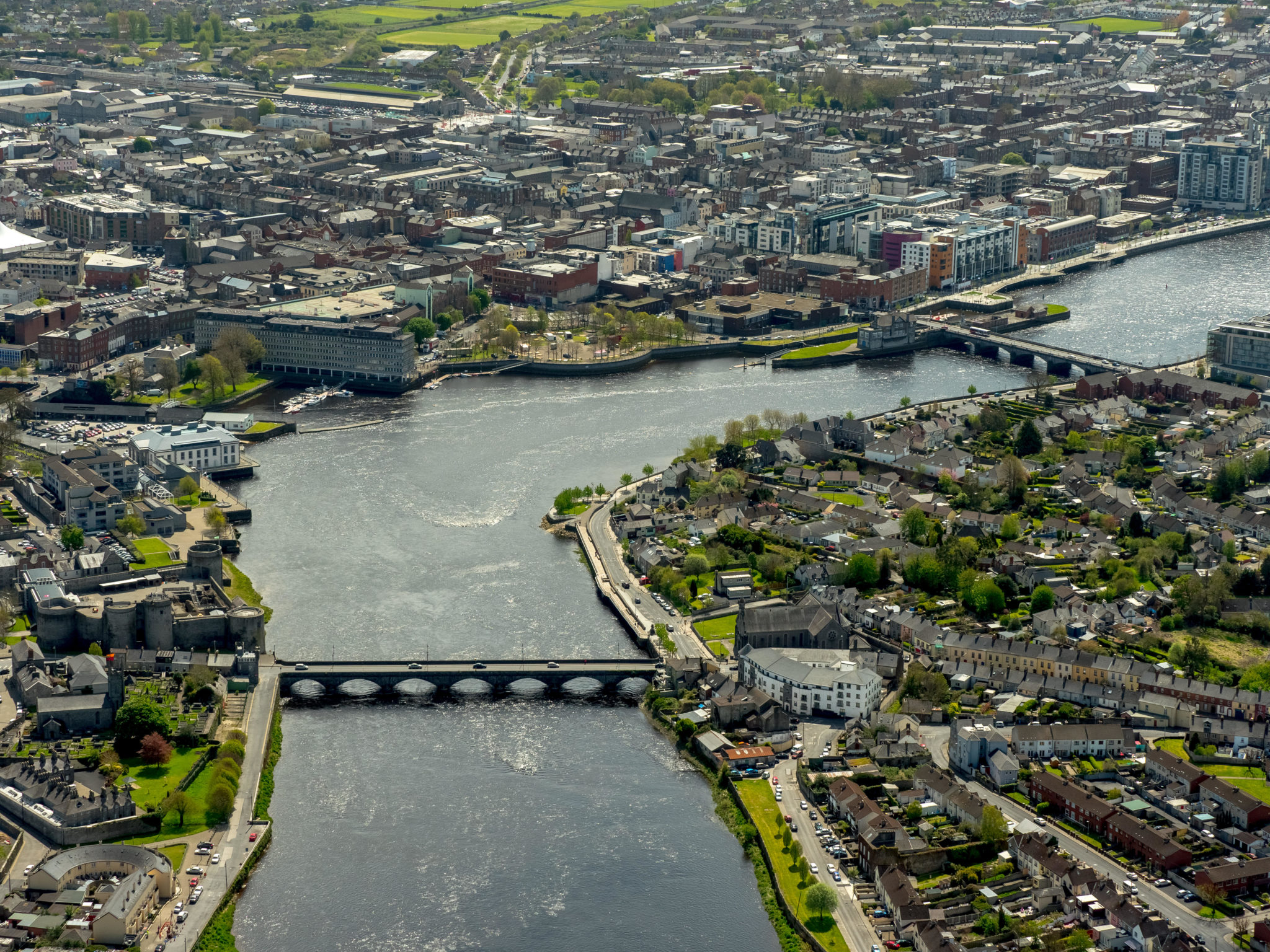 Grave Yd.Graveyard · 1099 yd
 Castle Blake or Farranshone (Site of)Castle, unclassified · 1356 yd
 King's IslandIsland · 1.1 mi
 Site of Cromwell's FortFort · 1.3 mi
 Fountain SculptureHeritage attraction · 2.6 mi
 Visitor CentreVisitor information · 2.7 mi
 Campus MapVisitor information · 2.7 mi
Other information
Photo: National Inventory of Architectural Heritage · Website use allowed for educational or private purposes with source credit