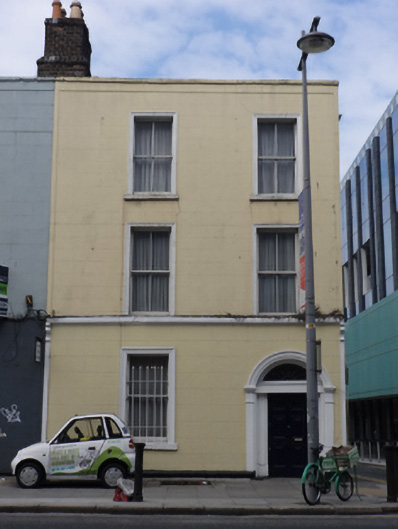
What is recorded here
Corner-sited attached two-bay three-storey over basement former house, built c.1830, with recent two-storey return to rear (north) elevation. Now in use as commercial premises. M-profile shared pitched slate roof, clay ridge tiles, yellow brick chimneystack with clay pots, rendered parapet having granite coping and cast-iron rainwater goods. Lined-and-ruled rendered walls, rendered eaves course, rendered pilasters, with console brackets to ground floor, over masonry plinth course to front. Raised circular medallions to east elevation. Square-headed window openings having moulded masonry architraves, granite sills and continuous sill course to first floor, two-over-two pane timber sliding sash windows to upper floors, one-over-one pane timber sliding sash window with wrought-iron bars to ground floor. Six-over-six pane timber sliding sash and replacement uPVC windows to rear (north) elevation, and replacement windows to east elevation. Round-headed door opening having moulded masonry surround, timber panelled door and masonry doorcase comprising panelled pilasters supporting fascia and spoked fanlight. Granite kerb stones and granite paving with iron grille to front. Situated to north side and centre of Pearse Street.
This building is quite complete, with the render window architraves, sill course and façade console brackets distinguishing it from its neighbours. Its corner site makes it an eye catching addition to the streetscape, while the shared parapet height and fenestration arrangement with the buildings to the west maintain a sense of continuity. By the mid nineteenth century it was occupied by an architect, a silver polisher and a dressmaker. The establishment of the street's width was delayed until 1812 due to difficulties in negotiations between the Wide Streets Commissioners and Trinity College Dublin, whose land formed the street's southern boundary. Previously known as Great Brunswick Street, the street was renamed in 1922 to commemorate William and Patrick Pearse, who were executed for the part they played in the 1916 Rising, and whose family had a business on the street.
This does not grant access. Most recorded buildings are privately owned; view them only from public ground unless the owner allows entry.
Places near here
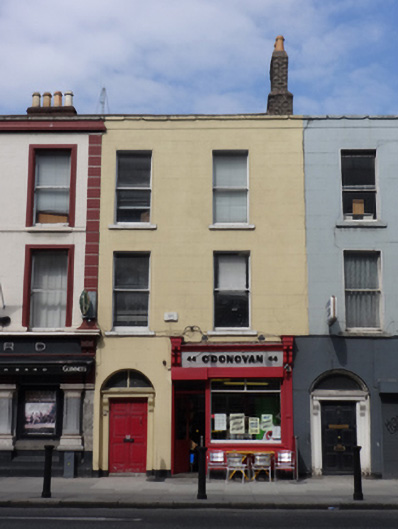 O'Donovanhouse · 14 yd
 The Lombardshop/retail outlet · 23 yd
 The Naughten InstituteMemorial · 131 yd
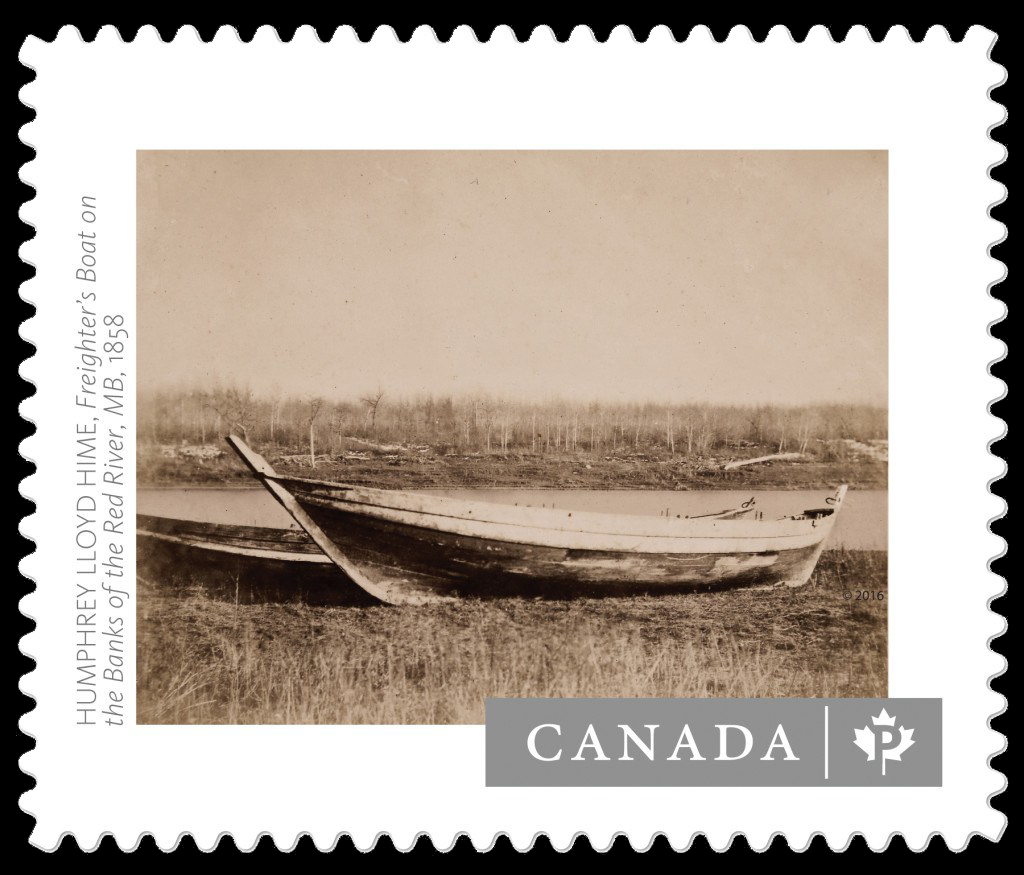 Humphrey Lloyd FRSMemorial · 164 yd
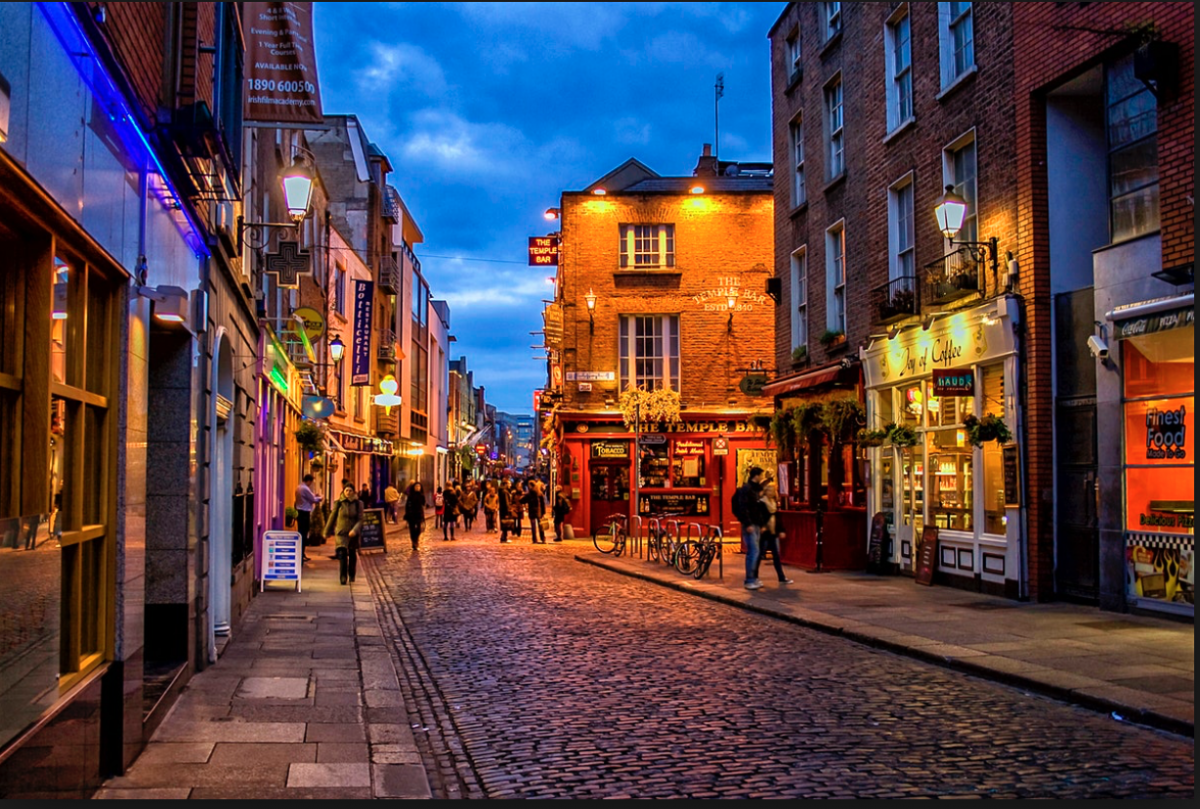 Quay in Unknown TownlandQuay · 353 yd
 Trinity College DublinHistoric university campus · 421 yd
 Jeanie JohnstonMuseum · 444 yd
 1GQVisitor information · 447 yd
 Oriental planeOriental plane · 470 yd
 Bigleaf MapleBigleaf Maple · 584 yd
 Library in Unknown TownlandLibrary · 592 yd
 Burning of the Custom Housearmed conflict · 619 yd
Other information
Photo: National Inventory of Architectural Heritage · Website use allowed for educational or private purposes with source credit