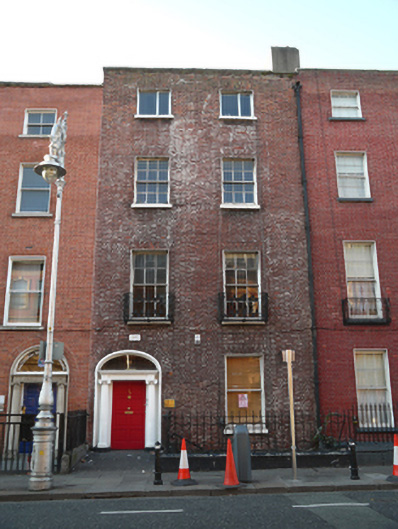
What is recorded here
Terraced two-bay four-storey house over exposed basement, built in period 1763-73. Now in office use. Double-pile slate roof with front pile hipped to south and pair of rear projections set perpendicular to rear. Shared rendered chimneystacks with clay pots to north party wall. Roof hidden behind parapet wall with granite coping and shared cast-iron hopper and downpipe breaking through to north. Red brick walls laid in Flemish bond with cement pointing, wigging and extensive efflourescence. Chamfered granite plinth course over rendered basement walls. Gauged brick flat-arched window openings with patent rendered reveals, granite sills and early replacement six-over-six pane timber sliding sash windows to first and second floors, one-over-one pane window to ground floor, with replacement timber windows to top floor, and replacement uPVC to basement. Decorative cast-iron balconettes to first floor windows. Gauged brick three-centred-arch door opening with moulded masonry surround and painted stone Ionic doorcase. Replacement timber door flanked by engaged and fluted Ionic columns on plinth bases supporting panelled lintel cornice with wreaths and plain fanlight. Door opens onto concrete platform flush to street, bridging basement area. Platform and basement area enclosed by twentieth-century steel railings on concrete plinth wall with steel steps giving access to basement.
Originally leased by Dr. Bartholomew Mosse in 1748, these plots were laid out by Luke Gardiner in 1753. This house was built by Andrew Reid, along with Nos. 52, 56 and 57, but was considerably altered during the nineteenth century and owes much of its present appearance to that period. The retention of an Ionic doorcase, the decorative ironwork to the windows and the general presentation of the facade, form part of the varied architectural detailing that gives Parnell Square its inherent character and appeal.
This does not grant access. Most recorded buildings are privately owned; view them only from public ground unless the owner allows entry.
Places near here
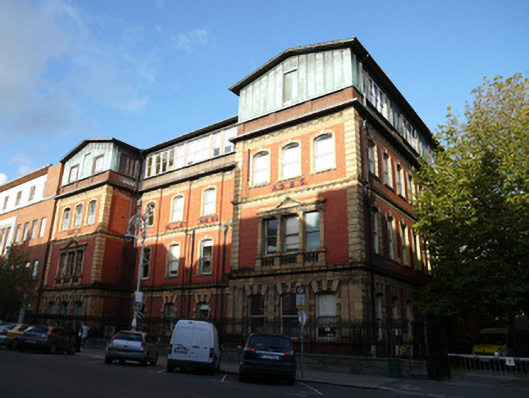 Rotunda Hospitalnurses' home · 41 yd
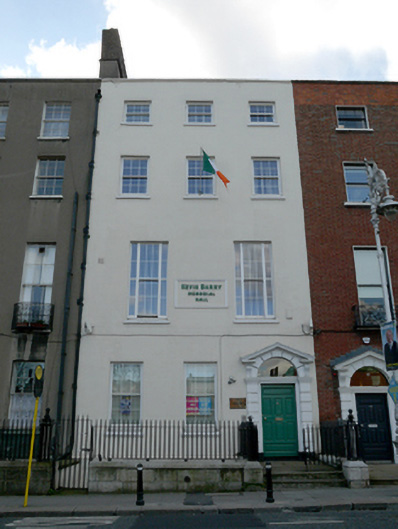 Kevin Barry Memorial Hallhouse · 75 yd
 Anna ParnellMemorial · 150 yd
 Dublin LetteringHeritage attraction · 212 yd
 Theobald MathewMonument · 249 yd
 Father MathewMemorial · 357 yd
 Burial ground in Unknown TownlandBurial ground · 361 yd
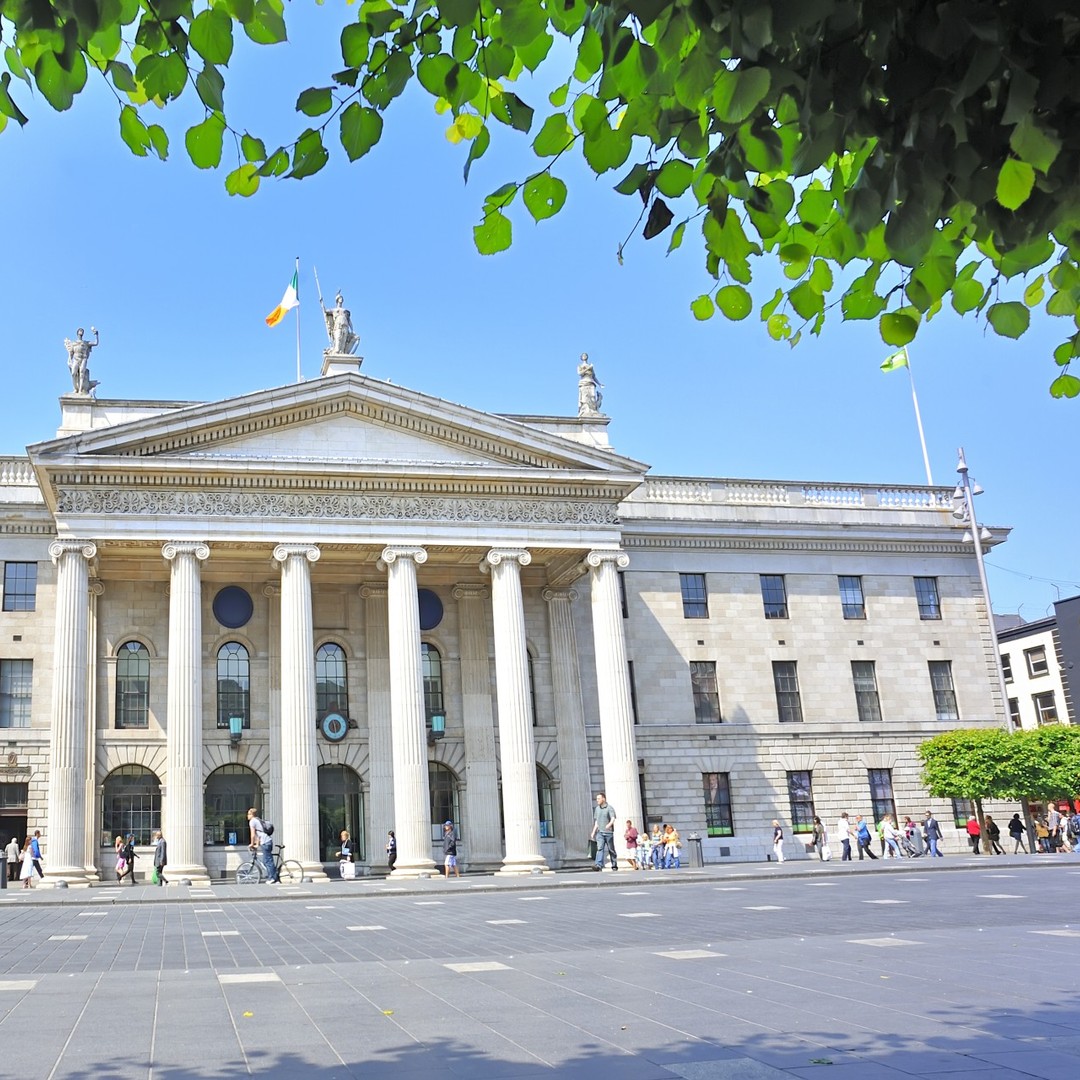 GPO MuseumMuseum · 395 yd
 CúchulainnMonument · 407 yd
 London PlaneLondon Plane · 678 yd
 Chinese ToonChinese Toon · 766 yd
 Burning of the Custom Housearmed conflict · 888 yd
Other information
Photo: National Inventory of Architectural Heritage · Website use allowed for educational or private purposes with source credit