What is recorded here
Two decorated stones from the lost graveyard still stand embedded in the wall of Mosney House, preserving fragments of a burial place that disappeared around 1854. The triangular grass plateau where St. Peter’s chapel stood has left no visible graves behind, perhaps because it served only as a convenience chapel rather than a true cemetery. What remains is a quiet reminder that even erased places can return through the stones they leave behind.
Situated on rise in a low-lying, level landscape. St. Peter’s chapel (ME028-017----) is at the S edge of a raised triangular, grass-coverd plateau (dims c. 46m N-S; c. 40m E-W) defined by scarps (H up to 1.2m) with the apex at N. This plateau is separated by a berm (Wth 2-10m) from a grass-covered earthen bank (at W: Wth 2.2m; int. H 0.5m; ext. H 1.1m; at E: Wth c. 7m; int. H 1.4m) at W, NW and E, which may be modern. There is no evidence of burial, which might not have occurred at a chapel-of-ease, but according to Cogan (1862-70, 2, 255) the graveyard was removed along with remnants of the church c. 1854. Two decorated stones from the site are now built into the wall of Mosney House (ME028-012002-; ME028-012003-). (Ward 1965)
Compiled by: Michael Moore
Date of upload: 23 December, 2014
Neolithic passage tomb; dates to the 4th–3rd millennium BCE. Its location on a raised plateau suggests ritual significance, possibly linked to early Christian structures like St. Peter’s chapel nearby.
The monument record does not grant public access. Check the route and ask the landowner before entering private land.
- What survives
- Recorded monument
Places near here
 St. Peter's Chapel MoymurthyArchaeological place · 4 yd
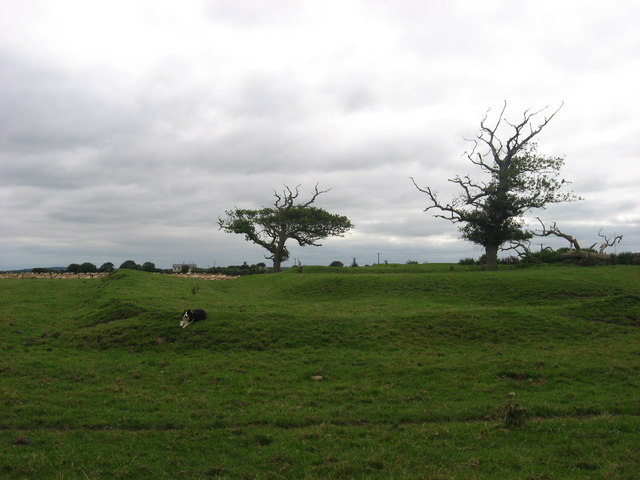 ChapelChurch · 13 yd
 Holy well in Irishtown (duleek Upper By., Moorechurch Par.)Holy well · 903 yd
 Ben HeadCliff · 1046 yd
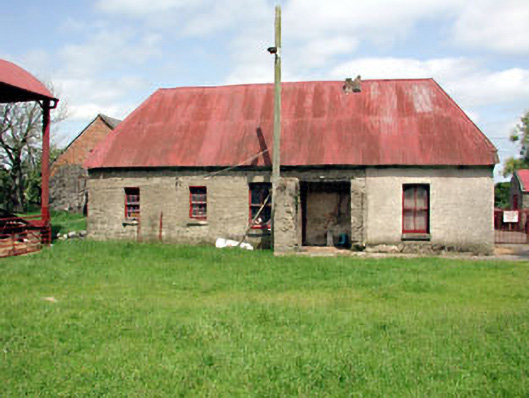 farm housefarm house · 1652 yd
 SycamoreSycamore · 1.2 mi
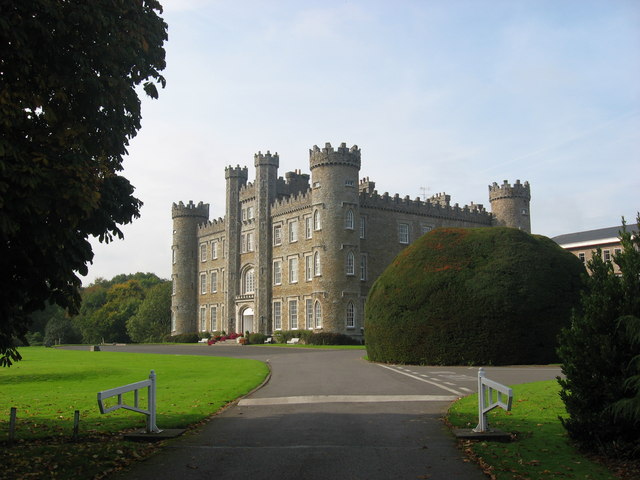 Gormanston CastleCastle · 1.4 mi
 European YewEuropean Yew · 1.4 mi
 Ballygarth CastleCastle · 1.9 mi
 Battle of Julianstownbattle · 2.1 mi
 Clonard SpringSpring · 3.4 mi
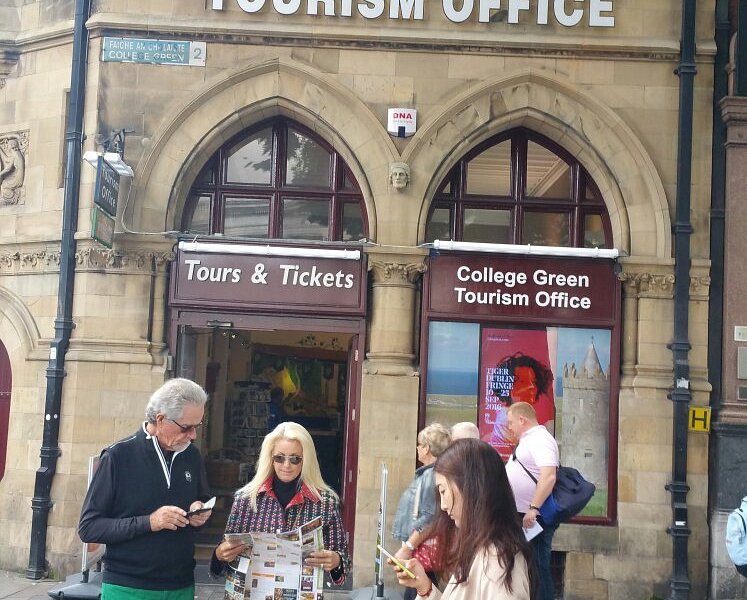 Balbriggan Tourist OfficeVisitor information · 3.8 mi