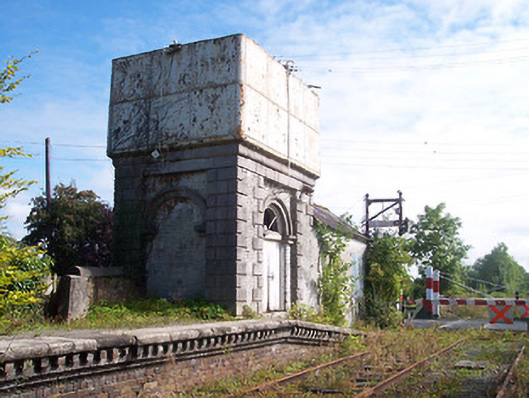
What is recorded here
Detached two-stage water tower on square-plan, built c.1851, having a single-bay single-storey block to the east end. Now disused. Wrought-iron water tank (on square-plan) to top with pitched natural slate roof to single-storey section. Constructed of red brick with extensive cut granite detailing, including rusticated granite quoins to the corners, pulvinated string course below water tank and moulded round-headed arches to water tower. Recessed round-headed doorway to south elevation of water tower having timber double doors with the remains of a fanlight over. Central round headed window opening to east gable end of single-storey building with stone sill and having remains of a multi-paned window. Round-headed doorway to the south face of single-storey building having rasied brick block-and-start surround, now infilled. Located to the east end of the Moate Railway Station complex (15317037) and to the north of Moate.
An elaborate and well-detailed water tower, which forms part of an extensive collection of structures/elements associated with Moate Railway Station (15317037). It represents an interesting historical reminder of the great age of the stream in Ireland. Although these water towers were built out of necessity, skill and design went into their construction, which can be seen very clearly in this fine example at Moate with its extensive cut stone trim exhibiting classical detailing. This feature was built by the Midland and Great Western Railway Company to serve the Dublin Broadstone to Galway line, which opened between Mullingar and Galway in 1851 and closed to regular rail traffic in 1987. It is possible that this feature was built to designs by the renowned architect J.S. Mulvany, who was responsible for the designs of a number of the train stations along this line, and may have been responsible for the designs of the station itself to the west.
This does not grant access. Most recorded buildings are privately owned; view them only from public ground unless the owner allows entry.
Places near here
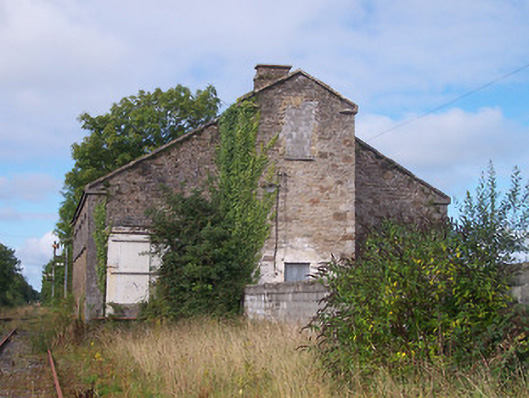 Moate Railway Stationstore/warehouse · 213 yd
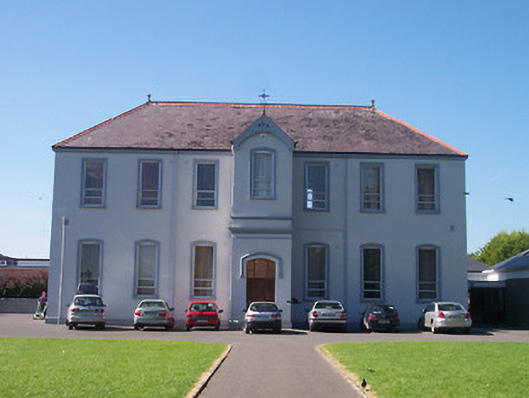 Saint Brigid's National Schoolconvent/nunnery, school · 222 yd
 Charles BianconiMemorial · 372 yd
 The Bob Traynor GalleryGallery · 414 yd
 Bawn in Cartronkeel (clonlonan By.)Bawn · 632 yd
 Moate HillMountain / peak · 683 yd
 Dún na Sí Heritage CentreMuseum · 1140 yd
 Enclosure in CooleenEnclosure · 1.2 mi
 Nolt indicatedCrannog · 1.3 mi
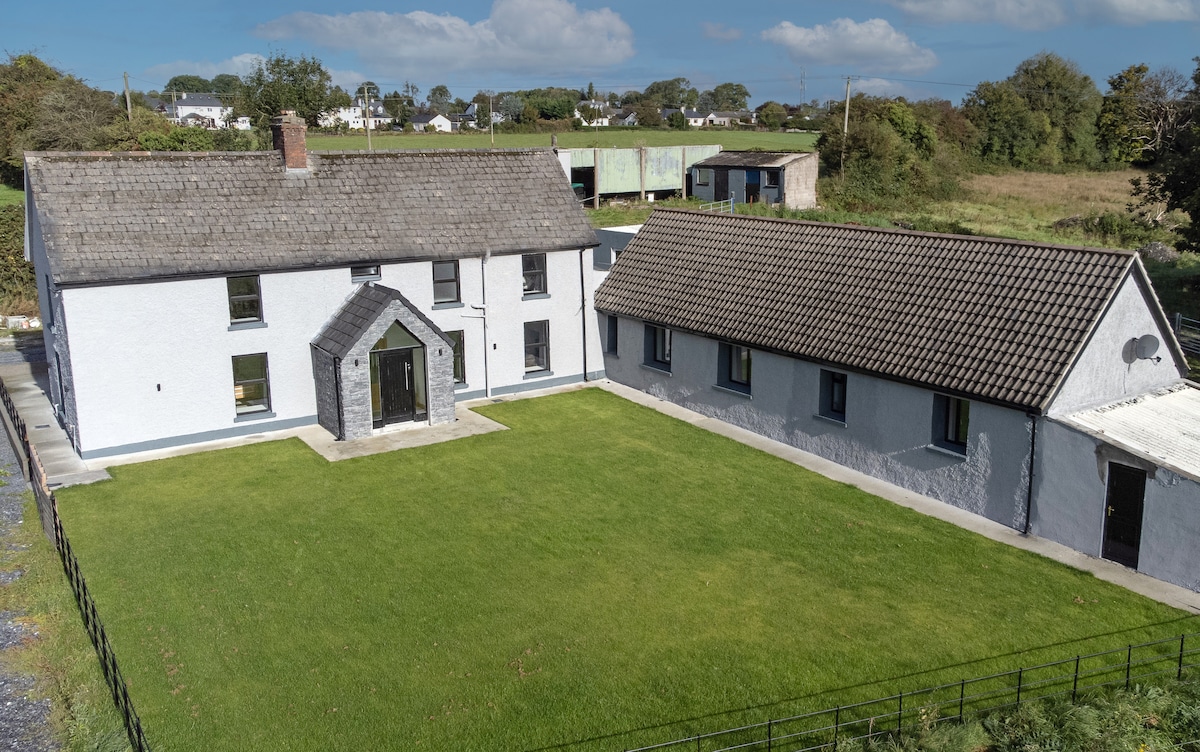 Bawn in DuneganBawn · 1.7 mi
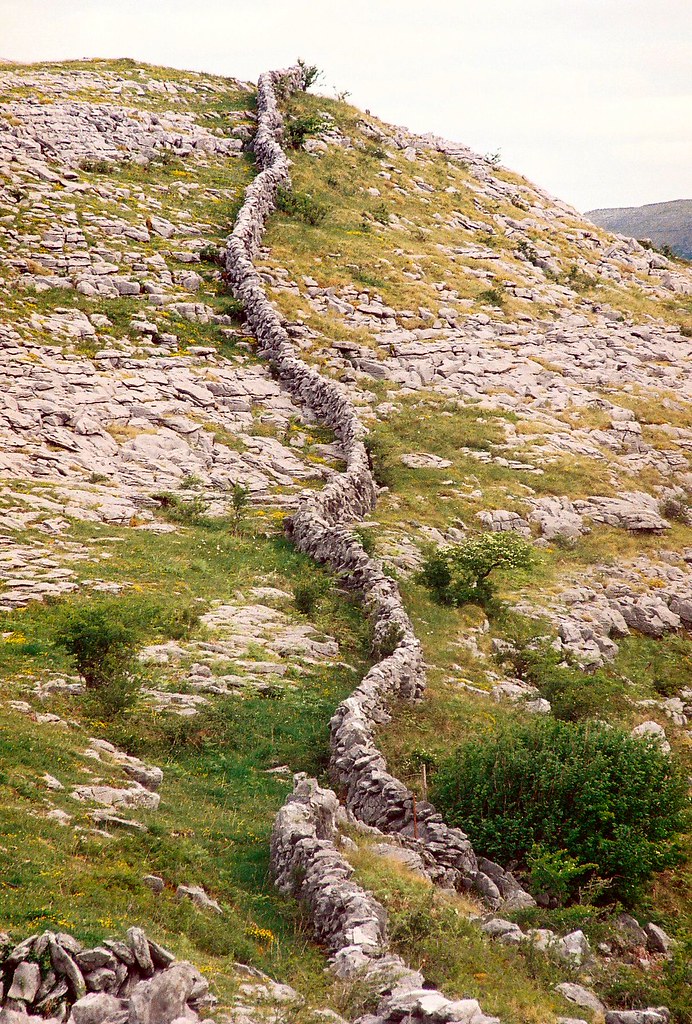 Roughan HillMountain / peak · 3.6 mi
 ToberaskeenSpring · 4.0 mi
Other information
Photo: National Inventory of Architectural Heritage · Website use allowed for educational or private purposes with source credit