What is recorded here
Five thousand years before written history, hands shaped flint blades on a cliff edge above the Blackwater River. Two shallow stake-holes still mark a forgotten hollow where someone stood, watched the water, or sheltered from wind. Ploughs and time erased most of that life, but three hundred sharp fragments remained buried in soil. They are not trophies; they are the residue of thinking, cutting, adapting, and living at the edge of a river.
On top of a cliff on N bank of Blackwater River. Excavated in 1990 (Anderson 1991; 1993) after discovery of diagnostic Early Mesolithic flint artefacts during field-study project (1983-5) (Woodman 1989). Seven trenches were opened comprising an area of 35 square meters (Anderson 1993, fig. 3.2). Lowest lying area excavated produced gravel spread, probably in situ, delimiting hollow with two stake-holes (undated); elsewhere cultivation appeared to have removed any traces of occupation.
Over 300 flint pieces were recovered, the majority coming from 'ploughsoil horizon' (Anderson 1991). Most of these consisted of blades and blade fragments; also found were ten microliths including rods and one scalene triangle; other fragments included three microburins, two scrapers, a single-platformed core, and much debitage (Anderson 1993, fig. 3.3). Assemblage dated 'c. 9000 b.p. - 8000 b.p. based on parallels with other sites' (Anderson 1991).
The above description is derived from the published 'Archaeological Inventory of County Cork. Volume 4: North Cork' (Dublin: Stationery Office, 2000). In certain instances the entries have been revised and updated in the light of recent research.
Date of upload/revision: 14 January 2009
The monument record does not grant public access. Check the route and ask the landowner before entering private land.
- What survives
- Recorded monument
Places near here
 Kilcummer Viaductviaduct · 391 yd
 Old Railway BridgeRuins · 424 yd
 Grave YdGraveyard · 549 yd
 Field system in Renny UpperField system · 777 yd
 Castle (in Ruins)Castle, unclassified · 1002 yd
 Blackwater (Avondhu) WayWalking route · 1.3 mi
 Priest's WoodForest · 1.8 mi
 Ballyhooly CastleCastle · 2.1 mi
 Johnson's WoodForest · 2.1 mi
 Knocknaskagh North TopMountain / peak · 2.4 mi
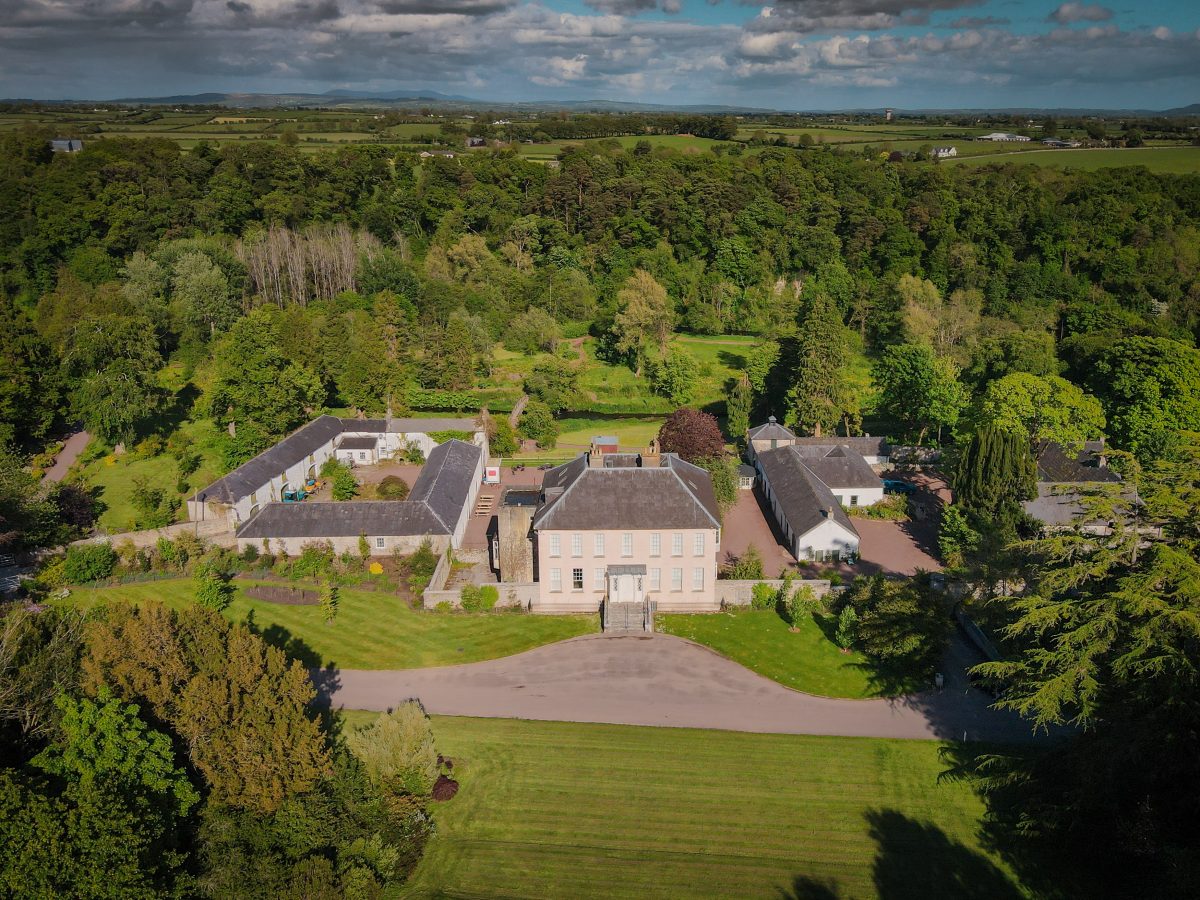 Anne's Grove GardensHeritage attraction · 3.2 mi
 Liam BurkeMemorial · 3.4 mi