
What is recorded here
Knowth cemetery, Tomb 15: Situated c. 10m NNE of the great mound, Tomb 1C, at a point where some of the kerbstones of Tomb 1C are missing. This is the remains of a mound (diam. c. 20m; max. H 0.9m) of sods and boulder clay contained within a stone boundary (diam. c. 16m) that was 2-2.5m inside the kerb. The mound was laid on the old humus and it was topped with shale and more subsoil extending to the kerb, with further shale on top around the kerb. Both the kerb and arc of stones only survive E-WSW. Within is a well-preserved passage tomb (total L 9.2m; Wth 0.4-1.5m) of at least 21 orthostats, mostly set in sockets. The passage is divided by three sillstones and is entered at SW. The larger orthostats are furthest from the entrance. There were two deposits of cremated bone in the two innermost segments of the passage which had two flints and two bone beads, but the mound produced 26 flints and sherds of Carrowkeel ware. Three males, one female and one other were represented amongst the cremated remains together with four juveniles and there were fragments from one unburned adult (Buckley et al. 2017, 311-12).
Twenty six kerbstones survive, 19 in position, and a further five are indicated by packing stones. Two orthostats and the innermost sillstone of the tomb have art, usually confined to a single motif, a circle, spiral or lozenge, and two kerbstones have art, including one with five concentric arcs. The third segment of the tomb contained an almost complete Bell Beaker with what was thought to be a secondary cremation, and 3 inhumations (Eogan 2012, 54-56), one of which produced a C14 date of cal. AD 428-582 (Schulting et al. 2017, 354), were inserted into the innermost section of the passage. Bayesian analysis of the other four C14 dates suggests a period of use between 3200-2900 cal. BC, but none of the sampled cremations was associated with the Beaker (ibid. 354-5). The mound at S and W was disturbed by the construction of Man-made underground passage 7. The mound is completely reconstructed and provided with natural light. (Eogan 1984, 90-109, 308-12, Site 15; 1986, 80-2)
The above description is derived from the published 'Archaeological Inventory of County Meath' (Dublin: Stationery Office, 1987). In certain instances the entries have been revised and updated in the light of recent research.
Date of upload: 10 July 2007
Amended: 16 September 2020
See the attached plans:
_1 Cemetery plan from Knowth 6, Fig. 2:1
_2 Tomb plan from Knowth 1, Fig. 45
Neolithic passage tomb, dating to c. 3300–2500 BCE; part of the larger Knowth cemetery, significant as an early example of passage tomb construction in the Brú na Bóinne complex, a UNESCO World Heritage Site.
The monument record does not grant public access. Check the route and ask the landowner before entering private land.
- What survives
- Recorded monument
Places near here
 MoatPassage tomb · 64 yd
 KnowthArchaeological place · 65 yd
 Knowth Timber CircleHeritage attraction · 65 yd
 Enclosure in KnowthEnclosure · 179 yd
 Knowth Fox CovertWood · 475 yd
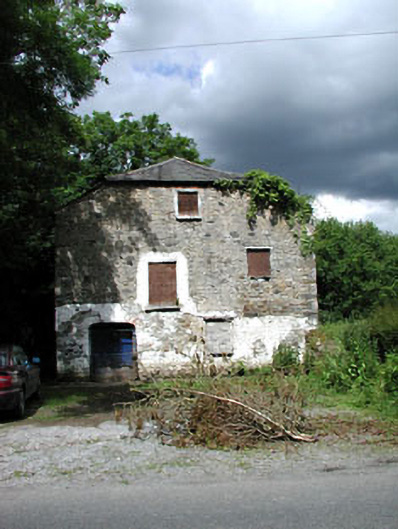 Mill Housemill (water) · 1737 yd
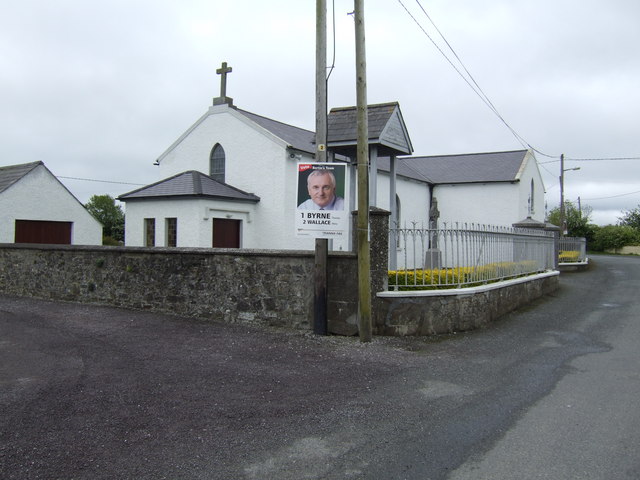 Catholic Church of the Nativity of Our Ladychurch/chapel · 1.2 mi
 Brú na Bóinne Visitors CentreVisitor information · 1.8 mi
 Dowth CastleCastle, tower house · 1.8 mi
 Fennor CastleCastle · 2.0 mi
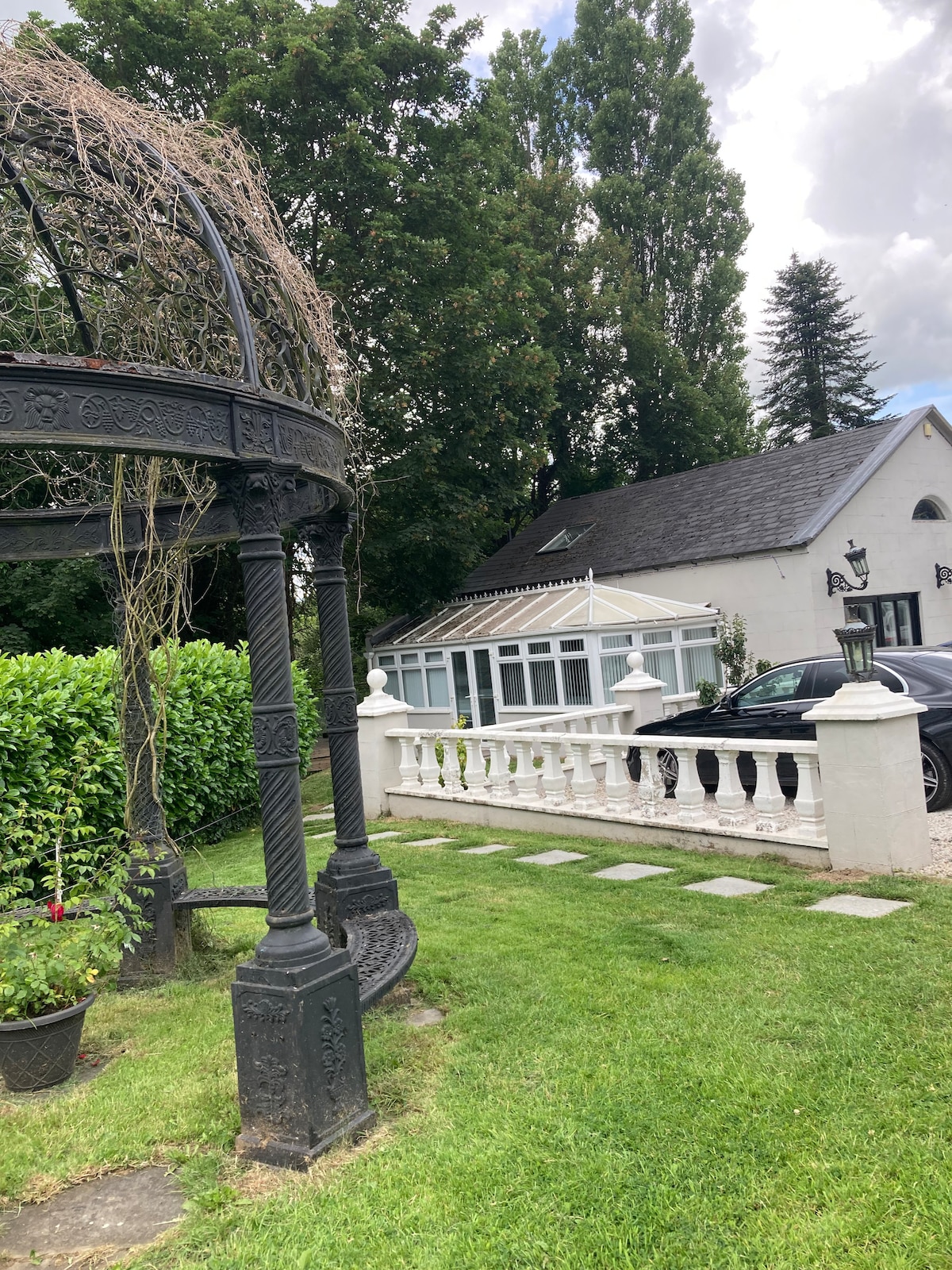 RiverviewMemorial · 2.1 mi
 Little WoodForest · 2.2 mi
Other information
Photo: John M · CC BY-SA 2.0